Ouch, Ouch, Ouch. What a fast and a busy week it was. I miss sleeping so much like a lover missing his heartthrob! I'm missing this opportunity even on weekends (but that's not something new).
My schedule had been busy; so much that I barely had the time to think about my camera and process new images. However, I had the chance to test my new toys a little bit - yet more testing is needed. More to come about that later.
Splashing:
By last week we had one of our first practical outdoors workshop in part of the Philosophy of Light workshop with the group. The appointed location was Shuwaikh beach area. The day was windy and really refreshing. While everyone was struggling with jackets seemed to be I'm the only one who was satisfied with a T-shirt!
I was the first to arrive and started to work straight away with some shots of high-speed flavor trying to freeze the water splashing on the rocks. But soon I've moved to long exposures and ND filters.
Maybe the exposure in some of these shots didn't exceed 30 seconds but it was hard to achieve even a one second exposure with the sun being tough. I ended up setting up 6 stops of NDs in front of the Tamron lens and trying several shutters. I've cut back to do more high-speed shots and then back to long exposures, and then was able to achieve 8 seconds (mainly because the sun was approaching the horizon and level of light was going down), but after all, I've found out that a half second is just fairly enough to give a surreal look. With the waves being so strong and splashing against the rocks (and almost made me have a full shower too!) it is not necessary to make very long exposures. Even times less than half a second might be quite enough to give the desired look. Lengthening the exposure time with strong water waves would erase most of the features on the rocks and too abstract. After exhausting all my options with the waves, I've simply stood up on the concrete barrier and started to shoot with minimalism in mind as in Dimensionality. To me, at least, this image seems a breakthrough because it is a simple structure, but yet has a depth with a vanishing point in the horizon. Maybe I was lucky? One bad thing back then though is that I didn't get my polarizing filter yet.
Let's Play!
My new toys have arrived with the beginning of this week, and I didn't have much time to test them thoroughly, but few clicks here and there.
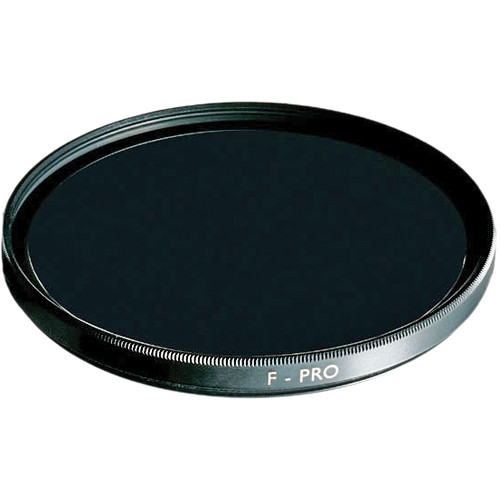
One of the toys that I was eager to try and learn about is the Infrared B+W glass filter. Even though my camera is not converted (i.e. sensor adjusted to receive IR radiation), yet after some surfing about the topic a bit, seems the only problem with this is the long exposure times required, while the converted cameras would react normally with normal exposure times as in normal cameras. This is what I understood so far.
The title-less image above was captured as I was waiting for the TV crew who were supposed to do an interview for a program on TV with the group's members. As I was waiting I've decided to try some aspect of this filter and even it was hard to be done without a tripod. One of the hard things to do is to match the exposure metering done without the filter to the exposure metering after fixing the filter. In a quick inspection seems the difference is 4 stops. However, such calculations are not quite correct, because the type of the light to be received by the sensor (specially unconverted) is completely different. I imagine metering the light and doing a correct exposure would be done nicely only when the camera is converted, or maybe if there are special light meters that read IR only and compare its level to 18% gray!
The image above looks a typical black and white shot (after being converted from a completely red image), but certain details made me think it made some difference, like the details of the tiny clouds (which were hard to notice in reality) beside the building in the horizon on the far left which looks hazy.
I'm reading more about it for the time being and seems I could achieve more interesting shots by adjusting the white balance instead of converting to black and white. This is what I've inspected by reading so far.
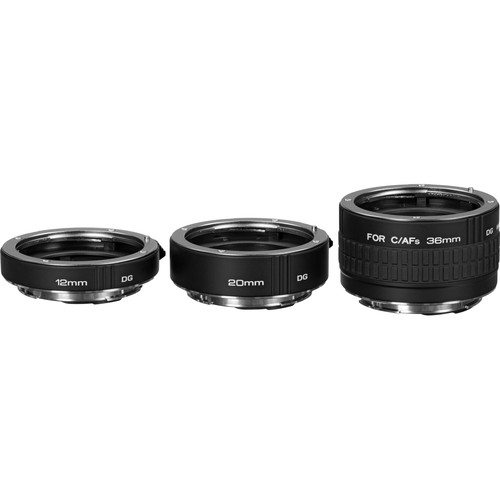
I didn't get the chance yet to test the polarizer thoroughly, but I got a little chance to test the Kenko extension tubes set. Extension tubes works by allowing the lens to focus in a distance closer than it is on the original lens.
After doing my part with the TV interview (which barely went on well), I've stayed away doing my own trials with the extension tubes on some plant leaf. It is a hard task to shoot with such degree of closeness and zooming without using a tripod of course.
I've found it mandatory here to use the on-camera flash to fasten the shutter speed and reduce the shake effect. In the beginning I thought it won't work because usually with such long lens combination, the on-camera flash would cast a shadow on the subject, but probably not here in such close distance. It could be time to use rails (or maybe some parts of my VR-head) to move the camera smoothly on the tripod for- and backward.
This test is still not enough, and I'm eager to implement this with reversing lenses technique and see what effect does it yield, specially with my new 58-58 adapter ring which arrived along with the new toys!
Away from testing the new stuff (and mainly because it was night time already), the TV work was not over by then and boredom filled my head. Yet, my eyes weren't.
I noticed some decorative plant in one of the corners which inspired me for some shot with a shadow, but the problem was that I didn't bring my speedlites, thus, I had to use the available data-show device with its blue/purple light and projected it onto the pot or vase from the side (after hardly stabilizing it over a couch!).
Maybe what I personally like about Reality of Shadows is the fact that I've used the Fluorescent WB to add more bluish streak to the already-blue light. Yes, I needed to adjust the WB little bit later and reduce/add some saturation for some colors, but the starting point was fair enough. No HDR rendering.
Now for the coming week, I might have some plans, and a busy schedule too. For sure I need to test more procedures with the IR filter. On the schedule, there is giving my own tips about Photoshop in a special session; it is not a paid service of course, but a friendly help. Also on the schedule, there are plans to get involved in more local expos, and one of them is supposedly sponsored by Kuwait University. Bearing such responsibilities do feel heavy though. A shoulder for a burdened head, is all what I would ask for in such days...
My schedule had been busy; so much that I barely had the time to think about my camera and process new images. However, I had the chance to test my new toys a little bit - yet more testing is needed. More to come about that later.
Splashing:
 |
| Dimensionality Canon EF 50mm, f/16, 60-1sec, ISO 100. |
I was the first to arrive and started to work straight away with some shots of high-speed flavor trying to freeze the water splashing on the rocks. But soon I've moved to long exposures and ND filters.
 |
| Nature Paints Tamron 70-300mm @228mm, f/40, 0.5sec, ISO 100. |
 |
| Der Sanfte Zorn Canon EF 50mm, f/1.4, 8000-1sec, ISO 100 |
Let's Play!
My new toys have arrived with the beginning of this week, and I didn't have much time to test them thoroughly, but few clicks here and there.
 |
| Source: B&H |
 |
| Canon EF 50mm, f/1.4, 200-1sec, ISO 100 |
The title-less image above was captured as I was waiting for the TV crew who were supposed to do an interview for a program on TV with the group's members. As I was waiting I've decided to try some aspect of this filter and even it was hard to be done without a tripod. One of the hard things to do is to match the exposure metering done without the filter to the exposure metering after fixing the filter. In a quick inspection seems the difference is 4 stops. However, such calculations are not quite correct, because the type of the light to be received by the sensor (specially unconverted) is completely different. I imagine metering the light and doing a correct exposure would be done nicely only when the camera is converted, or maybe if there are special light meters that read IR only and compare its level to 18% gray!
The image above looks a typical black and white shot (after being converted from a completely red image), but certain details made me think it made some difference, like the details of the tiny clouds (which were hard to notice in reality) beside the building in the horizon on the far left which looks hazy.
I'm reading more about it for the time being and seems I could achieve more interesting shots by adjusting the white balance instead of converting to black and white. This is what I've inspected by reading so far.
 |
| Source: B&H |
After doing my part with the TV interview (which barely went on well), I've stayed away doing my own trials with the extension tubes on some plant leaf. It is a hard task to shoot with such degree of closeness and zooming without using a tripod of course.
 |
| Lamellae Canon EF 100mm macro + 68mm, f/8, 25-1sec, ISO 100 |
I've found it mandatory here to use the on-camera flash to fasten the shutter speed and reduce the shake effect. In the beginning I thought it won't work because usually with such long lens combination, the on-camera flash would cast a shadow on the subject, but probably not here in such close distance. It could be time to use rails (or maybe some parts of my VR-head) to move the camera smoothly on the tripod for- and backward.
This test is still not enough, and I'm eager to implement this with reversing lenses technique and see what effect does it yield, specially with my new 58-58 adapter ring which arrived along with the new toys!
 |
| Reality of Shadows Canon EF 50mm, f/1.4, 50-1sec, ISO 100. |
I noticed some decorative plant in one of the corners which inspired me for some shot with a shadow, but the problem was that I didn't bring my speedlites, thus, I had to use the available data-show device with its blue/purple light and projected it onto the pot or vase from the side (after hardly stabilizing it over a couch!).
Maybe what I personally like about Reality of Shadows is the fact that I've used the Fluorescent WB to add more bluish streak to the already-blue light. Yes, I needed to adjust the WB little bit later and reduce/add some saturation for some colors, but the starting point was fair enough. No HDR rendering.
Now for the coming week, I might have some plans, and a busy schedule too. For sure I need to test more procedures with the IR filter. On the schedule, there is giving my own tips about Photoshop in a special session; it is not a paid service of course, but a friendly help. Also on the schedule, there are plans to get involved in more local expos, and one of them is supposedly sponsored by Kuwait University. Bearing such responsibilities do feel heavy though. A shoulder for a burdened head, is all what I would ask for in such days...


