Showing posts with label failure. Show all posts

Thursday, May 2, 2019

AstroFails - Reflections…

It has been a semi-idle week. I had many hopes but they were crushed down; Regarding astrophotography that is. However, I might keep trying after a while, but right now I need to focus more on some ideas I'm trying to achieve and do for a while but I was simply lazy to do. What I liked about my trials with astrophotography is the fact that I can do it at home just in the yard and I can have a decent time alone even when everyone is inside the house. Reminds me of that time when I used to climb up to the highest point on the roof just to shoot the cityscape of my area from there or do time lapses for the sunset. Unfortunately though for me now, I can't go to the roof, and in the yard, my field of vision for the sky is limited by the surrounding houses which somehow limits my good view to the zenith above me alone. But that's another story anyway. Yet, I will post here some of my failures with astrophotography, which is still under studying and learning processes.
Before heading to my failures in astrophotography, I'd just like to list here my results certificate from Treierenberg Circuit, which was emailed to me on April 19th. I wouldn't call it a success, nor a complete failure, but I was hoping for more brilliants results than this actually.

A=Accepted, R=Rejected (for exhibition).
Click to enlarge.
 First of all, if you have OCD please don't look at the list because I didn't have the time to organize it with my copy/paste process! It bothers me as well but I have to do with this right now. As you can see from the list, lot of images were rejected (and some of them were kind of unexpectedly rejected). However, I'm happy that my first time with "Series" photography, entitled Syrian Girl, was accepted; All five images. This series was shot some time ago (I think in 2017) for a project with the group which I was a member in back then, and it was not really dedicated to the topic of a Syrian girl at all, but was more general about how a girl would remain a girl even in adulthood. But somehow the meaning can be twisted as well to reflect the status of a girl, who lost her parents in war.
Anyway, no gold medals this time, but I'm happy that my shot Anxiety got accepted. I can't post all images here but probably you can roll back to my previous posts where I posted some of these images (and I made a quick video as well for one of the posts).


AstroFails

As I've mentioned earlier, my trials with astrophotography from the yard at home were prone to fail mostly and I couldn't catch but a glimpse of some constellations or stars. My real target, though, is to shoot something exciting like a nebula or a galaxy.
In the course of learning, I had my hopes up for various reasons, as well as learning many other aspects that might be beneficial for the photographic vision and processing as a whole later on. Specifically, the power of RawTherapee! I still have my hopes high despite the failures that I've had already. I've read and still reading from time to time about the trials of many people in shooting high ISO and in the city bringing the space to life with their images, without even using a tracking mount which typical for a serious professional astrophogoraphy, Despite following their steps, I didn't come up with anything serious though and I guess it's all laid on my own problems with the location and gear.

A trial with 50mm lens on April 21st. Probably Leo constellation appears here.
The black spots are probably passing clouds or just stacking artifacts.
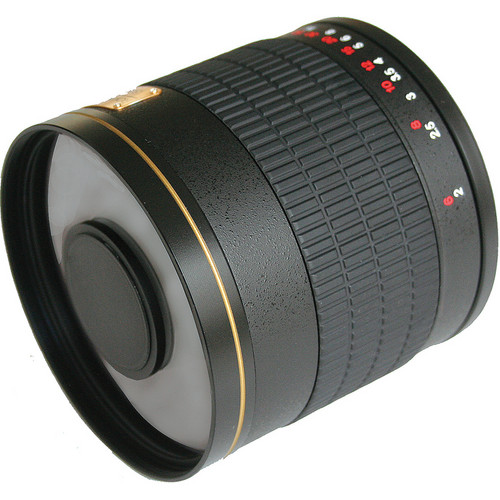
So far, I didn't exceed the limits of shooting constellations only, even with the range of 300mm, which I've read in some pages that it is fine for astrophotography. The downside though of using my 300mm lens (Sigma's) is the small diameter compared to more professional photo lenses (62mm) and the high f-number (f/5.6 @300mm) which limits the passage of light (specially faint beams) even while shooting in high ISO. Using my Rokinon mirror lens is of course out question here (but I tried it anyway!); The lens if 800mm but with a fixed aperture of f/8. A catastrophe even with high ISO. But I like to imagine how the situation would be if I would be using a tracker with this lens? Then I would be able to shoot for a longer time and would for sure collect more data and more light!

Trial at 100mm on April 23rd with Hα filter. Unfortunately,
I couldn't work out what constellations are present here. I've spent hours trying to check
star maps! If you can help, please feel free to comment below.

My trials in the beginning were always at 300mm with Hα filter to suppress the light pollution. However, reading more about the topic, I've realized that most professionals would shoot normal, without such a filter, even in untracked astrophotography like what I'm doing right here, and shoot Hα to collect more data in that region of the spectrum and merge it with the normal images. It's easy to be done digitally, complicated to be done in practice! However, I've shot with the filter and processed some images and some of them yielded some good results with Deep Sky Stacker (DSS). Seeing how things are hard with 300mm, I've decided to go all the way to the beginning; Shooting with 50mm, then 100mm and then maybe 200mm and 300mm. My trials are still going on while typing these words actually but I've stopped for some time to do other photography projects on the side!
This experience in shooting astrophotography, despite its failures, as I think, did teach a number of things and opened my eyes to another venue. I like to organize my thoughts in points here:
  • Shooting with high ISO: I'm not afraid to crank the ISO to its highest point. Not only in astrophotography but it could be in other genres as well. A number of things had changed when it comes to dealing with such images and such noise.
  • RawTherapee: It turns out, beside DSS, that this open source editor would be (and is) the best friend one can have away from Photoshop! The noise reduction algorithms and the capabilities of adding a dark frame and a flat frame to the algorithm of noise reduction and image correction makes it ideal. This is beside the "demosaicing" algorithms, of which two are dedicated to high ISO images. I'm thinking seriously of visiting some of the old images I've taken (specially those from 2015 from the Monodrama festival back then) and try to reduce the noise with RawTherapee. Some professionals, as I've read in some articles, make a point that it's bad that RawTherapee does not allow the addition of more than one dark frame to take the average for noise reduction (like DSS does) but I think this is something specific to DSS and the nature of astrophotography, and RawTherapee is a general editor of some sort and should not necessarily go on the same path as DSS. Another good point for RawTherapee is the ability to work with 32-bit images as well (HDRs), and in various algorithms as it seems (linear and rational).
  • Ball Heads: I never imagined that my worst enemy in shooting would one day be my best friend in shooting! When I started my trials with astrophotography, I used a panning head; My preferred head to work with ease. I've neglected all the advice I've read about using ball heads in those online articles from professionals. I was wrong, completely. Ball heads in this situation IS the real and the only candidate for shooting the sky. Thinking about it, I might even consider integrating such a head in my usual workflow (but not in panorama making for sure of course).
Probably these are the major points that changed or added to my knowledge about photography and my usual workflow in processing images after shooting. At this time, I'm still trying to cope and enhance my practical workflow when shooting the sky but I have to admit that I didn't achieve much progress in that arena. Here are some of the problems that I'm still trying to find solutions to:
  • Focusing: Having a good focus to a completely dark sky with unseen stars (until the images are processed) is quite a struggle. I've been even taking test shots just to notice and see if there are any bright stars in the image and move the focusing ring accordingly. Reading articles online about this matter did not help much, and applying the principle of the hyperfocal distance is not achievable somewhat (specially when the f-number is quite low). Probably the most significant advice I've seen online is to focus at some light source or a subject which is around 100m away or so, and that is not possible to do in my case (I don't have such a space as I'm shooting at home).
  • Locating: Currently, I've been using an app on my Huawei android phone called Sky Map, and probably this is the best I could find. The app is fine, but the problem is in matching the field of view on the phone with that of the lens (i.e. what does the lens see). The lens' field of view is a measurable angle (according to the sensor size), but on the app there is no scale for that. I tried to check for a better app but seems this is the best I could get so far. 
  • Pointing: With the problem of locating, comes the other problem of pointing in the right direction into the dark sky. A cumbersome method I've came up with is to hold my phone against the LCD of my camera (as if it is the LCD itself) and look at the map on the phone to know what stars are in view. This is not an accurate method of course but maybe a good approximation. Moving the camera cannot be done while holding the phone against the LCD, unless with some help (but I'm working alone here, as usual).
  • Tracking: The method of "untracked astrophotography" depends on moving the camera manually and follow up the movement of the object in the sky. But the sky is dark already and I'm not sure how would I follow up an object that cannot be seen even on LCD when the shots are taken! For this, I depend on some visible clues like a glittering little star and check its movement before changing the orientation of the camera. However, maybe this star is not anywhere near my original aim in the sky!
  • Gear: Not talking about a tracker mount (which is favorable actually), but a good lens would do wonders. In the images above, shot at 50mm and 100mm, all were actually taken with my Canon EF 50mm f/1.4 USM lens, with just the addition of a 2x teleconverter to reach 100mm (and adding another one to reach 200mm even). Teleconverters double the focal lengths AND the aperture. Thus, f/1.4 would naturally go up to f/2.8 (and surprisingly stops at this value even when adding another teleconverter). Most of the articles I've read online talk about Canon's 70-200mm lenses with f/2.8 and adding a teleconverter to that to reach 400mm to shoot nebulae and galaxies. Makes me really wonder whether my Sigma 70-300mm is any good to the task with its f/4 at 70mm and f/5.6 at 300mm (and adding a teleconverter would raise that up to f/11 at 600mm!). Baseline: f/4 is not good enough. But anyway, I'm willing to try my best still with what I have.

Those are, probably, the most dominant problems in my work with the sky so far. I'm willing to try and try again. For the time being, I'm just having a break to type this blog post and also to work on side projects (which, again, starts with chasing my gear around and locating lost items). I was hoping though to get some decent results for a galaxy or a nebula, and start typing an Arabic blog post about my experience with it. Guess this has to wait till I get concrete results. I am aiming also to take wide angle shots and try to catch the milky way in such light-polluted area, so I might leave the comfort of my home or try to reach the roof. We'll see about that.

Finale

Summer is arriving here and the weather is getting hotter and hotter. It's such a mess in my workplace right now, and such a mess in my brain right now. The idea of just resigning and leaving everything behind me really tickles my brain from time to time. I really need some kind of eternal rest, from useless routines and work, and people as well. Is that a result of not traveling for such a long time? Maybe. Not sure if I will travel this year though despite having some ideas already. The laws here, also, are getting up to some ridiculous degree, and around me I see many people and instances of people trying to survive in this turmoil of a thing that is supposed to be a homeland.
Meanwhile, I'm looking at my poetry writing and I feel sorry for myself for not being able to write down anything or do anything about it for months now. It feels if my soul, rather than my body, that is so tired deep inside. Tired of everything. Tired of even pinning a smile on my face wherever I go and keeping my cool temper. All that is blocking my way of expression, verbally, and in writing. All I'm wishing for right now is to have the mood and power to work with my camera as much as possible and trying to put my mind off the problems that hover around me…

Thursday, February 20, 2014

Inert...

Another week is passing here with a dormant activity on almost all levels of my life. I'm not sure what is it really, it is just that deep feeling of tiring mind and body. Despite my trial to do some photography but I failed with an honorary degree. Maybe I will talk about that later.
My niece is out of the hospital now. According to the doctors, it seems that she was inflicted with the herpes virus, and probably her teeth are suspected for such low immunity (adding the effects of thalassemia) to the virus and enabling the virus to the reach the circulatory system that easily and up to the brain. Thank God she is fine by now, even though with a dozen of medicines and antibiotics. Just to imagine such a little girl is suffering all of that at such an age makes me hate my life already.

Well, let's see what I've done in the past 2 weeks, if there is anything that I could have done better anyway...

Astro

After getting my Rokinon mirror lens, I didn't have much chances in the past weeks to try it well, but I did enough to see its effect on lunar and solar photography. The solar part, in particular, was a cumbersome experiment which I will talk about in a while.

100% Crop
Rokinon mirror lens (800mm) + 2 x2 teleconverters, f/32, 100-1sec, ISO800.

The first real trial for the lens was directed to the moon. since I got the lens, the moon persisted on not showing up in the sky; if it is there then it's cloudy, or simply the setting time is prior to sunset itself. Anyway, let's not blabber about the "good" luck I've been experimenting this lately. I've finally captured the moon here and it's shaky as you can see above because of the great focal length (3200mm in total), and the wind was persisting that night. The crop above is a portion of the image which is not resized.

Sonne IX
Rokinon mirror lens (800mm) + 2 x2 teleconverters, f/32, 8000-1sec, ISO100.

The next test was aimed, of course, towards the sun. In fact, the sun was the main inspiration to get such a lens after all! However, you might have noticed that the ISO was relatively high in the moon's shot and it is low in the sun's shot, naturally because of the light level difference between the two. Ironically though, the sun's shot, to me, was harder to achieve for a number of reasons:
  • Sun's position in the sky which forced me almost to raise the camera at 90o.
  • Facing the sun and not being able to cover the camera with
LensCoat as I did with previous shots. The LensCoat is useful to cover my head as well while working with the camera's LCD, giving me shelter against the harsh sunlight. The diameter of the mirror lens and the fact that the camera was placed on Manfrotto telephoto lens support made it impossible to cover the system with LensCoat.
  • Cokin's adapter ring (105mm) is bent (!) and could loosely attach to the front of the mirror lens.
  • Focusing with the green welding glass proved cumbersome (it doesn't give a sharp focus after all) thus I had to try placing ND gel filters sheets in front of the lens (as Cokin's square ND filters are smaller than the diameter of the lens). This highly affected the quality of the light and increased the cumbersomeness of the movement of the camera and lens (specially with some wind blowing).
  • Despite the stack of ND gel filters, I still had to use the fastest shutter speed (8000-1sec)  for my camera and still it would be somehow a bright image.

  • Source: B&H
    I've used around 11-stop of ND filters in my sun shot. Surprisingly, the shot became desaturated. The blue color of Sonne IX might be typical for images processed from IR shots done before (by swapping channels) but in this instance all I had to do is increase the vibrance (and no channel swapping is involved). In the first instance the image was almost greyscale in appearance. I was thinking for some time about using the gel filters for general long exposure shots with other lenses instead of the Cokin square ND filters because staking Cokin's would yield a magenta tint to the image, and here with gel filters it did give an unexpected result. However, desaturation is way better than a magenta tint, from my perspective at least.
    The cumbersome situation with the filters made me rethink about the so-called Rear Filters which are supposedly fitting for T-mount lenses like this mirror lens. On the other hand, there is some hope in developing some way to fit gel filters easily into such a system by placing the filters on the rear end of the teleconverters instead of the rear of the mirror lens. However, this needs some revision as the structure of the teleconverter's rear is tricky a bit. Also one of the things that I need to work with is to innovate some way to focus this lens without touching intimately to reduce the shape as much as possible. For the time being, I might be using some rubber bands and clips!

    100% Crop of the sunspot.
    Now back to Sonne IX which surprised me with the existence of two sunspots (each spot is composed in a pair of poles in fact, meaning they appear as 4 dots). On the smaller version, the focus sounded fine, but of course as we approach in to view the 100% or the real size of the image we can see that the focus is not sharp enough. That's good enough though. Previously, using my Sigma and two x2 teleconverters (yielding 1200mm), the sun would appear as one big disk in the frame. Now, however, using a mirror lens with the same teleconverters, a quarter of the sun fills the frame, giving a good zooming in for the sunspots at hand. The crop you see here is for the sunspot at 5 o'clock in Sonne IX above.

    Nox

    I've been trying hard in the past 2 weeks to push it further with my night photography. However, the exhaustion and the lack of interest in most of the locations available made me almost idle. Now, in the coming few days, I have to work as much as possible and as fast as possible because winter is vanishing, though slowly. After all, I've somehow succeeded in only one shot which took me some time around 45 minutes to do.

    Ad Borea
    Rokinon 8mm fisheye, f/8, ISO100.

    The location is an old one in fact. I've previously took a shot in this location, with the same lens, and also in one winter night. The difference here is the shot was taken under the roof of the structure (gazebo?) rather than away from it. Also, Ad Borea is in fact a tone-mapped image from a HDR slide. The sequence of the shots was started at 16 minutes exposure and ending at 30 seconds, which one stop difference between successive shots.
    One of the embarrassing moments is to discover, after returning back home and uploading the images to the PC, that there was some trash on the left side that the darkness made it hard to see back then. I had to spend some significant time trying to manipulate the image (after tone-mapping) just to remove the trash from the scene. At the end, the only plausible solution I had in mind is to copy the table from the right side and fit it on the left!
    Now this location can be inspiring for some panorama work but I need to check my options first in that location.

    Failure

    I had some ideas sketched down on pieces of paper. Unfortunately for me, all of them do involve some portraiture work. Since I don't have a model, I have to try it all on myself. Of course, this is not an easy task, to be a model and a photographer for yourself in the same time (in fact it is never advised to be so). My room is in clutter; with all the gear splashing in the place. I've tried for several days to catch a decent portrait, but my trials were to no avail on both fronts; posing and lighting. Guess my face is simply not photogenic and doesn't encourage on more creativity with the light! I've decided for the time being to just abandon these ideas and keep on going with something else. Portraiture is a nightmare.

    Finale

    With the lack of books in the current time, I'm trying to spend time (specifically at work) reading off Wikipedia, which is not a good source of information but it would do the job for general knowledge I'd say.
    On the group's front, we are now in the phase of sorting out images to enroll in Austria's international photography contest and I've been given the responsibilities of uploading the photos as in the last year. Not sure how much I will get involved with the group for the time being, but surely I have to be careful in this field. Otherwise, I would slip into a twirl of responsibilities loads beside caring for Mom and the house, and my own projects with my camera and other things (Geltani specifically). Sometimes, I do think that I don't need a vacation from home and work only, but even away from my own camera.

    My work is passing through some upheaval in the current time; we don't really know what is going on with the administrative body of the college. Things seem to be in chaos, and more suffering for us, the scientific staff in this place. Day by day, I feel the screws are getting loose on my nerves and I might explode at any moment, with any one. My worries are even extending further on the home front, with some family members being into some hard times (other than my niece).

    I have to say that I'm literally losing my faith in everyone around me. I firmly believe that no one out there would really help me with anything, however simple may it be; I have to take things on my own and with my own hands; always. "Don't I deserve some love?" had become a stabilized bell-ringing question in my head at all times.