Showing posts with label stars. Show all posts

Thursday, May 2, 2019

AstroFails - Reflections…

It has been a semi-idle week. I had many hopes but they were crushed down; Regarding astrophotography that is. However, I might keep trying after a while, but right now I need to focus more on some ideas I'm trying to achieve and do for a while but I was simply lazy to do. What I liked about my trials with astrophotography is the fact that I can do it at home just in the yard and I can have a decent time alone even when everyone is inside the house. Reminds me of that time when I used to climb up to the highest point on the roof just to shoot the cityscape of my area from there or do time lapses for the sunset. Unfortunately though for me now, I can't go to the roof, and in the yard, my field of vision for the sky is limited by the surrounding houses which somehow limits my good view to the zenith above me alone. But that's another story anyway. Yet, I will post here some of my failures with astrophotography, which is still under studying and learning processes.
Before heading to my failures in astrophotography, I'd just like to list here my results certificate from Treierenberg Circuit, which was emailed to me on April 19th. I wouldn't call it a success, nor a complete failure, but I was hoping for more brilliants results than this actually.

A=Accepted, R=Rejected (for exhibition).
Click to enlarge.
 First of all, if you have OCD please don't look at the list because I didn't have the time to organize it with my copy/paste process! It bothers me as well but I have to do with this right now. As you can see from the list, lot of images were rejected (and some of them were kind of unexpectedly rejected). However, I'm happy that my first time with "Series" photography, entitled Syrian Girl, was accepted; All five images. This series was shot some time ago (I think in 2017) for a project with the group which I was a member in back then, and it was not really dedicated to the topic of a Syrian girl at all, but was more general about how a girl would remain a girl even in adulthood. But somehow the meaning can be twisted as well to reflect the status of a girl, who lost her parents in war.
Anyway, no gold medals this time, but I'm happy that my shot Anxiety got accepted. I can't post all images here but probably you can roll back to my previous posts where I posted some of these images (and I made a quick video as well for one of the posts).


AstroFails

As I've mentioned earlier, my trials with astrophotography from the yard at home were prone to fail mostly and I couldn't catch but a glimpse of some constellations or stars. My real target, though, is to shoot something exciting like a nebula or a galaxy.
In the course of learning, I had my hopes up for various reasons, as well as learning many other aspects that might be beneficial for the photographic vision and processing as a whole later on. Specifically, the power of RawTherapee! I still have my hopes high despite the failures that I've had already. I've read and still reading from time to time about the trials of many people in shooting high ISO and in the city bringing the space to life with their images, without even using a tracking mount which typical for a serious professional astrophogoraphy, Despite following their steps, I didn't come up with anything serious though and I guess it's all laid on my own problems with the location and gear.

A trial with 50mm lens on April 21st. Probably Leo constellation appears here.
The black spots are probably passing clouds or just stacking artifacts.
So far, I didn't exceed the limits of shooting constellations only, even with the range of 300mm, which I've read in some pages that it is fine for astrophotography. The downside though of using my 300mm lens (Sigma's) is the small diameter compared to more professional photo lenses (62mm) and the high f-number (f/5.6 @300mm) which limits the passage of light (specially faint beams) even while shooting in high ISO. Using my Rokinon mirror lens is of course out question here (but I tried it anyway!); The lens if 800mm but with a fixed aperture of f/8. A catastrophe even with high ISO. But I like to imagine how the situation would be if I would be using a tracker with this lens? Then I would be able to shoot for a longer time and would for sure collect more data and more light!

Trial at 100mm on April 23rd with Hα filter. Unfortunately,
I couldn't work out what constellations are present here. I've spent hours trying to check
star maps! If you can help, please feel free to comment below.

My trials in the beginning were always at 300mm with Hα filter to suppress the light pollution. However, reading more about the topic, I've realized that most professionals would shoot normal, without such a filter, even in untracked astrophotography like what I'm doing right here, and shoot Hα to collect more data in that region of the spectrum and merge it with the normal images. It's easy to be done digitally, complicated to be done in practice! However, I've shot with the filter and processed some images and some of them yielded some good results with Deep Sky Stacker (DSS). Seeing how things are hard with 300mm, I've decided to go all the way to the beginning; Shooting with 50mm, then 100mm and then maybe 200mm and 300mm. My trials are still going on while typing these words actually but I've stopped for some time to do other photography projects on the side!
This experience in shooting astrophotography, despite its failures, as I think, did teach a number of things and opened my eyes to another venue. I like to organize my thoughts in points here:
  • Shooting with high ISO: I'm not afraid to crank the ISO to its highest point. Not only in astrophotography but it could be in other genres as well. A number of things had changed when it comes to dealing with such images and such noise.
  • RawTherapee: It turns out, beside DSS, that this open source editor would be (and is) the best friend one can have away from Photoshop! The noise reduction algorithms and the capabilities of adding a dark frame and a flat frame to the algorithm of noise reduction and image correction makes it ideal. This is beside the "demosaicing" algorithms, of which two are dedicated to high ISO images. I'm thinking seriously of visiting some of the old images I've taken (specially those from 2015 from the Monodrama festival back then) and try to reduce the noise with RawTherapee. Some professionals, as I've read in some articles, make a point that it's bad that RawTherapee does not allow the addition of more than one dark frame to take the average for noise reduction (like DSS does) but I think this is something specific to DSS and the nature of astrophotography, and RawTherapee is a general editor of some sort and should not necessarily go on the same path as DSS. Another good point for RawTherapee is the ability to work with 32-bit images as well (HDRs), and in various algorithms as it seems (linear and rational).
  • Ball Heads: I never imagined that my worst enemy in shooting would one day be my best friend in shooting! When I started my trials with astrophotography, I used a panning head; My preferred head to work with ease. I've neglected all the advice I've read about using ball heads in those online articles from professionals. I was wrong, completely. Ball heads in this situation IS the real and the only candidate for shooting the sky. Thinking about it, I might even consider integrating such a head in my usual workflow (but not in panorama making for sure of course).
Probably these are the major points that changed or added to my knowledge about photography and my usual workflow in processing images after shooting. At this time, I'm still trying to cope and enhance my practical workflow when shooting the sky but I have to admit that I didn't achieve much progress in that arena. Here are some of the problems that I'm still trying to find solutions to:
  • Focusing: Having a good focus to a completely dark sky with unseen stars (until the images are processed) is quite a struggle. I've been even taking test shots just to notice and see if there are any bright stars in the image and move the focusing ring accordingly. Reading articles online about this matter did not help much, and applying the principle of the hyperfocal distance is not achievable somewhat (specially when the f-number is quite low). Probably the most significant advice I've seen online is to focus at some light source or a subject which is around 100m away or so, and that is not possible to do in my case (I don't have such a space as I'm shooting at home).
  • Locating: Currently, I've been using an app on my Huawei android phone called Sky Map, and probably this is the best I could find. The app is fine, but the problem is in matching the field of view on the phone with that of the lens (i.e. what does the lens see). The lens' field of view is a measurable angle (according to the sensor size), but on the app there is no scale for that. I tried to check for a better app but seems this is the best I could get so far. 
  • Pointing: With the problem of locating, comes the other problem of pointing in the right direction into the dark sky. A cumbersome method I've came up with is to hold my phone against the LCD of my camera (as if it is the LCD itself) and look at the map on the phone to know what stars are in view. This is not an accurate method of course but maybe a good approximation. Moving the camera cannot be done while holding the phone against the LCD, unless with some help (but I'm working alone here, as usual).
  • Tracking: The method of "untracked astrophotography" depends on moving the camera manually and follow up the movement of the object in the sky. But the sky is dark already and I'm not sure how would I follow up an object that cannot be seen even on LCD when the shots are taken! For this, I depend on some visible clues like a glittering little star and check its movement before changing the orientation of the camera. However, maybe this star is not anywhere near my original aim in the sky!
  • Gear: Not talking about a tracker mount (which is favorable actually), but a good lens would do wonders. In the images above, shot at 50mm and 100mm, all were actually taken with my Canon EF 50mm f/1.4 USM lens, with just the addition of a 2x teleconverter to reach 100mm (and adding another one to reach 200mm even). Teleconverters double the focal lengths AND the aperture. Thus, f/1.4 would naturally go up to f/2.8 (and surprisingly stops at this value even when adding another teleconverter). Most of the articles I've read online talk about Canon's 70-200mm lenses with f/2.8 and adding a teleconverter to that to reach 400mm to shoot nebulae and galaxies. Makes me really wonder whether my Sigma 70-300mm is any good to the task with its f/4 at 70mm and f/5.6 at 300mm (and adding a teleconverter would raise that up to f/11 at 600mm!). Baseline: f/4 is not good enough. But anyway, I'm willing to try my best still with what I have.

Those are, probably, the most dominant problems in my work with the sky so far. I'm willing to try and try again. For the time being, I'm just having a break to type this blog post and also to work on side projects (which, again, starts with chasing my gear around and locating lost items). I was hoping though to get some decent results for a galaxy or a nebula, and start typing an Arabic blog post about my experience with it. Guess this has to wait till I get concrete results. I am aiming also to take wide angle shots and try to catch the milky way in such light-polluted area, so I might leave the comfort of my home or try to reach the roof. We'll see about that.

Finale

Summer is arriving here and the weather is getting hotter and hotter. It's such a mess in my workplace right now, and such a mess in my brain right now. The idea of just resigning and leaving everything behind me really tickles my brain from time to time. I really need some kind of eternal rest, from useless routines and work, and people as well. Is that a result of not traveling for such a long time? Maybe. Not sure if I will travel this year though despite having some ideas already. The laws here, also, are getting up to some ridiculous degree, and around me I see many people and instances of people trying to survive in this turmoil of a thing that is supposed to be a homeland.
Meanwhile, I'm looking at my poetry writing and I feel sorry for myself for not being able to write down anything or do anything about it for months now. It feels if my soul, rather than my body, that is so tired deep inside. Tired of everything. Tired of even pinning a smile on my face wherever I go and keeping my cool temper. All that is blocking my way of expression, verbally, and in writing. All I'm wishing for right now is to have the mood and power to work with my camera as much as possible and trying to put my mind off the problems that hover around me…

Thursday, December 5, 2013

Es Ist Winter...

What am I? A question that persisted all this week. I'm not sure how to answer it, but to answer this, I have to do some photography. Some more photography, as much as possible. It's winter, with fresh air that would help me clear my mind.
I've been running some errands and will schedule for ERG (Electroretinography) examination. It makes me awry and worrisome. I've read a bit about the test and how it is done and I do feel scared a bit of the way it is done, and annoyed. However, it is something that must be done in addition to the previously-done OCT and Visual Field tests.
I've gave up hope about my (old) car and seems it won't be fixed any time soon. After fixing the computer or chip was fixed, the mechanic said that the car would turn on, but can't be moved as the car doesn't response to the accelertion paddle. I've decided now to get a new car and even if my car gets fixed, probably I would give it up. It will be another drop of money and budget but for something very critical. I didn't decide yet what make of car yet, but it's not a big deal for now.
The nights of winter are lovely and chilling. Fresh air, quiet atmosphere, and sparkles of light. It's a shame though that I can't go out to do some photography every night (and this is one more reason to think of a vacation in winter only), but there is a beginning for everything...

Linien des Lichts
I've talked last week about my desire to go out and shoot, specially at night. This is a must for me in winter time. Winter, is the best season to shoot for many reasons, and for me, it's enough to talk about the temperature. Being cold and out alone in solitude is far better for me than being boiled at night when the soil gives the heat back after a hellish day, like those in summer!

My first trials here were not good but they are a start and I did spend some time reflecting on the results. I was wishing for a cloudy night to do some clouds' movement with long exposures. The target was the dock at Soog Sharg.

Nox Infinita
Rokinon 8mm fisheye, f/8, 4m20s, ISO100.

At the moment I've stepped out of home, I've realized that there are no clouds in the sky to help me. However, it happens that clouds can accumulate on the shores, or specific shores rather than others. I had to try after all. When I reached the place (and it was after 3 A.M.), I've found it busy with some fishermen or just "picnic" takers. I hesitated because I was (and always am) not ready for interference and annoyances, specially from security guys. Thank God, none of that happened. Back to the image now.
I've realized later that the location wasn't good. The fisheye lens did a good job in eliminating the presence of people far from my location, but the light sources made a harsh flare. Such flare might even be hard or impossible to avoid because the sources lie in front of the camera directly I suppose. The f/8 made the effect drastic as well. That, however, didn't stop me from making some few adjustments to Nox Infinita later on, at least to make the color blend nicely with some good contrast. One thing though I wish I've done back then; is to raise the level of the camera which was less than one meter high above the ground (< 3ft).

Unendlicher Nacht
Rokinon 8mm fisheye, f/8, 4m20s, ISO100.

While working with Nox Infinita back home after that night, I suddenly got the urge to transfer the image to B&W. I had some feelings that it would be a nice and a mysterious scene when in B&W (and probably more communicative than the color version); and thus, Unendlicher Nacht was born.
The work with Unendlicher Nacht was harder than I thought in fact. The matter was not a simple matter of adding Black and White layer in Photoshop, or simply changing to Grayscale. Not even as simple as desaturating the image. I had to spend some time changing the tones to reach my own satisfaction with this image. Amazingly, the lines of the stars (or planets) in the sky in the B&W version are clearer and more visible than they are in the colored version. These lines I will talk about later.

Back to the location, I've thought that since there are no clouds to record, the situation and the image was boring already. Since I've brought my LED light with me, I've decided to try and do an experiment with light painting.

Comparison
Left to right: Normal, writing "Allah" in Arabic, then writing TJ.
Click to Enlarge

My trials are awkward of course because light painting requires special arrangements first. I should have wore black clothes to avoid reflecting light back to the camera. I didn't flip the images when post-processing because they are not serious shooting trials. Another lesson I've learned in these trials, is the importance to time the writing with switching off the light. As you can see from the two examples above, the writing looks more like doodling because the LED was not switched off in between letters.
Back now to the lines in the sky formed by the stars or planets at that location. I have to say it was all discovered by a coincidence, because in fact, I've never thought that such place with relative abundance of light resources would allow the camera to capture any glimpse of the skylines. Let's take a closer look...

Click to Enlarge
Original image: Rokinon 8mm fisheye, f/8, 80sec, ISO400.

In the previous shot I've increased the ISO just to reduce the time to around 80sec, but in comparison, the histogram between those taken at ISO100 and those taken at ISO400 are almost the same; probably the only difference in this case is the length of the lines formed at ISO100 (because it takes 4 minutes and 20 seconds to perform the exposure then). At this point, I do see some hope in this location despite the (usually) inadequate conditions like those light sources and the fear of flare in the image. Add to that, of course, the movement of the active people in this place at 3 A.M.! This tiny discovery about this location, and finding out that B&W rendering do somehow help on accentuating the lines in the sky, makes me eager to do some experiments in the coming days if possible - but this time deeper inside.

Scattered Mind

Source: Amazon
We had the annual book fair last week and I barely had a chance to go there and get some books. I didn't roam the place and barely visited three corridors of the fair with composed (I guess) most of the Lebanese sector. Most the books I bought this year were from Lebanese publishers. However, I was somehow disappointed because not much innovation is involved. The books are mostly in Arabic, but most of them are translations from foreign books. One would say this is good for people who are not good in English (or French, or even Russian for example) but with me, it doesn't matter. One of the books I'm reading now is How to Think like Leonardo Da Vinci in Arabic (originally by Michael Gelb). However, it is important to read with some critical thinking present. I have to say a lot of the methods and notes written in this book are already done by me naturally (and some of them for unknown reason); Just consider this blog for example where I jot down my thoughts about some stuff in my life (but not much about my emotions like the book states). Moreover, the book seems to give a sense that the western methodology and culture is the base for the rising of a community and its "wake". This is some point that I critically don't agree with, not because I'm from the opposite side of the world, but because I follow up with history and many arousals did exist before the European renaissance. In fact, the European renaissance is the last in the chain so far (and to seal this arousal in culture and science, we had the two world wars with all their push to technology and industrialization) and as life progresses, we are surely to see another link to its chain (as the Chinese are already on the rise). This fact makes me consider Leonardo as a tool rather than an example. Yes, there are many things to be learned in his methodology, but not everything in his methodology should be learned, specially that Leonardo did work under the framework of the European culture back then with all its consequences and shadows over many fields like architecture and music. It seems, to me, the book is mainly dedicated to European audience more than to a universal audience, and this is one negative point in the translation movement. Arab translators seem to be translating without really knowing or understanding the contents of the context in between their hands - it is merely a process to milk money in any possible way. I did even find out many orthographical mistakes in the Arabic context and I didn't reach half of the book yet!

Source: B&H
Anyway, away with Leonardo for now and let's bring more toys into play. In fact, I was hesitating and asking myself if I should do this order now or not. After all, I guess we all have our crazy "momentos". Thus, I had to place a new order at B&H for some stuff that I'm going to list here. The first, and the most important item too, is the Sigma lens of 70-300mm which should replace my broken Tamron. It costs a bit more than the cheap Tamron, but it has an OS system, or Image Stabilizer (IS). It has some good reviews so let's see how it will act. Let's hope I fight the urge to do extreme macro tricks with this one! Good thing that the filter thread is like Tamron's; Ø=62mm. Meaning I can use Cokin's adapter ring already with it for filters. Unlike Tamron though, this telephoto lens, doesn't have a macro mode, which I deem not necessary by now actually.

Source: B&H
Then, I've decided to add a macro rail after the many failures I had while doing extreme macro shots lately and I though this item is a must by now. Compared to other items of the same category, this one rail from Manfrotto is considered cheap! It says that it can be up to 8kg (17.7lb)! Quite good! Ironically though, I should get a new tripod to my collection as well since I do feel my old-by-now heavy tripod is getting chipped and awkward to control by time. However, a tripod can be probably taken from shops around here instead of ordering from outside with the rest even though I'm sure the quality won't be a match.

Source: B&H
Next on the list is another kit for light modifiers. The Impact Syl Arena Strobros On-Camera Flash Light-Modifier Kit is named after one of my favorite authors about Speedlites, Syl Arena. I'm not sure what's the difference between this Impact kit and the other "original" kit, but bearing the name of Syl Arena sounded like it is a recommendation from the author himself! Anyway, I've been struggling for some time with a single set of modifiers and I've realized that I need more modifiers when I work with 2 speedlites. My Rogue kit which I already have, bear a single entity of each modifiers. Thus, in case I decided to use 2 snoots on the two speedlites, for example, then that would be a problem and I have to work around it. Now, it should be no problem I guess!

Source: B&H
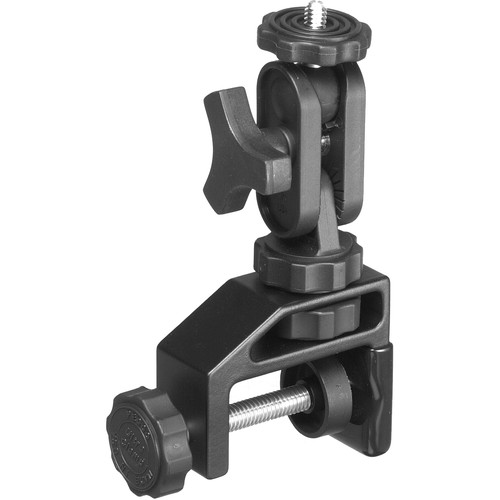
One of the ironic thing here is that I've ordered a new camera mount to replace the (crap) Delkin camera vice mount which became dismantled piece by piece with the first or second use. The ironic thing is, once I've placed this order, my brother managed to fix the Delkin vice. Anyway, I'm not sure how good the Delkin vice mount would be after the fixes, so two mounts are better than one. I didn't try the Delkin after the repair until now as I'm typing these words. The Pedco Ultra Clamp Assembly with 1/4"-20 Screw here has a high rating from users on B&H, but I came not to consider much of that. Delkin has a high profile as well and I AM the only one who wrote a negative review about it! Let's wait for its arrival and see how it will manage heavy weights.

Source: B&H
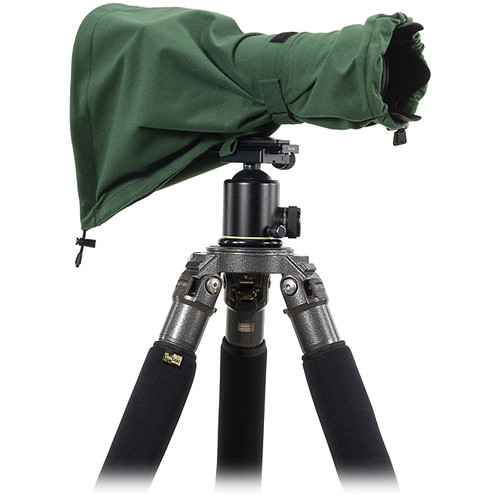
 I've always thought of doing shots in strange weather conditions. Well, not strange, but I mean under conditions that usually people try to avoid. For this reason I've longed for having one of those coats for camera systems. The LensCoat RainCoat RS (Rain Sleeve) (Medium, Green) would help me with this from now on, hopefully. I remember one time I had to spend few minutes in the rain waiting for my long exposure to finish. Ordering this sleeve, though, doesn't mean I'm looking for troubles specifically! But it is just something useful and good to have with you in winter specifically.


Source: B&H
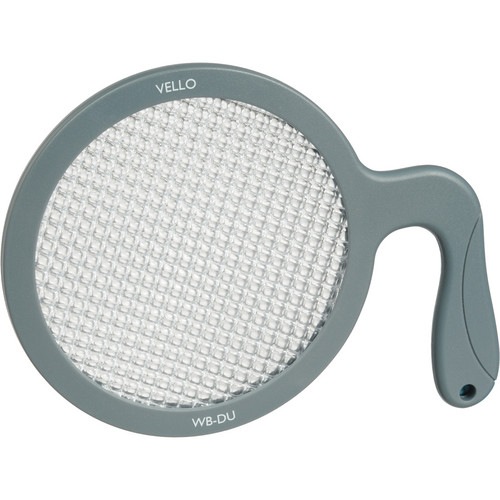
Finally on the list, I've placed an order for Vello Universal White Balance Handheld Disc. I've felt that I need such a tool specifically when working at night time in locations that bear lot of lights of different types. It does indeed make a difference when trying to fix all that in post-processing. The disc here is handheld and I think it is what I need - it doesn't screw to the lens like other WB tools available and it is up to 95mm in diameter. Thus, I can use it with many lenses now and in the future without worrying about the filter thread on the lens itself. The thing I'm not sure of yet though is whether I should take a shot of the disc with the same ISO as my original exposure or not. In my camera (EOS 7D) all I need is to take a shot of the body that I want it to be a reference for the WB, and then use it by Custom WB function. Does the ISO make a difference? Theoretically, it should not. We'll see!

Finale
Books, tools, camera, lenses and even artificial languages... where am I and what I'm doing? It's a weird feeling inside me; it's like hope and despair entwined together. There are lot of things I want to do, yet, something is stopping me. Well, beside the physical condition that is. At work now, more issues are awaiting and I must tend to them, beside doing my own business with the eye-checkups and Mom dialysis schedule. As much as I want to keep feeling strong, yet I can't neglect that feeling inside me; a feeling of betrayal somehow. Like someone had been left all alone by life, despite all the good things that I've been trying to achieve to others. I wonder if this is what they call midlife crisis.

Now, with my ideas for getting new toys, and new car as well, I do hope that my mind is taken off a bit from such melancholic thoughts for some time and get busy with other creative projects. With my new car (if I get to purchase it any time soon), I would be free to go to Failaka island some time, at least for few hours if possible. On the other hand, and because of the retinitis pigmentosa possibilities, I've decided to dig out for solutions for my brother, sister and me personally. I'm so sick of life right now in fact that I'm challenging it not because I like living it - there is nothing much for me here, but merely because I hate it, and if it was a man I would have strangled it to death. Thus, I want to do everything I can and RP won't stop me right now. I want to keep looking and doing everything I can do and reach with my ideas. One step at a time... and all alone.