Thursday, July 28, 2011

Moody Philosophy

Been a really messed up week. Busy and time flying by without control. Ramadhan is going to be next week (not sure which day I need to check the calendar). It is not a big deal for me as I'm used to fasting now, but because of the time shift in general, and because of the traffic jams that are just unreasonable, I would be getting tired more often.
Today's post will be somehow a long one, generally because I had some mood to do the experiments and things I wanted to do for some time now. Yet, I didn't include everything of what I did this week (like pictures I took from my work place!). Hope you find this useful anyway.


I. Beacho-sophy:
Been to the beach in early hours of Friday after a sleepless night, despite the tired body I got then. I really was not in the mood to drive but I didn't have anything better to do, so  I went there one hour after the sunrise time, and it was annoying indeed. You would think people have been spending their time overnight on that beach, and needless to say how the many annoying barbarians do act when they see someone with a camera. My main fear was, though, that some of families there might cause me a headache thinking I'm taking pictures of their kids. Very annoying.
The sun already rose above the horizon with some angle at that time. The light is not as warm as I wanted it like when it is at sunrise time, but it did make enough elongated shadows for my use. The problem with summer, and I believe it is something general and not only in this region, is that the sun doesn't give that warm yet not so harsh light quality in the morning or by sunset, and this is related to the relative inclination of the sun's path from one point of the horizon to the other. In winter, the qualities of light of the early morning or at sunset times are the best for more interesting play of light and an interesting play of colors (think of mixing the white cover of the snow with the coming warm light rays of the sun at sunrise or sunset making a balance between warm and cold into some interesting composition; alas, we don't get snows in this part of the world!).

I think I've went into some state that opposes the general trend of thought, or maybe this is what I think. I roamed the beach after breakfast in BK aimlessly in fact. The high tide didn't make any good spots for me. A low tide timing is the best to discover the rocks beneath, and those are the ones that do give an interesting look, like the old shot called Silent Observer.

Silent Observer

However, under the light of the book that I've finished lately, Harald Mante's Serial Photography, I kept my eyes open for different and ordinary objects that can make up a theme after all. In fact, thinking about it now I do have a lot of photos that can be grouped into some unique themes of themselves. After all, however, I rated the book for 3 starts out of 5 on Amazon. I think it needs more order and organized writing, but nevertheless, it is a source of inspiration!

Serial Photography: Using Themed Images to Improve Your Photographic Skills
Having this book in my mind, you would see things in a different way somehow, or in fact you might just begin hunting for pictures of things that people usually don't care about: mob, rocks, chairs, doors, rags... etc. This is exactly what I noticed myself when I came across some large stones and rocks that lay on the beach, but I have to say that HDR helped me here to emphasize the idea that I wanted to deliver. The image was edited first in HDR mode in Photoshop just to change the saturation and add some adjustment layers to fix the exposure and other color casts. Gave it a try with the manual tone-mapping, but, as usual, I've failed with an honorary degree! Anyway, I realized that a sharper look can be achieved when tone-mapping this adjusted HDR in Photomatix after all.

Rock and Rocks

Despite the fact that this image is already rejected from some stock sites, but I'm satisfied about it because I have an idea behind it. It is maybe a matter of Philosophy, or simply Psychology. If you are sure of something and expressed something in a way you are satisfied with, it wouldn't matter, maybe, if others refuse it after all. Of course this can't be general, as we have matters in life that enroll under "etiquette"! 
My idea is uniqueness and being separate from the rest. Being with others and being alone in the same time. In fact, I did take images from Ireland and from here that can be put under such theme. I'm thinking seriously of making a "tableau" or a large image that contains smaller images or thumbnails of images that go under the theme of Uniqueness, Alone, or Different. Good thing though I didn't dip myself so much into the water while taking this shot, as my feet were going down into the mud and the sea water was tickling my feet as well!

But if the previous image was done in a thoughtful way, this was not in fact the whole story. There are times when the concept comes later after the visual aspect. I like to call it a Reverse Philosophy, as it is simply a reflection on what did you take a picture of, and trying to find a philosophical meaning for it AFTER taking the picture and not while or before taking the picture itself. I think it is simply put: being the photographer and the viewer in the same time.
This happened as I was walking on the beach and found out a grating of some sort that I just don't know what it is used for, and apparently it was a really old piece because of the corrosion. The idea in the beginning was purely systematic and abstractive. I planted the grating in the sand to try to make a shadow the curves with the sand ripples. I thought it is a good thing to have an image where straight lines, make curved shadows at the same time...

Grated Shadow

Tried hard to make some interesting geometry or illusion by moving around and pointing in several directions toward the grate, but I guess this one was the best. It seems that I'm in the process of making my own style in shots, where I tend, automatically, to play with the visual lines of the object and swallow up the object to make it simpler or illusional. My spell-checker doesn't approve "illusional" so I'm going to say: tricky!
Another shot was made from the back in portrait to give some depth to the essence of the image. The sea water was included in the scene but was cropped out later, leaving the grate and the sand.

Beach Remains

The picture above followed the rule of thirds originally until it was cropped. Both of the images of the grate were actually processed from RAW files, but when I shot them, I did take bracketed sequence to prepare the scene for HDR processing. However, I deemed that unnecessary to do as I liked the colors and the exposure in one of the slides for each scene, and started from there trying to adjust more of the colors. It is dramatic enough as it is. I didn't clean the above shots from the litter dropped on the beach intentionally, as I wanted to add some "motion", specially in Beach Remains, to simply show for real, Beach Remains! It is the message of what we do to nature. Everything on this planet is beautiful, until we arrive in it. However, Grated Shadow specifically was a point to stop in my thinking. The meaning that I give to this image was simply added AFTER the shot and the processing and on location I really didn't have such thoughts at all. I can see it now as a show of how straight people in the apparent, do have crooked personalities at the back. Are we what we say we are? Are we straight (in manners) indeed, or it's just a bubble we are living? When the sun shines over, our shadows will become clearer to the observer, but in the same time, we might be indeed straight and good, yet the background makes us look evil. In the second picture you can see that the bent grate is actually forming a full circle despite the bend in its structure from the top. Go on and think about it. How would you interpret that with yourself?

Walked off from that location to hear a rumble on the road in front of the beach, to see that an accident just happened before my eyes! Two buses crushing each other's sides. Anyway, while everyone was looking, I prepared my tripod to shoot one last image. The shed. It is a common target for my camera on the beach but this time my thought was aiming at making a play out of it. An illusion that I was not aware of before. You can visually make the shed stand on 3 legs instead of its regular 4 legs!

Geometrical Play IV

This one too was processed from a single RAW even though I did take bracketed sequence, and guess what, I didn't notice the clouds in the horizon behind the shed. Things were like washed out in the location but the details started to show up when being processed. With adding some adjustment layers to fix colors and luminance, some banding in the sky appeared and I had to use some blurring techniques to render it smoothly with other areas of the sky.
I did try making a 3D image out of this scene but seems that I swung my tripod head so much, thus making the final 3D image containing a strong visual ghosting effect. However, my aim was to change my procedure somehow when I work on creating 3D images out of HDR slides. It is another story to tell, maybe on another day...

You might be reading the title Geometrical Play IV and wonder where was III? The fact is I didn't put Geometrical Play III in any posts on this blog. But just to make a good sequence (a new series?) I might as well list them here accordingly...

Geometrical Play I
Geometrical Play II
Geometrical Play III

As you can see, Geometrical Play III is only a merge between I and II. I had to overlap the two and manually blending the middle area to make it look like one pillar after all.

II. What Stop Are You?:
There was an experiment that I wanted to do some really long time ago, but since most of my work and inspiration comes essentially from a spark of a mood, I didn't really feel like doing it until this week arrived. This experiment is just to know how many stops does the welding glass (got it from ACE few months back) put down. The settings was not easy to work with and in fact I started in a wrong way in the beginning, because I was using a halogen light source.
I was thinking of a halogen source in the beginning because I thought having a strong light is essential, since I'm going to use a glass that is almost opaque. Yet, my measurements using the camera metering did not work quite well because of the hard light and the shutter speed went far beyond the speed of 8000 (max shutter speed for Canon EOS 7D), and that was with the highest f-number (smallest aperture) that my Tamron lens could give (f45).
I had to re-configure the set and use a less intense light source, so I chose a regular tungsten lamp of 60W. The camera was set on Av (Aperture priority) mode so that I would change the f-number and the shutter speed would be shown up by metering. The ISO was fixed at 1600, and this high value is just to make the sensor more sensitive after putting the glass in front of the lens, and of course this value must be constant before and after putting the glass.

The set after re-configuration

Of course the experiment was carried out in a dark room (almost dark as the time was day), and I used my Tamron here mainly for two reasons: A) it has a macro mode so I can fill the lamp within the viewfinder completely and put the filament of the tungsten lamp in the center (for spot metering), and B) this lens has the highest f-number among my other lenses (can reach f/49, but in the experiment that maximum was f/45). After obtaining the results and putting them into spreadsheets, I managed to get the Stops from the simple equation that I usually use to measure the time required to take long exposure shots: T = S * 2x, where T is the time after applying the Stops, and S is the shutter speed at metering, and x is the number of Stops. Simple algebra turns the equation for number of Stops as: x = [log(T) - log(S)] / log2.

Results of the experiment

The time here (or shutter speed) is in seconds of course. F-numbers below f/14 were neglected because the shutter speed required was faster than 8000 (that is 1/8000) and such measurements can't be considered for comparison. The maximum shutter speed for Canon EOS 7D is 8000. The average Stop number from all these values yields: 11.6635808068826; Of course I'm not going to include this number in my future calculations!! Thus, I can say the Stop of this welding glass is 11.7 as an approximation.
Another problem arise with using this glass, which is the tint. Welding glasses are usually tinted with some color, but fixing the WB might fix the problem as I did in this little experiment with the halogen lamp before. I'm not sure though how it would when it comes to a real scene with various colors around...

Halogen lamp with tint from glass

Fixing the tint with WB in RAW editor (added a bit of yellowish hue myself)


Now with such experiment, I might be able to use various materials and not necessarily glass to make up for filters! However, I'm stuck now trying to cut the glass piece to the size of Cokin Z-Pro filters so I would be able to fit it in the adapter as a regular filter. I'm lucky too that the thickness of the glass is acceptable and fits in the adapter, so all what I need is to cut it. So far, I couldn't find a shop to cut this piece and one shop told me already that I need a special type of shops that make glasses for cars' windshields and the like because this glass (the welding glass) is a special variety and might not be cut properly with regular methods! I might end up having to make up the holder myself in some DIY-way! Even with that though, I'm waiting for the release of new quantities of ND100 filters from Cokin which put down 6.6 stops. I read on some websites that the product was called for from the manufacturer for some reason. However, I'm waiting for notifications to my email from B&H whenever this product is available.

Finishing off this camera-trend with long-awaited writing capabilities. I've been busy with work lately. I have to do an experiment with some apparatus and take some readings, and I prefer to do it by early hours of morning so I would be able to do other things the rest of the day (at work). I really need to work on hard brainstorming on both fields: photography, and writing. Not an easy task at all.
Capture: Digital Photography Essentials (English and English Edition)I'm spending my time reading the last of the three books, which talks about the basic of the digital camera and photography, even though it would feel like I'm coming late to the class, but I'm learning new things still even if I know how to use my camera. Well, I can use the basic functions in the camera but still there are lot of things that I need to work and sort out and read about.
However, I've been trying hard to put some lines that were roaming around in my mind into some verses, and I had to sacrifice my time at work that I would specify for reading this book, to write what I wanted to write. I think I suck at time-planning, as usual. I need to sacrifice more for my Ayvarith projects and the sound-recording that I'm still not able to do. Anyway, my new written piece (call it a poem or a lyrics, as you like) is called Of You, All I Need, and maybe I should say, it is a dedication...


Of You, All I Need

Thinking of you till it hurts,
six thousand miles to fray.
Mimicking actions of love,
passionate dreams as they may.
Wondering about,
Searching around,
All what I envisioned seems untrue.

Seven seas or lands,
staggering winds won't stand,
for a peek into these eyes.
A signal is all I wait,
a heck of improbable fate,
watchin' it goes on by, by my eyes.

Through the distance,
I've burned my fire,
in hope of a glancing heart.
Through the silence,
I sought the patience,
when my world was fallin' apart.
Just a glance, though,
just a glance, now,
of you, all I need...

In the matter of the fact,
whether dead or alive I stay.
My mind is a conquered,
and my soul went astray.
Wondering about,
Searching around,
for something without a clue.

A flame of desire,
driving me to the higher,
to something ever untouchable.
If only this hand,
expands to stand,
some of this worried collectable.
I'm into pieces...

Through the distance,
I've burned my fire,
in hope of a glancing heart.
Through the silence,
I sought the patience,
when my world was fallin' apart.
Just a glance, though,
just a glance, now,
of you, all I need...

O my saviour in the gloom of troubles,
my smiler when my frowning doubles,
how did you leave me,
at a broken heart?


Thursday, July 21, 2011

Casper...

A sort of an idle week. Been trying to figure out some ways to use my camera here and there and totally forgetting about my Ayvarith projects COMPLETELY. There were attacks of fatigue, maybe because of my long gone fasting, I'm not sure really. However, it didn't go out completely idle as I was able to reach my camera somewhat, but most of the time I was working on old pictures from Ireland, dating back to 2009! Simply, I just felt like paying a visit to these pictures and having some rest myself, and tried my best to touch the RAW files only, without creating HDR.

Done an experiment just to test how it is to do some long exposure. If I remember correctly, the longest exposure I've done before was for 5 minutes on the roof on my house, when I was testing my new (back then) lens, Tamron 70-300mm Macro lens. I was pointing at Saturn if I remember correctly and made a little trail.

Trail of Saturn. Two trails imposed on each other.

This time the experiment was a bit different, and with me reading the new book I got about Night Photography (a great book, makes me want to try my luck with film cameras instead of digital ones), I'm getting inspired as I read, but unfortunately lot of my dreams need some nice landscapes and some nice people to be surrounded with. I went into trouble with cops before and I'm really not intending to have more at the current time.
My little experiment was to use a longer exposure time, but not outside. Simply in my room. I got the idea as I was reading the book (as usual, in my bed time to help me fall asleep more easily). The process to measure for the required time was somehow long, and I had to use a ND filter in an awkward position, because I was using a Fisheye lens, and in Fisheye lenses you need to a Gel filter to be placed at the back of the lens and not in the front of the lens, but I did it anyway and I stuck it with a duct tape even though it fell down later on because of the bad quality of the tape! That didn't affect the result much. It is an experiment after all and the results were not to be published in stock sites.

Night Photography: Finding your way in the dark
Night Photography by Lance Keimig
 

In the beginning I've fixed the camera in one corner and turned off the TV just keeping my PC monitor on (need it). I mounted my Fisheye 15mm lens to get a bigger portion of the room and went on configuring the setting that I would need. In fact I was aiming to expose for one hour but with all the mess in the mathematics the maximum I could achieve was 44 minutes, theoretically. I wanted one hour to give chance for more blur as I would lay in bed later on and, as usual, I would flip all over the place.
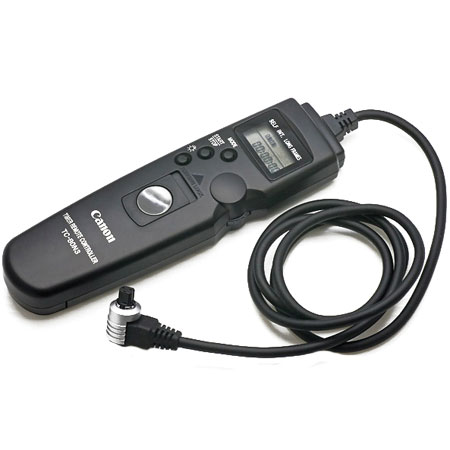
I've fixed the mode to Av (Aperture priority) and pushed the ISO to the maximum value "H", which counts for 12800. This is just to take the reading for the time needed at this level at 0EV. The time reading was about 20 seconds, taken while setting the metering to Center-Weight. I used this metering because, logically, I want the whole area to be measured and averaged and not only one spot of the scene. However, with some calculations and keeping in mind that going up and down in ISO in stops, will increase or decrease the time in doubles or halves accordingly (a stop = 2x), all what was to be done is multiplication (20 seconds X 128, or 27, that is 7 stops) and the result was around 2560 seconds (i.e. 43 minutes approximately). The ND2 (one stop) was stuck to the front of the lens hoping to increase the time of exposure and keeping the exposure as it is but seems I've done some wrong calculations here and there was no need for it. With my intervalometer remote control then I've fixed the exposure time to 44 minutes, and changed the mode to Bulb of course for such long exposures (and had to change the battery to be on the safe side).


TC-80N3 intervalometer (remote control)
Image Source

Snapshot from ACR (Adobe Camera RAW editor) with the time of exposure circled.

The histogram above is not a good histogram under the light of what I've read recently in Keimig's book. It is better, as mentioned, to have a histogram pushed toward the highlights (to the right that is) as much as possible (and clipping would occur most of the time) and it's just a rule of thumb, as this would grant a good exposure for the shadows. The histogram above was adjusted to avoid clipping from both sides. Few minutes after fixing everything and after opening the shutter (with a timer to give me time to go to bed first!), I've heard a sound of something falling down, and no wonder, it was the ND filter. I knew it would fall down with this bad quality of tapes! I didn't try to fix it but rather left it like that to see the results later on and the fact is, it didn't change much of the exposure.

Sleeping Ghost
general view

Sleeping Ghost (cut)
zooming into the blur movement


In fact during the exposure I did indeed get up to do something with my PC and get back to bed but such movement was not recorded in this long exposure because I would need to stay more into one position and then move to record my image on the sensor. My movement to the PC and back to bed was fast so it was not registered on the sensor, but instead all what there is to see was my flipping in my place. A nice experiment that makes me somehow confident about my approach to this matter. Hope I can target the sky soon.

Another trial took place, with my little gift to my niece for her birthday. Well, I have to say it is a cheap one but I guess she wouldn't mind :). The take was to take a picture of it with a candle light, simply because I was sick of using that softbox I've made myself. It's clumsy and bigger than it's supposed to be I think. The shoot was done with Tamron 70-300mm Macro lens, as I wanted to get a closer look on the stones.


Juveler (jewels)

Juveler means "jewels" in Swedish. Why I chose Swedish? I don't know. Probably because I have now many Swedish online friends via MostPhotos, anyway the sound of the word was appealing to me. Yu-ve-ler. Has a sense of Turkish if you ask me (plural article in Turkish is -lar or -ler)!.
Despite its simplicity, the white balance here was hard to pick up and I had to adjust it by the RAW editor. Anyway, I preferred the hot tones to reflect the goldish hue (gold is attached to money and jewels and richness in general) even though the bluish hue when using Tungsten WB was appealing as well. Many ideas were crossing my mind just to shoot this simple bracelet, like long exposure (but there was no need for it really) and focus stacking. Focus stacking was probably more reasonable to do, because in such macro lenses the shallow depth is common and it depends on what kind of effect you like to achieve. If you want to increase the depth of field, then, focus stacking is the solution (and more work awaits) to include the whole subject into the depth. After looking at this result here, I think I can say I'm satisfied. The blurring effect at the back is nice enough. One thing I'm not satisfied about is, the luster of the stones. I wanted them to sparkle but I think I should have changed the angle of the light or the camera. I need to read more on this topic specifically.
Still working on some vertical panoramas and trying to understand more about the looks and trying to make a decision what would look good or bad about them. I can say that I've discovered that not all locations might be suitable for this. Naturally! Not all structures are suitable for such panoramas (or for other types of techniques as well). This is nature I believe. There are often times though when flipping (rotating) the point of view (the roll) would be better, but you might sacrifice some aspects. This is exactly what happened to me.


Alice in Thornbrook
Considered, by me, one of the worst panoramas I've ever made. This panorama can't be stitched directly in HDR, but I had to go around and tone-map, then stitch. However, what I like is the light lamp in the ceiling which gives an illusion of a tilt while the ground is straight still, and the window on the right which gives a depth to the inside. The image is for the dining (or breakfast) room in Thornbrook House (B&B) where I stayed for 14 days. Miss those days.
Another panorama, which was a bad too, and even worse than this one because of the shake and shifts of the tripod and the VR-head rotating my camera. This panorama even got severe stitching errors even after stitching the tone-mapped version instead of the HDR version.


In Terra Horologiis (in land of clocks)

I like the tones, and the window on the left, which like the previous vertical panorama gives some depth into the inside, but the bad part is that it has so much distortion in the chairs and clocks, and other furniture pieces. Unlike the previous one, which was a simple room, the lounge was filled with objects making distortion in such locations appear so severe. Conclusion: Always check the location and see if you can re-arrange objects in case you would think of doing such vertical panoramas. Also, don't forget the roll part, which can be a good trade between good features (like a window in perspective for example) and the good looks (not much distortion in vital parts).

It's Thursday, finally. I'm praying for some rest now after a week of unexplained fatigue. Words are stuck in my mind and can't put them on paper or on monitor. A sense of panic and fear occupies me from time to time but I don't know why, and my daydreams are having a great toll on my mind with negative thoughts. I'm going to hit this Post button and try to forget the world while reading a book... by the way, did you know that I hate Internet Explorer? Yeah...

Serial Photography: Using Themed Images to Improve Your Photographic Skills


Thursday, July 14, 2011

New Heights...

What a mix of a week. Slow and fast, but nevertheless, I'm happy it's over already. To me at least since it's the last day here and the beginning of a weekend by tomorrow. Started out the week with a drama when the AC stopped working suddenly and the weather was humid, at a time I was already planning to do some experimenting with my camera on the roof. Anyway, after fixing the AC and after having a shower in sweat (then a shower with real water), everything got back to normal. Literally speaking, on Monday, July 11th, I did NOT sleep at all, and even went to work the very early morning without sleeping prior to that (I was awake since 7 p.m. the Sunday before). Could not sleep until the next day, Tuesday, at around 2 a.m..
I got some story here to tell, but before I go on talking about it I got to announce that I got a new tripod now (headless) and I think I've should have had this long time ago. It fits my VR-head perfectly giving more stability and on the other hand I can fit a previously-purchased tripod head (or panning head) separately. This pan head has one handle to rotate around making it easier (and faster) to handle rather than using two controls for panning sideways and vertically. I couldn't find this brand on the net or on B&H, but it's called Fancier, followed by some model number.
Just as a little review, the tripod is extremely useful for my work specially when it comes to panoramas, and it extends to some lengths longer than my previous tripods (only matched maybe by my monopod). The camera can fixed on the central column of the tripod either way (up and down). The weight is not an issue, but I have to say it is a bit heavier than my previous aluminum tripod. The legs can be stretched out to low levels as well (giving me some ideas now).
Now to the bad points: It doesn't have a handle to carry around. To carry it around I'd have to put it in its case. It does not have a lock around the central column to hold the 3 legs firmly, making sliding legs a possibility.
I've measured the full length of the tripod extended, with central column completely stretched, and having my VR-head above that, it gives out a length of around 204cm (~ 6.69 ft), and that inspired me for a little thing to do, as I will explain later. Now let's start the little story...

1. Chapter One: Idiocy:

Yes; Idiocy. I admit (but maybe you need to look in the mirror in case you are laughing now, ahem). Early this week, I was going on and on trying to figure out a way to extract a vertical panorama out of a full panorama, which I did successfully, with delicate calculations and procedures. To explain this, I might need to draw a little diagram.

Panorama Plan

Instead of using the slide numbers that I usually get after converting to HDR images for the panorama stitching, I'm using simply numbers for angles. The outer circle is for the horizon or 0 degrees tilt, and the inner circle is for 45 degrees upward tilt. There is no need to use a downward 45 degrees tilt when we talk about vertical panoramas, but maybe in certain occasions it might add some depth by putting more of the background. The middle point "Z" here means the Zenith of the panorama. I will be using the notion "^" for angles on the inner circle.
Now, an example to work with. The first target to work with was the Ardeaglais, as I explained in the previous post last week. This vertical panorama followed with the same plan, but as a comparison I will put it here again...

Suas agus Síos (up and down)

To make out this panorama, I've started with frontal angles first [12,1,2] and start from there going upward [12^,1^,2^]. At the zenith, I realized one slide from the zenith won't be enough, so I must take others on the side, i.e. [10^,4^]. Now, the hard part, which had to be done outside in Photoshop then plugging in the results into PTGui. The coming part includes the slides at angles [8,7,6] at 0 and 45 tilts (notice that I keep the order from left to right). I had to rotate these slides upside down to mimic the view of upside down (duh!) because simply, I couldn't change the rotation of these slides within PTGui without affecting the whole stitching process. The stitch was successful, to some degree, and the image was there online.
Later on, I thought that this is not enough. The vertical panorama was too thin to my eyes. So I decided to include more width, and that is by taking angles 11 and 3, and also 9 and 5. This inclusion meant I had to include more from angles 10 and 4, and other work related to flip the images of the lower side and... wait a minute! huh! How come I didn't see this coming...

The Hanging Dominican
more width added.

2. Chapter Two: Spark of Light:

In case you wonder why I named the last chapter "Idiocy" and didn't know why yet, well, here it is! After working with the above panorama, The Hanging Dominican,  I realized that I'm practically... using the full set of the panorama! Should I flip some and keep some? Is it really easier than I thought? It's really amazing how we lose our conscious when we concentrate about details of procedures and forget about the whole picture or concept! The whole procedure of flipping images before stitch, picking the proper slides, and all the fuss in the memory because of that - all of that could have been avoided by a simple touch. Changing the pitch parameter for the spherical panorama and point it upward to the roof! As simple as that! The width of the panorama can be controlled then later on by cropping in Photoshop after all.

Monkish Design
full spherical panorama with changing pitch orientation

3. Chapter Three: Complicated Simplicity:

Now, this is something related to panoramas but it's not related to the previous points before. I explained above some aspects of my new tripod and I had plans to try it out on the roof. I thought such good height that this tripod can provide for me would be a good start to see how it works with a simple panorama from above. I had to climb on the highest point on the house and from there spread out my tools. My aim was a simple panorama; a 360, i.e. one horizontal line.

Homeland Summer
Despite its simplicity, the stitching took me hours to fix, and I'm still not satisfied with the results. Technically, the process of taking the panorama took me less than 5 minutes, literally. To take this panorama, I used a method that I've read about before but never used it, which uses metering for highlights and shadows of the scene with a fixed aperture (f-number) and then take the shutter speeds that you get from metering, and work in Manual mode, fixing the shutter speed to something in between the two shutter speeds (of the highlights and of the shadows). This way would make a coherent exposure across the whole set, but it didn't work quite well probably because I'm in the open sun (and I don't want to talk about the heat).
For some reasons unknown to me, there was always break in lines even in this simple panorama, and optimization would fix this but with some weird stretching lines (caused by distorting some images to fit some areas down there). The biggest problem was one of the slides didn't have control points to stitch with others, and fixing my own control point did make the situation worse. I tried to optimize the exposure in hope that would fix the control points problem (exposure might be a factor for not recognizing some points or pixels on adjacent images, sometimes), but that didn't work out. There was some crop in some of the slides, but it was not much of a big deal (one to three pixels I believe) so this reason was rolled out.
Finally and just to get the process going on, I gave up stitching in HDR. I simply tone-mapped the whole set, and stitched from there. The set was stitched nicely without any loss in control points! Since I'm satisfied with the colors already, I thought it's not needed to save the control points and stitch back in HDR to tone-map again. No need for this. There were some broken lines and optimization saved the work, but with some stretching in the lower portion (can be apparent even after cropping it in the image above). Left now with problems of noise and grain pixels which were hard to remove without losing some details. I still don't understand why such problems occurred in such a simple panorama as this one...

My books arrived now and I can "waste" some of my time reading. Three books they are:

Night Photography: Finding your way in the dark 

Capture: Digital Photography Essentials (English and English Edition) 

Serial Photography: Using Themed Images to Improve Your Photographic Skills
Of the three, the Night Photography book is the one that captures my interest the most. Did I mention that I have an artificial language to look after?...


Thursday, July 7, 2011

Arithmetical Endeavor

I can't believe it's Thursday already. I don't feel even being in this office and typing this! I'm fasting, true, but who said I can't sleep more? I'm just hoping the weather would stay stable as it is now...

Yet, who said you should adhere to the bad weather? Well, maybe from the safety side, yes it's better not to do anything with your camera without proper cautions taken care of. Well, I don't have such cautions, but I decided to work in the dust when we had a strike of a dust wave (as usual, every weekend). I didn't do much with my VR-head for some time now so I've decided to go and try it out there, in the yard of my own home...

Still a Home
The tone-mapping of this HDR panorama got me by surprise. My aim was to find a yellowish hue for the image but when tone-mapping I found out that however I change the slides it just turns out with some shade of magenta. Even Color Balance in Photoshop did not correct much of it. Not planning to do it as a QTVR, so I've decided to cut out the bottom and some of the top instead of cloning out as usual. I'm studying now more methods for easier Nadir shooting. I have to admit though that I was lazy here. I needed to do more of "selective" tone-mapping; like tone-mapping two versions of the HDR and then overlapping them and do some masking between the two. The level of black is exaggerated to add some melodrama and melancholy to the scene by the fact that it's a dust wave accumulating on the ground (taken at noon, the dust wave started around morning).
Not one of my favorites I have to say, anyway I had to do one more task with this panorama; tunneling. This time though, I had to go further before tone-mapping and do some edition in Photoshop to ensure the yellowish hue for the whole panorama and avoid that magenta look and shade. Some cropping as well was used just to remove a remnant of the tripod handle in the stitched image.

Being a Grain of Sand

The title was inspired by Simply Red's song Say You Love Me, because when I saw such a view after the final adjustments, I couldn't help but to feel tiny compared to the structure (which is supposedly to be my home!). Speaking of yellow of course doesn't mean to make it bright (I hate yellow), but a dark golden hue is fine. I think it's attractive to the eye.
This simple experiment now is pushing me further to think more about abilities and capabilities in panoramas venture. I'm quite convinced now that my tripods are not useful to this VR-head at all. Specially that the handle of the tripod would show up in the panoramas (and it is large and needs to be cloned out carefully). One of the methods for shooting the nadir might be useful in compensating this and dropping out the appearance of this handle in the panorama (by using Point of View optimizing in some detailed work). I hve to try this out one day.
Beside the tripods, I've realized that I can subtract a vertical panorama out of a full panorama! However, it's not going to be an easy task and if I'm aiming for a vertical panorama originally, then I better do it that way. The thing is, I never tried doing a vertical panorama with my VR-head, and to do so I need to flip the Vr-head (L-shaped) to make it horizontal, so the camera would rotate in a circle vertically. Not an easy task with such head mounted on such tripods I have already. This is one of the reasons to think about a new specialized tripod with exchangeable head, if possible.
However, beside this technical observation, I'm not somehow aware of the necessity to stabilize my work with panoramas in a coherent way; that is to make my procedures with every panorama I tend to do more regular and similar. Such regularization would make my work easier on computer in case I needed to extract a file from the whole set for any purpose, like that for a vertical panorama. Making a mental note now, I've decided to:

  • In each row, I will be taking 13 angles (0 degrees to 0/360 degrees) instead of 12. Used to do a mix between the two method, but I have to fix the number of angles in each row to this. One extra shot might be useful later on.
  • Despite the difficulties that I will encounter, I need to take a row at 45 degrees up and down. In the above panorama of my home, I tried to take two rows down at 25 and 50 degrees, hoping that would help to clone out the legs of the tripod naturally, but I was wrong. We are back to the old ways.
  • Two zenith and one nadir shots will be taken, each perpendicular to each other. This would help me out later on in case I need to extract a vertical panorama from the full panorama. Usual angles are 0 and 90. Complications expected for nadir.
  • Shoot the upper 45 degrees first, then 45 degrees below second. This is to keep the numbering of the slides unique for every panorama I would have to go through, e.g. slide #14 will always point to the shot taken at 0 degrees tilting 45 degrees upward (0,45).
  • Always shoot Zenith and Nadir at the end. Zenith first, and Nadir second. Nadir though is still to be considered as I'm trying to find ways to overcome this hard angle.

This said, it leaves me with some calculations to do to know where I stand and what I'm needing here, excluding the fact that I always shoot for HDR panoramas, I will count the number of angles as single images:

  • 13 angles X 3 rows (0,45,-45) = 39 shots.
  • 2 Zenith + 1 Nadir (might be 2 with complications) = 3 (or 4).
  • Total: 42 shots (or 43).
  • Slide numbers for the 4 basic directions would be (number,angle of rotation): [(1,0),(4,90),(7,180),(10,270),(13,360)] @ 0 degrees vertical. [(14,0),(17,90),(20,180),(23,270),(26,360)] @ 45 degrees upward. [(27,0),(30,90),(33,180),(36,270),(39,360)] @ 45 degrees downward.
  • Zenith will be on slides 40 and 41. Nadir will be on slide 42 and beyond.

I hope this systematic division of the panorama procedures would make it easier later on to solve problems as well whenever they occur before stitching (e.g. adjusting the exposure with respect to the surrounding slides).

  • Ardeaglais Cormaic Into Play:
Speaking of the vertical panoramas above, I've had a try with one of the first panoramas I've taken back in Ireland, in Cashel: Ardeaglais Cormaic, or Cormac's Cathedral, situated on the top of Cashel Rock hill, along with the castle of Cashel Rock.
The reason I chose this panorama specifically to work with and try to extract a vertical panorama from, is the dome that decorated the zenith in that place. I have to admit though I didn't situate myself exactly in the center under the dome but it was good enough to show the details of this dome. It would look great, I thought, to find the pillars that hold the dome in a weird shape going up and down and connected to two grounds; up and below.
Several difficulties arose. First, I had to re-merge the images into HDR, because I've deleted the previous files that were done for this place (to save place). Picking the required slides for this vertical panorama from the whole set was relatively an easy task (but a matter of memorizing the place in mind and picking the required ones). At this point, the matter of having a vertical panorama done directly at the place, and with the camera moving up and down in a circle, showed evidently. If I was do it again, I would set the camera in landscape orientation and go from horizon to horizon in almost a full circle (excluding the nadir point). This way, with a fisheye lens, I would have a wide-enough view to stitch over.
Our case here was different. The full panorama, and because of the VR-head, was taken with the camera being in portrait position, and because of this I had to consider 3 shots for every elevation or level. The total slides needed for this vertical panorama totaled 15: 3 at 0 degrees, 3 at 45 degrees, 3 at zenith (zenith + 2 on its sides), 3 at 135 (or -45) degrees, and finally 3 at 180 (or 0 backward) degrees. Now imagine we do this landscape orientation, we would probably need 5 slides only considering the wide (horizontal) view of the fisheye lens.
Second hardship appeared shortly after, when I realized that I can't flip certain slides in PTGui and make them stitch upside down. Maybe there is away and I don't know of it yet, but I didn't waste time here trying to figure out. I realized the best way here is to flip the slides themselves (i.e. open them in Photoshop, turn them 180 degrees upside down, and save them into a new file). Mainly, the files that were causing the problem were 6 slides that come after the zenith level (i.e. from 135 degrees and down to 180).
Third problem occurred when, after stitching, there were some high level of artifacts in the final result. Hot pixels (weird colored pixels in the dark areas of the panorama) and other splashes of colors. I had to go back to PTGui and tried to change the settings I've used to do Exposure Optimization in the previous stitch, and after that I've saved the file in OpenEXR format (.EXR) instead of Radiance format (.HDR). The problem was greatly with some need of fixes still, but it was much better than previously done. The thing is, I don't know what solved the problem really; the file format, or the change of exposure optimization settings? I've noticed some differences before in quality and other parameters between the two formats for HDR files. I won't be surprised if changing the format from HDR to EXR did indeed solve the problem. Finally the result...

Suas agus Síos (up and down)

There were of course some adjustments as usual and some blue strikes that I had to put down by Hue/Saturation adjustment layers. Before tone-mapping as well, I went on fixing the white spaces between the arches to give out some details before the process of tone-mapping, by changing exposure and gamma values. Over with this project, now I would think of other panoramas and try to predict their outcome in vertical panoramas like this.


I'm trying now to understand the concept of exposures more, specially for night photography and long exposures. Along with that, I'm delving more into the concept of metering as it is an essential part of the whole process for long exposures and night photography. I even got myself a new calculator to keep it up in my camera's backpack just in case I'd need it to estimate relative stops and exposures. I don't know how it was hidden from me all this time but the concept was simple all the time: a "stop" is a factor of 2. Increasing stop meaning doubling the exposure, and putting it down then we are halving the exposure. Then, a simple formula can be used in a certain manner to have a long exposure (with aid of metering), and thanks to the many websites that were filled with tips (too many to mention here):

T = S * 2x

where T is the time needed to get the same exposure at metering, and S is the shutter speed (time, in seconds) at metering, and x is the number of stops in play. Now depends on the situation, the formula might change for something else other than the shutter speed, but here I'm sticking myself to metering the scene in Av mode (thus knowing the shutter speed needed to achieve 0EV level). We would have to add several factors in case we are changing the stops in more than one way, like changing the ISO and the f-number (aperture), as well as the shutter speed itself.
Now, to my experiment, and here I've been changing the stops simply by adding ND filters. The experiment was simply to shoot a light bulb behind the window bars, and adding water sprinkles to make some sort of halo around the light source. In this case, we have to do a reverse engineering of some sort. Not exactly, but simply use the formula the other way around: I want to know how many stops I need to put down to make the shutter open for 5 seconds; long enough to sprinkle water in front of the camera.

Behind The Bars

With simple algebra, we fix the time to 5 seconds, and we have the shutter speed known from metering the light bulb, and what is left was the number of stops only to know what ND filters to use.

log2(T/S) = x

or in case the calculator can't calculate LOG for bases other than 10, then it would be:

log(T/S) ÷ log(2) = x

Using this formula, the result was 3 stops. Thus, I need to use ND8 filter, which reduces the light by 3 stops. Bear in mind that there will be fractions, so approximations are in use here. The result was as I liked, all I had to do is click the shutter speed (with 10 seconds timer to give me more time sprinkling water in front of the camera). I tried to shoot normal HDR for the scene but merging into HDR was problematic with the noise level, despite the nice blue shades in the shadows that showed after changing the color temperature, when merging, to fluorescent. I gave out the idea of HDR for this scene and I'm satisfied with what I achieved with water sprinkling on the scene. I have to say that water seems to increase the the luminance of the scene a bit, and probably it will be a dramatic increase if it was not sprinkling the water!

Weekend is here, and I'm so frustrated at what to do next. So much in mind and so less in power! I have to burn this mind for some photography ideas. I'm planning to order a new set of books for now. Would be good to spend time at work reading some of those. Not sure yet about the books I wanted, but surely one them would be about Night Photography.

Uh Oh