Showing posts with label exposure. Show all posts

Thursday, April 17, 2014

Ikaros 2014

Finally done. One more objective is off the list: A visit to Failaka (Ikaros) island. To avoid any rush, I had to book a ticket almost one week earlier and I was lucky to make it in the middle of the week; as the ferry schedules are becoming more congested in weekends. My travel set off on Wednesday, and I came back on Thursday after spending one night there.
Luckily this time the reception in Ikaros hotel didn't make a big deal of me being a single occupier. There are certain laws here that I just don't quite understand, but anyway, what to understand nowadays with many other laws?
The quantity of photography this year from the island wasn't as much as before, mainly because I was busy exploring rather than getting inspired; specially with me having a new car better acquainted for desert and rough conditions. There were some nice geographical features but artistically, they won't have much value in the eye of the camera, but they were something for the eyes to please.

Ίκαρος

The first day wasn't full of activities in fact. As I've stated above, I was mainly busy exploring. I've found the idea of recording some videos a fancy idea to include more about the atmosphere on the island - specially with some spooky sense at some specific places!
I won't be placing all the eggs in one basket for this post, since I'm still working on sorting out the images and trying to fix some of the images (specifically for the noise problem). Summer is coming, and my chances for a good long exposure are diminishing slowly as well...


The video you see above was taken in the court of an old mosque (now just ruins as you can see). These banging sounds prevented me from going further deeper inside, but I had the chance (and courage!) to climb up the narrow minaret(1). The bad thing is, I didn't have any shotgun mic, because the wind was blowing up there and my voice was barely apparent...


Though I had an idea to take a panorama up there from the top of the minaret, but the conditions were bad and dangerous. In fact, I couldn't even climb up to the top of the minaret with my gear, and I barely made it out with my backpack only on my back and the camera dangling from my neck. Up there, I knew there is no place to place my tripod and VR-head, specially that the location was not central. Since a panorama up there would (and should) be handheld and merely few shots to be stitched, I've decided it's not a big deal make the troubles for and a video up there is enough.


I had some troubles fixing the exposure in the video. As you can see, I had to stop every few steps to adjust the "shutter" of the video. I'm not a videographer, thus such concepts are somehow beyond my understanding. Probably because the lens here is Rokinon 8mm fisheye lens, which is completely manual, the camera didn't adjust to the lighting conditions automatically. Just a speculation!

I've left the mosque after taking one shot only (before doing these videos) and still till this very moment I'm wondering what was that banging sound that was coming from inside. The sound in the video isn't as loud as it was in reality (mainly because of the limitations of the camera's mic). I'm pretty sure, it wasn't the wind. The loud noises made by these bangs point to a staggering wind, yet it was breezy with a nice atmosphere - only up in the minaret, the breeze become a bit faster (but recorded in the camera loudly!).

As I've stated before, I won't be putting all the eggs in one basket; otherwise it would be a pretty long, thus I will just state the activities of the first day on Failaka. I'll leave the next post (hopefully) to discuss more thoroughly some of the panorama work and panaglyphs.
In the first day I've went deeper into the desert land, far away from the urban (uninhabited) side of the island. Lot of geographical features and nice green spaces because of spring, and lot of troubles too as my car got stuck at some point but I was lucky to pick it out! At the end of this journey I decided to take a shot of a lonely tree, with a twist...

Μονήρης
Canon EF 50mm, f/1.4, ISO100.

This tree, for some reason I'm not quite aware of, attracted me for its simplicity and loneliness. I tried to add some twist to it by shooting with infrared filter and in HDR bracketing. I've used here the 50mm lens with f/1.4 (widest aperture) which enabled me to work fast even with an infrared filter - helped by the sun in the middle of the sky as you can see from the shadow of the tree. In processing this image, I had to process each RAW file for infrared as I usually do with infrared images, and then convert the shots to TIFF. and only then HDR was merged from these files. Merging infrared RAW files is somehow, senseless. The surprise here is to see that the image retained its greens on the leaves of the trees after being relatively lowly saturated or almost black and white when processed in RAW! The rest was a job of fixing the vignetting and the saturation of colors, and of course, noise reduction.

The night hovered over Failaka and I was reluctant to go out in the pitch darkness on the island; there is no electricity except in few buildings in the periphery of the hotel. No street lights. Anyway, I decided to head out not far from the hotel and try some long exposures. The disappointment is, to find the sky out of any significant features; and needless to say that the periphery of the hotel wasn't much in features that help formulating a foreground to the images - the only thing I could think of is the ruins of some old clay house which I've taken shots of before several times.

Εδώ Είναι ο Ίκαρος
Canon EF 100mm macro, f/11, 18m, ISO100)

Surprisingly, one of the first problems was, what lens I should use? The 50mm made the features of the ruins somehow far away. I didn't want to use the sigma 70-300mm here simply because I was hoping that a prime lens would the image better - I'm expecting a load of noise already as the weather wasn't cold enough! Thus, my only choice as it seems was the 100mm macro lens (of course I can use it as a telephoto lens!), besides, the proportions when applying the law of thirds looked appropriate. To focus here, I had to keep my car's light on and pointing to the wall, then turn them off after auto-focusing was done. Several test shots in ISO12800 were due of course and then the work began with a 18 minutes exposure. However, before starting with the exposure, I had to do some testing for the White Balance. Even though at night times, the Tungsten WB is my usual choice, here I've decided to sway a bit from the typical and headed to Fluorescent WB (which I typically choose for dusk and dawn times). I didn't regret this choice afterward when the file was processed and gave out an astonishing blend of yellows, and blues! The only bad point here, the sky was featureless (not even clouds were present till next morning).

Υπήρχε
Canon EF 50mm, f/11, 9m, ISO100.

Just to show how much dark it was even near by the hotel, the other portion of the ruin was not visible until I took the previous shot and started to move backward with my car, when the car lights fell upon this feature, and thus decided to stop and do something about it. Because the focal length here is smaller and more landscape is included originally, the exposure time became almost half of what it was before, rounding to 9 minutes. Since the general atmosphere is not complex in terms of composition and quite normal, I've thought that the only way to get something interesting out of such settings is to produce unnatural colors, and here, again, I had to bet on the white balance change. This time though, it was set to Shade WB. This white balance made the image in general quite yellowish with a golden theme. Something magical a bit. The car's and my shadows were present in the foreground because of the lights not far away from some building - the shadows can be faint on location but they persist with a long exposure; something that you MUST be careful from. When processing the image, the noise level was hard to fix; the general noisy population on the image was reduced, but many hot pixels or hard spots remained. As for the shadows, I tried to clone them out but I chose the easy way out: crop the image into a square. A small sized image like Υπήρχε above, can be easy to look at and pleasant to see, but I wouldn't risk printing it on some large prints! Probably a canvas would be fitted the most for such printing method to suck in the noisy appearance as much as possible.
(1) Despite the fact that the word minaret is used now mainly to note the tower of the mosque, in most of English speaking word, the word itself is a misnomer. The word "minaret" is derived from the Arabic word Manárah [منارة] which means "the place of light" and used for the lighthouse. The proper name for the mosque's tower is Mi`thanah [مئذنة] in Arabic which means "the place of the prayer-call". It is probably one of these words and concepts that got lost in translation over time.

Finale

This is part one of Failaka's print, and hopefully more to come next week with more discussion about panaglyphs, anaglyphs and panoramas and some fixes to the ghosting problem (more like reduction in the fact).
I've started as well posting in Arabic in another blog. The blog is mainly for beginners in photography in hope that the language would make things easier for some people to understand and comprehend the photographic concepts. With this in mind, my schedule might be busier than it is already.
Trying now to enjoy what's left of days in my short vacation before I head back to work next Sunday. Just remembering this day makes me shiver with anger... Seriously, if only young people know what does it mean to be an adult, they would have probably ended their lives before reaching 25...

Thursday, February 27, 2014

Showers

It's the holidays. The National and Liberation days made this passing week somehow of a less suffering. However, because of the stupidity outside in such holidays, usually, I've preferred not to go out and do any activities, even at late night. In the meantime, I do have to pick Mom to dialysis of course, even during the holiday. Thus, waking up in the morning is a no-escape matter, with one delight; which is to have an option for whether going back to bed, or stroll all over the place and try to find some joy.
On other hand, my plans to go to Failaka island last week suffered a catastrophic failure. After waiting for around 2 months just to have an adequate time during the weekend, I had to lower my expectations for spending a night on the island, and later, I had to cancel the whole thing after being told that if I got onto the ferry now (Friday), I won't be able to get back until Tuesday. The number of visitors is increasing by every year, and probably the company has no plans to increase the number of ferries. The situation is catastrophic for me, because temperatures are going up gradually by the day, and I don't have a chance to enjoy some tranquility and solitude on the island.

Showers

Had a chance to go out at night, the week that I was planning to go off to Failaka and failed. The thing is, I barely pushed myself out of the house since I was exhausted. However, I had to work as fast as possible because I arrived at the location just around one hour before the sunrise.

Ciudad de La Mañana
Rokinon 8mm fisheye, f/8, 4m8s, ISO100.

My first aim was the (typical) gazebo which I've shot before of course. I've made a critical mistake here for working on the ground instead of close by. The steps leading to the gazebo-like structure proved to be hard to fit into the composition. Anyway, there were more hassles along the way.
In the beginning, the shot was taken several times with different exposure times, ranging from 4 minutes down to 30 seconds. However, merging them into a HDR slide proved problematic and I had to use only one exposure from the set. This is because some exaggerated level of noise and some tiny trails in the sky became weirdly black with white outline! Thus, my choice was to pick the longest exposure to have the longest trail possible, the 4 minutes and 8 seconds exposure. Processing, however, was another story. I couldn't find a good compromise between the level of the light over the city and the faint trails in the sky: you lighten one, the other is blown out, you darken one, the other disappears almost.

Mitternachts Dusche
Rokinon 8mm fisheye, f/8, 6m, ISO100.

After finishing from the first shot, Ciudad de La Mañana, I've realized that the city lights in the horizon are problematic. Thus, I've simply put the camera in portrait position and recomposed. The move proved to be efficient somehow - the exposure is lengthened to 6 minutes and more trails are shown. I'm lucky at that time that the light poles near by were off; I think they are switched off automatically some time between 3 and 4 a.m.. There is no extra exposures for this shot. Only one taking up to 6 minutes. In post-processing, and in order to eliminate some of the color casts (since I didn't use my WB disc here), I've simply clicked with the WB dropper on the steps; thus, the yellowish tint for the structure is gone and turned almost gray, while the sky became bluer. Some cropping was needed of course just to re-define the edges and to remove the somehow-harsh light blow on the right from the horizon (not completely eliminated though). I think Mitternachts Dusche proves that you can still do star trails to some extent in the city and no need to go out into deserted places just do such trails. All you need is some really dark place, and preferably without a glowing horizon when possible. I used to do such trails deep into the seaside, but my trials were mostly during summer, which deemed these experiments useless.

Ahmadi

Since it's the National and Liberation Day(s) holiday, I've decided to pay a visit again to Ahmadi just as I did last year. Ahmadi, further south, is probably one of the fewest places in Kuwait that are entitled for "city". The city of Ahmadi is majorly administered by oil companies and they are responsible for housing their workers as well as the decoration in such holidays. I happened to call a friend, same friend that picked me last year to there, and went together in a trial to catch something. Strangely though, this year the lights were not as pretty as the last year. I could barely think of something to do there. I even picked my VR-head thinking that I might be able to shoot some panorama at some location, but it was to no avail.

Blumen des Lichts
Canon EF 50mm, f/22, 2sec. ISO100.

One of the first encounters (after roaming for 15 minutes or more) was a thought for an abstract (as it is usually). The hardest part here was to frame the light decoration which was raised high on a light pole. It would be preferred to be on the same level as the lights. I've tried several lenses and even attached teleconverters to get to a specific focal length and framing (15mm to 30mm). Mainly because I didn't want to use the shaky and outdated 18-55mm. Finally, I've settled down with my Canon EF 50mm and framed Blumden des Lichts the best I could by moving my tripod (and its head). Still not quite satisfied, but the least to do I'd say. Later, when processing Blumen des Lichts, I had a vision for it to be in BW. Night shots converted to BW do have a special taste that I still don't understand, but I like!

Blumen des Lichts (BW)

Moving not far away from the first location, we've encountered a curve of light decorations on light poles which was somehow a good target, but one major problem existed: trees.

To Grow
100mm, f/2.8, 15-1sec, ISO100.

I won't be talking much about the many shots taken for To Grow, because I tried many lenses here and many compositions. The trees were problematic thus I had to rely on somehow a low exposure. However, maybe you have noticed that I didn't mention the lens type I've used above and only 100mm. This is because a moment of stupidity from my side, which, after remembering it, I couldn't stop laughing!
The matter was about finding a proper focal length to compose with. As I was trying several lenses, I came over to the idea of using my Canon EF 50mm with a teleconverter to raise the focal length to 100mm (and the lowest f-number will raise from 1.4 to 2.8). The point is, I do have a Canon EF 100mm macro lens (for which lowest f-number is f/2.8 indeed) which can be used as a telephoto lens! I didn't realize this fact until the day after the shoot when I was going through all the shots! Anyway, it is all related to the frame of the mind and the field of its working ideas at that particular moment I guess.
I'm not so satisfied with To Grow, and even though it is uploaded to my Flickr, I didn't like to upload it to any stock websites. After all, however, this is the best I could get with such a photo.

Path of The Rainbow
Canon EF 50mm, f/16, 2sec, ISO100.

As we were about to leave Ahmadi city (with some disappointment) we came across this path covered with arches of lights forming some sort of a rainbow. Initially, I've tried my favorite fisheye lens, the Rokinon 8mm, but it proved not so useful in such circumstances because so much of the surroundings would be included in the image, beside the relatively small size of the arches. The other fisheye lens, Canon EF 15mm, wasn't much better also. Because of this, the Canon EF 50mm sounded like a good compromise, and it was.

Rainbow Splash
Canon EF 50mm, f/1.4, 125-1sec, ISO100.

Just before I pack up my stuff, I've touched the focusing ring by mistake, causing a defocus of the scene in front of me (could see it because I work with LiveView on). I loved the (bokeh) effect here, if I can call it a bokeh after all. Usually "bokeh" is used when there is an object in the foreground while the background goes blurred into a bokeh, but here, there is simply no foreground and just blurred lights. The effect, after checking it on PC, turned out to be like a watercolor painting done by a child. I like the effect. And this was all that could be done in Ahmadi that night!

Geltani Galore

I didn't have much time with my Geltani project lately, but with my queue of books is over (and lurking on Wikipedia for more reading) I did work slightly with Geltani in my work place trying to push things forward a bit.
I've almost finalized some "radical" strokes for the characters and trying to do more tests for the sounding system, as well as the writing system itself. The grammar, of course, is another story to put up with. In all ways, I must prepare myself to make a specific introduction for the language, specifically into Omniglot. It seems though there would be a lot of "idioms" if I can call them so, because there would be a lot of expressions that I need to go around to avoid ambiguities that arise because of the nature of the Arabic language; the primary source of the script, and the conlang.
In the meantime as well, I've been reading much into Mesopotamian literature and languages (majorly Semitic) and their scripts. Akkadian is of special concern, as it is the predecessor of Babylonian and Assyrian dialects. The cuneiform used to write these languages (before the advent of Aramaic/Nabataean) can be a source of inspiration for another conscript, but let's hold the thoughts back for a moment and concentrate on Geltani and relative conlangs already in the field! The grammar of Akkadian does have slight similarity with Turkish when it comes to the order of the sentence, but the its Semitic influxes that are pretty much similar to Arabic to some extent are the real source for future ideas about grammar and conlangs, if there is any to be in the future. This might mean complicating the matter further, but my view of conlangs had changed since I've created Ayvarith and other conlangs and con-scripts. Back then, it was making communication easier by dropping lot of grammatical needs; Now, however, it is about being unique and interesting, beside the type of sounds as well of course.
On the course, I have a plan to study the IPA representation of Arabic letters and sounds, as I think it had been somehow off-the-track with some sounds. I need to do a bit of study and more thorough research through IPA and, of course, my own native tongue, Arabic.

Finale

Life had been inert from my side. Or maybe it is in general. It is something beyond this boring holiday. I think it is the unavoidable black look to the future, specially when it comes to the family matters.
People keep on telling me to continue with my studies. An issue that I've long forgotten about. I'm asking myself now, am I really into studying again, in any field? Looking at how I can organize my time and life, makes me feel it is just a joke to suggest the idea.
All can I think of is, right now, a vacation. Somewhere, far away from this land and its inhabitants. 


Thursday, February 7, 2013

Loud and Silent...

It was a week highlighted with anger and relief in the same time. Something weird, but well, not so weird when I look back at all my problems with the future engineers I've met in my college days. But anyway, after being shown on TV twice in a week almost, maybe some awkward people that I've dealt with this week would reconsider when they deal with me personally, or with the group in general.

Earlier this week, and during the Cultural Festival in Kuwait University, the group received some phone calls about a request to prepare for an expo. In the beginning I didn't realize what is it about or where. Later though, I've realized it would be in the faculty of engineering (i.e. college of engineering). It is a place, allow me to say, I despise.
I can make out a novel about this event and all the bad surprises I've met, but I'm going to follow up with some points to make writing this a bit easier:
  • Failing to describe the location of the expo perfectly. In the beginning, it was a corridor, then suddenly they told me it's a hall, and then back to reality; it was a corridor. A corridor outdoors is a bad location and I would have said NO, but we were entwined that we had to do it anyway.
  • The group's organizer invited one of those so-called organizers for this event to check our gallery in the cultural festival in Kuwait University for a whole three days of the festival and he didn't come to check if the photos are appropriate. He didn't bother himself to come and check. Amazingly he had the guts to lie even and to tell me that he made a contact with our organizer before 2 weeks!
  • We were surprised to discover that the event would be just 4 hours and for one day only! Information about the time span was not exposed to the group's organizer as it seems, because he was surprised as I was!
  • For such a small event in such small time span, I was so much bugged with phone calls and rush from their side (typical attitude for engineering students).
  • Preparation time was changing from afternoon to night and back to afternoon time, and then finally I got a flood of phone calls to come and prepare (and urged to fulfill a promise and agreement as if my word for it was not enough).
  • On preparation at night, a friend and I headed to the location and worked (with a bad tape) to fix the images, but before that the so-called organizer swept through the images on the ground as cheap prints. 
  • He was begging for pictures of cityscape. Seems he thought that making such photos and printing them is as simple as building a house out of LEGOs. What surprises me is the childish tone used to beg. As we say in Kuwait: A beggar, and putting on conditions!
  • I was aware that tapes used to hang the photos are not good enough, thus next morning I came as early as possible with a staple gun to work out on the photos and fix them on the stand by stapling the corner without puncturing the mat board itself. Also, I brought 2 of my framed panoramas with small stands, just to show good will and that we are still want to achieve something good in this event (since he was begging for urban imagery). Anyway, later in the day I had to look for someone to move the stands outside and when this was to be done, they almost crushed my Grand Mosque framed panorama and the stapled photos fell down like leaves in autumn.
  • Despite my warnings the night before about the power of the wind in such a passage, yet the future-engineers claimed there is nothing to be afraid of since there are buildings and trees to lessen the power of the wind. The result? Prints flying over my head and on the ground while stands falling down with the slightest blow of wind. One them almost fell down on my head even!
The mess inside the show room after fixing the prints in the morning before moving them out.
 After all of this mess and even more, I got mad and I phoned our leader and he gave me the green card to withdraw and leave them without a photography section. When I left the place (heading home to keep the prints there away from the sun), I felt some RELIEF to end it that way after all the humiliation and the lousy work and arrangements.
After such events, I've started already to plan for some kind of a show in my own work place, the faculty of science - the faculty of engineering's neighbor. The primary negotiations seem promising and I went into the public relations office with one idea and I went out with two ideas or more. A new challenge now arose after the little meeting: creating art from environmental topics and concepts in a form of photography. Hopefully, we will be discussing the matter with the group and see what can be done.

Silent Night:

It was such a quiet (and long) night. Woke up around 10:30 p.m. on Thursday's night, and it was such a long sleep (from 4 p.m.) which I thought it would be simply, a nap. Apparently, my body was so exhausted. As it stroke 3:00 a.m. Friday, the blood was pumping urging to go out in such a night. Tranquil as it may seem, and filled with eerie atmosphere as well.

Himmelsweg
Rokinon 8mm, f/22,
121 sec, ISO 100.

My target that night was the usual gazebo on the seaside - around 10 minutes driving (with traffic lights) from home. This is when the road is quiet of course.
One thing that was absent from my own chain of thought back then: the light pillars. I was heading there in hope of doing long exposures because this is something I was planning to do for a long time now, but the pillars screwed my plans for real! What to do now?
My only solution to this situation was to use the Rokinon 8mm fisheye lens, as it allows me to approach the subject up real close. So, I've simply went to the gazebo and stood between it and the light pillars. The problem? I can't use any filters. Thus, I had to work out my exposure depending on the readings taken from the gazebo and from there I would decided on the total exposure time (with very small apertures). Another problem that proved to be prevalent later is the distortion which was hard to fix with a suitable outlook to the whole scene - at the end I had to leave images like Himmelsweg and the others without much distortion fixation.

Geistersnacht
Rokinon 8mm, f/22(?), ISO 100
HDR
Working in the almost complete darkness (while stray cats were chewing on my backpack!), I settled and started to do many exposures with different settings and positions. To my surprise at home though, I've realized that I've created almost an HDR out of long exposures! First, however, I had to work with one exposure which resulted in Himmelsweg.  While working on Himmelsweg and trying to fix the exposure and the WB, I've noticed that with Tungsten WB the body of the gazebo would turn green (because it was slightly yellow from the light pillars). Furthermore, when I've merged 5 exposures (90, 120, 130, 663 seconds) to make the HDR image, and then tone-mapped it, the greenish glow of the gazebo was really pronounced. The funny thing is, I'm not sure that all exposures were done at f/22! I remember changing from f/16 to f/22, but... when? This lens is completely manual and nothing is recorded in the EXIF!
Tone-mapping Geistersnacht was followed with some Photoshop work to add a glow or haze and to add contrast and dodge and burn. The original HDR file, however, was saved before tone-mapping to correct for the yellow tint of the gazebo and to try to retain its gray look.

Träumesnacht
Rokinon 8mm, f/22 (?), ISO 100
HDR
There is one old trick to counteract the effect of a color cast by using a Photo Filter adjustment layer. However, you can also use the Color Balance adjustment layer to fix color casts but this might not be so flexible and not so direct, besides that it won't work in HDR (32bit) mode! I was trying to fix the greenish-yellow cast of the gazebo and yield more naturally gray. However, there is another problem waiting for me when using Photo Filter adjustment layer.
The method of using Photo Filter to balance some cast depends majorly on reversing the sign of the a and b in the Lab panel; meaning: if a is minus we change to plus and vice versa, and the same for channel b (and channel L is untouched). However, in 32bit mode, i.e. when working in HDR environment in Photoshop, the Lab is not present, but only the RGB panels (with floating numbers) and HSL panels.
At this moment, I was stuck a bit but some idea about the color of circles made my life easier and I was able to counteract the effect of yellow.

Circle of Colors

As you can see, from the circle of colors, there is an opposite color for each side (or each color). This circle of colors is the concept for the Hue command in today's programs and image editing software base, and that means supposedly that I can cancel each two colors together and neutralize them by adding them together. This is exactly what I used here: click with the eyedropper on the gazebo (under Photo Filter), and change the Hue by adding +180 or subtracting -180; this way you are moving to the opposite side of the circle! It was as I expected, and the result was as in Träumesnacht, where the gazebo was neutralized and the sky was tinted blue because of the neutralization process (and we have a layer mask to control the areas of the effect, but I didn't use it here).


The Hue Fix

This is a fast guide, which inspired me in fact to write a new tutorial as soon as possible for the group to enhance their photo-processing. I will try to explain here with few screen shots, and of course you can click each image to view the full resolution.

The original section from the HDR slide with green overcast.

With Photo Filter adjustment layer, we can choose a type of filter from the menu, or we can click the other option for optional color. We click the second option and a palette is open and now with the eyedropper I click somewhere on the green portion of the image (or any other areas I want to balance). Notice the Hue value is 106o. Make sure before using the eyedropper that the Layer Mask of the adjustment layer is NOT selected.

We add 180 to the Hue value: 106+180 = 286. We simply put this value down in the Hue space. The result is a magenta color. Simply click OK then. The effect is still not so obvious.

Back to the original Photo Filter dialog box after clicking OK. Here, we increase the Density to 100% to prevail the effect more. Notice how the steps turned balanced and almost with no tint. Remember all this work is done under HDR mode without tone-mapping.

 After the last exposure, I've decided to move in a hurry and get back to my car as the rain started to drop down slowly. Once I've reached the car it started to hammer down faster and faster! Silent night, and a rainy one. Perfect, but with only one thing missing; someone...

Silent Morning:
After finishing with the Silent Night above, I was already excited to have another go the night after, that is Friday/Saturday night. Unfortunately for me, my afternoon nap didn't go well and I've ended up sleeping on and off at late night.

Über die Steinen
Canon EF-S 18-55mm @18mm,
f/14, 60sec, ISO 100.
However, I pulled myself together by early morning time and tried to reach my favorite spot on the beach (near McDonald's) before the sunrise, but the traffic lights delayed me enough to brighten the sky. Well, I'm there already and didn't want to miss a thing. There were some heavy clouds above my head, and some are scattered in the horizon and I thought it is a good chance to start with some long exposure using NDs. The problem here is, to include more details and foreground, I have to use the 18-55mm EF-S which I hate the most - the sharpness of such lens is not reliable and needless to talk about the shaky situation when using a polarizer or NDs on this lens of the shaky focusing-ring.
After some trials and fixing 7 stops of ND on the lens, and after some planning and framing steps, I think I've came to the proper image (which is not on Explored section of Flickr!), Über die Steinen. Originally the image was a full 3:2 frame, and uploaded to some websites that way, but then decided to make it a square to remove an excessive unused space on the right. Of course, at such morning time my favorite WB setting would be the Fluorescent WB, but it didn't make up much difference since the image was harshly tinted with magenta because of the excessive use of ND filters (3+3+1). Even though I've used the White Balance Shift control in the camera itself to bias the White Balance to the green side (opposing the magenta) but It made out a little experimentation in the RAW editor to fix the white balance and retain the colors back. Apparently, controlling the bias has no effect on the NDs tint. GUYS, ALWAYS SHOOT IN RAW!

Ciudad en Rojo
Canon EF-S 18-55mm @35mm, f/8, 3.2sec, ISO 100.

As the time proceeded, the sun kept going on above the horizon, and I thought "why not try some IR?" After all, I'm trying to increase the exposure time to record the movement of the clouds and the IR filter is a good light stopper, but of a special kind!
After some time fluctuating between landscape and portrait orientations, I've settled with a landscape orientation. The IR and the polarizer were fixed on top of each other, a move that I've done before to add more stops (but gives me hard time unscrewing the filters apart later on). I was surprised though; the exposure took only 3.2 seconds at ISO 100! Then I've realized that I'm shooting a bit facing the sun, and the shutter speed would be have been as fast as 8000-1sec probably if the filters were not used!
On the technical side now, when I started to process Ciudad en Rojo I was going with the typical IR workflow that I've developed for myself. However, since I've realized that Canon's DPP is far better than Photoshop for fixing the white balance of such images, it was natural to start the workflow with this software. The results were not so convincing, so, I switched back to Photoshop and started to edit the RAW file from there. After a glance into the image, and cropping little bit, I did really like the redness of the atmosphere (with a somehow annoying sun). Thus, all what was done is merely a reduction in the Red saturation, and the rest was a regular work of enhancements: dodge and burn, contrast and noise cleaning with the addition of sharpness.
What I really liked about Ciudad de Rojo is the reflections on the sea surface that I didn't notice clearly on location! I'm not sure if it got clearer because of the polarizer and/or the IR filter (a polarizer is more of a candidate of course), but it was a shot of luck indeed (and would have been better with a longer exposure to soften the water surface). While processing the image I had to burn a bit to emphasize the reflections and to my surprise as well, the reflections showed a longer extension downward more than I thought!

Sonne nach Dunkelheit
Canon EF-S 18-55mm @21mm,
f/8, ISO 100, HDR.
Then there was a trial just before leaving (because the rain started to drop down) and it was still with IR filter. This time, the work was bracketed initially to see which exposure RAW would be best to work with (I'm still not used to judging the exposure of IR images on LCD or even histogram). Lately, however, I've realized that I could do with some HDR after fixing the white balance in DPP and convert the files to 16bit TIFF files. Mixing the original RAWs with such hard red tint is not really a good idea for tone-mapping later. However, after fixing the WB in DPP, there were some blue tints within a majorly black and white image (or slightly sepia tinted black and white) and all the resulting TIFFs were merged into one HDR file which was tone-mapped.
The first thing to do then in the processing sequence was to swap the Red and Blue channels (and hence all the blue streaks were turned reddish or yellowish).

 As for now, my queue of books is a bit hovering and my reading pace is slowed down. Getting busy with the group does leave me exhausted most of the time at night time and I can hardly open my eyes and continue reading anything. On the other hand, I have to keep being busy a bit even at home to get further news about contests (international ones specifically). Being busy seems to be an amendment for some issues in my life; as Thomas Edison once said "as a cure for worries, work is better than beer"...
Now, it is time to look for those damn TV tapes!

Thursday, July 26, 2012

Das Lichtenspiel...

First week of Ramadhan now, and things are relatively, slow. For me, it's not a big deal in fact to fast from dawn to dusk everyday; I've already been fasting for more than a month before Ramadhan, but it is all about the people around you that sometimes make your life harder. Up till this moment, my schedule didn't change despite the change in the general timing of... everything. The life here almost shifts two hours forward. My work begins 9 instead of 7, and needless to say that shops and other places don't start till late in day. but guess who's being active and in his office by 7 a.m.!

This said, I'm waiting for my visa interview next Tuesday, 31st, and I just wish I'm over with this sooner than this date. The problem is, my mind is in chaos for the time being and I'm worrying about many stuff all in the same time: the visa procedures, the traveling arrangements and my camera and tools, my various pending projects. Mentioning projects, I've made some adjustments lately to my website www.tj-prints.com, adding a tab for Services and a tab for Guestbook. Things are slow, but I hope they're steady...

I. Das Spiel:
As part of my effort to push myself forward with my camera and fighting idleness as much as possible, I've been pushing myself around trying to pay close attention to light and light patterns and, of course, shadows. This calls of course for more abstract shots.

Ohne Licht (Without Light)
Canon EF-S 18-55mm @39mm
f/14, 1/15 sec., ISO 100
Canon EOS 7D
Shots like Ohne Licht might have nothing in special, except of its simplicity, and a show of pattern. Despite the timing of the shot (around 10 a.m.) yet this portion of the yard caught my attention as it was lit under the shade.
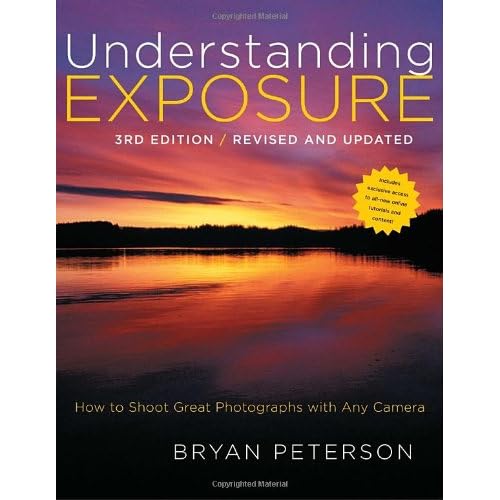
Such shots were somehow a test, as well, for the proper metering away from the complications of light meters and gray cards. After reading Bryan Peterson's book: Understanding Exposure, I've realized it is mainly about the reflectance and how close to 18% gray after all. To take this shot, I've came closer to the switch (since it is the gray thing in the whole scene) and took a (spot) metering there using Manual mode. It is a habit with me now to work in Manual mode; it gives more flexibility. However, I've changed the f-number a bit and changed the shutter speed accordingly and took many shots of the same scene in burst mode. Later, I had to sort out which one was more stable than the others.
I do believe that simplicity of design can be relaxing to the eye, and despite the fact that I hate the color yellow (!) yet, there is a golden hue that makes the morning sun rays pleasant to see. The image underwent some check up with DxO optics to remove the slight barrel distortion usually caused by the 18-55mm lens. It was not a big deal in fact, but I wanted to have the chance here to see the difference, since DxO Optics comes with profiles ready made for this lens, and making fixing such distortions a piece of cake!

Loch (Hole)
Canon EF-S 18-55mm @34mm, f/8, 1/80 sec., ISO 100.
Canon EOS 7D

The funny thing about Loch is that I was aiming at the pattern of the shadows that are cast by the little old bush on the yellow wall. I took my metering off the shadows following the old advice used in the old days of film: expose for the shadows and develop for the highlights. After examining the shot in my PC, I've discovered that the shot was centered around a hole (hence the name). Well, it might not be exactly a hole, but it is rounded more than any other pattern around it! Call it luck, it might work as an illusion, maybe?

Schattenspiel (Play of Shadows)
Canon EF-S 18-55mm @55mm, f/8, 1/15 sec., ISO 100.
Canon EOS 7D

Another shot, but this time I was lazy about a bit. Schattenspiel. This shot was taken from the top of the stairs. I've noticed the play of light and shadows as I was going up and down to my room. Instead of using a lateral arm and a tripod to fix the camera, I've decided to go ahead and just.. shoot! I made many shots and most of them are shaky (if not all). Maybe this one was the best so far, even though it is still a shaky image. There was some cropping of course to adjust the vertical lines, and sharpening the image didn't help much to eliminate the shaky lines. Ironically, it didn't occur to me to raise the ISO at least to 200! In this image specifically, metering was done for the shadows, but this metering had blown out the highlights (beside the shake), so I've changed my mind and metered off the lighted steps. Some Fill Light during the RAW processing was done to enhance the shadows little bit. Distortion fixes were done in DxO Optics as well.

II. Signs:
Signs
Tamron 70-300mm @168mm,
f/18, 1/15 sec., ISO 100.
Canon EOS 7D
The irony prevails when you suddenly discover something that had been in front of your eyes for the past... seven years? No. More than that even.
Signs is a shot that was taken from a road that I'm used to take daily heading to my work place. I think reading about Contemplative Photography was not in vain after all. Things just sparkle in your brain out of sudden! One day I've just noticed how the traffic signs line up and condensed on this particular road. Another irony is... I've never cared for traffic signs! (Yeah, I'm a bad driver).
I've decided to head to this location in the early morning, as early as I usually go in regular days, but now it is Ramadhan and people won't be ready to head to their work places until 8 a.m. probably! I was on location at around 6:30 a.m.. Spreading my tripod up high made it hard to look into the view-finder and I didn't like to attach my new portable monitor to check the image; I didn't want to spend more time than it should be in front of the private properties. I know how and what people might think of me if they see me in front of their homes, here.
Again, on the steps of Bryan Peterson, I've metered the sky (and realized later that I've done a mistake) and settled down with some composition. I've changed the composition many times, but as it was hard to see, I almost took several shots blindly and decided to check them later. The shoot ran for bracketed sequence of 1-stop interval, just in case a single shot might not be that good (and I have to say that I've picked the +1EV shot rather than the 0EV). However, generally speaking, the composition for all the shots was not to my liking for various reasons, specially the tree behind the signs.
The mistake I've done with metering here was that, as Bryan stated, I should meter a blue sky, but the sky at that time was simply, white! I could've metered the green cover from near by bushes or palm trees, but my concentration in the first place was about the signs, and not to include green covers. The tree branch was hard to clone so I've just left it there.

Source: Amazon
You might say that I'm following blindly what Bryan Peterson said in his book, but I'm experimenting still, and I don't agree with everything. For example, he mentions that most of the time he uses the Cloudy WB because it gives more vibrant colors. It is true, but unfortunately, and probably because of the type of the weather we have here, I've found this largely inadequate. Sign, for example, was shot with Cloudy WB but I had to change it to lighten the image a bit as the image gave out a severe yellowish tint. Maybe there is something I've missed, but anyway Bryan himself stated that he would change the WB later when needed. The only point is that Cloudy in my case under this weather won't be as beneficial as Bryan stated for the type of weather he would usually work in.


III. Speed of Lite:
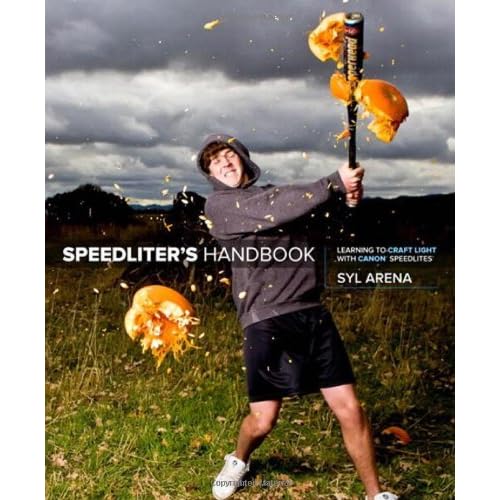
Source: Amazon
Now, as I go on and read my second book: Speedliter's Handbook, I've been pouring some attention into the flash and how it works by doing some small experiments. I'm still reading the book in it's beginning, which comprises lot of information known to me already, yet it works as a refresher. So far, Syl Arena, the author, played it good in this book; good text, nice to read, and organized thought process, beside the light humor in his words!
In fact, reading along, though I'm still in chapter 6, it made me wish that I do have some more flash heads, at least the 430EX, along with TTL cord or even a ring-flash. So much stuff to think about for the time being, beside my corrupted tripod which I need to fix or get a new one instead, beside considerations for a new case for my camera and tools. Talk about financial burdens!
Quote Cup
Anyway, in the course of teaching myself (and my eyes) how to notice the light patterns and embrace them, I've decided to bring my camera bag to my work place and work a bit on some issues. Quote Cup was a subject of my trials where I did change the position of my Speedlite from one position to another. Finally, I've aimed on creating a rim light composition, where the light spreads on the edges of the subject from the back creating some sort of a definition. I don't think I've done it the right way, but anyway, I guess I had some nice results, specially using my Canon 100mm macro lens, which provides a good shallow depth. It was a good decision not to clean the table, which provided me with all these sparkles in the scene! The on-camera flash provided some fill light to the front, and after some trials and changing the WB, I think Tungsten was the best choice. I have to think of more work to do with my flash to grasp more of its capabilities, but I'm not sure how. Time will reveal, I presume.

IV. Long Exposures:
Last week I've been trying to get some nice long exposures, but I think my trials failed. It was a good thing to catch some glimpse of the clouds movements at night, but there was a big problem with the noise level and the composition was not to my liking after all. I'm planning to try again but this time using some telephoto lenses probably instead of the usual fisheye lens trend, or probably my simple 18-55mm lens in one way or another. No pictures available for this trial as I didn't upload any, but for sure it was a noise image with lot of blown highlights because of inclusion of cityscape lights into the scene. Even long exposures timing is affected by Ramadhan, and naturally, the beach won't be quiet as it is before (it is already annoying in some specific locations during weekends).


Now, after a messy week, it sounds like I'm losing a bit of control over my life pace. Even though I've finished my Alexander project, I just can't force myself to work on other relevant projects, like the Geltani language and script. I think I need some time just to relax after a lengthy project like Alexander's story, or maybe I'm just too moody to work on that too.
This said, I do have a lot of things to think about prior to my supposed travel (in case my visa is granted anyway). I didn't prepare anything regarding the bookings; not even the plane's tickets. Needless to say, I can't stop thinking of the stress I would have to put up with regarding my luggage and tools with me. To make things worse, my backpack is sort of stuffed and I do need a new case sooner or later. One more lens and the backpack will explode!
On the other hand I'm worried about the functionality of my tripod, and I do need to find a solution for the lost rubber in one of the legs ASAP. Might sound not a big deal, but in doing panoramas, this can cause disasters! I have to resolve this issue, before traveling.
If only there is someone who can hear and bear what's in the heart of beats...

This said, I'd like to share with you all an inspirational post, by a fellow photographer (whom I follow), Jeff Lynch. I believe this post, is a spirit booster indeed. Go ahead Jeff; hearts with you.


Thursday, July 12, 2012

Force x Force

Exhaustive week. Not a single day passes without having to go out of work and back to my work again, and sometimes doing this twice or thrice, beside the work-related work, like preparing the samples and changing the samples for measurements. I've even napped in the office by the end of one day which made me leave late that day! There is a time crisis.

Source: B&H
However, I've finally got my shipment from B&H and still trying out my new 5" LCD portable monitor, and yet I have to try out the polarizing gel. The monitor alone was a problem and I think it will get somehow a bad review from my side, as the plastic is shaky and the cable was hard to get (and I lost 10 K.D for getting the wrong cable), while the hotshoe mount can be attached to the monitor, but not to the hotshoe!

All week I was trying to force myself to record more vocalization for Alexander's story. I'm close to the end, yet I do feel so down and so tired that I've skipped some days without recording anything. Anyway, there had been a large gap since the last time: from 2016 to 2736. With this now, I think only 10 verses are left. With a pace of 6 verses a day, this should be finished in two days!!!


By Force:

An interesting article by one of my favorite photographers, George Barr, did describe a lot of the mental process that I (and maybe most of the photographers) indulge in when I go out trying to shoot something. By coincidence on that very day as well, I was out in such a bad dusty weather trying to catch something... anything. I was just pushing to do anything with my camera, and it was indeed like some sort of a puzzle or a hunt - and processing the image itself was a puzzle itself too.

Dusty Zen
Canon 100mm f/2.8 macro. 1/5000, ISO500.

Pardon the high ISO, as it shouldn't be there in fact. I've simply forgotten that from my last session (which I've totally forgotten what was it!). The above shot was a test shot in the beginning, but then I've realized it is the one to be adjusted. The conditions were sort of harsh on the beach when the image was taken: staggering wind, dust in the air, and my intestines didn't stop giving me hard time.
The puzzle in the process is yet to come, when we try to turn a "boring" image in terms of color, into something interesting, beside some interesting framing. Just for a comparison, you can check the following before-after image:


The framing (cropping) after all was a problem since I didn't know how to give nice edges to the cropped image. However, when I shot this image my concentration was on the sand on the top of the rock (which settled down despite the harsh wind on the beach!). The major adjustments were done by means of a "trick" that I call the LAB method. It is an old method that I've used before, but not so often, specifically for a picture from Failaka island when, suddenly, the dust occupied the island despite the good weather in the morning as we set sail on the ferry from the main land.


It was a great time and great waves striking the rocks back then! However, what is the LAB trick?
  • First the image would be in RGB mode (regardless of the color space or the depth).
  • The image is then converted into LAB mode.
  • In the channels of the LAB, channel A is picked and the EYE icon is turned on for the main (first) channel to see the effects of our adjustments.
  • While channel A is picked, increase the contrast and/or the brightest to whatever level needed (and it can be done in various ways).
  • Same procedure is done to channel B.
  • Channel L can be adjusted in same way, and it can be used to sharpen the image, or reduce the noise as well.
  • When all is finished, convert back again into RGB mode.

Now, some people argue that this conversion from and into RGB will cause some loss in data (and I believe this is natural anyway in any conversion or any transfer of data) but I'm not sure how this loss occurs or what does it affect. Yet, the results can be promising for reviving an image!

After shooting this image, I've changed the lens (yes, in that weather, and it's dangerous) and tried to set and pose in some way to shoot another image of the rocks, however, the situation then proved to be a disaster. The shoot ran for HDR, but at home, even the HDR technique did not rescue the image and the blown highlights coming from the sun beams.

Ansin (there)

After the many problems in this image (tilted horizon, blown highlights, framing...etc) I've decided to crop with no respect to the original aspect ratio. The result is a small image after all, and not applicable for submission.
Because the lens was my 18-55mm, with minimum f/4, the desired shallow depth was not perfect for me. For this reason, I've resorted to the Lens Blur effect and blending down with a layer mask. Sharpening was done by NIK, and again with Noise Ninja. Some cloning was a must, when I've discovered some trash in between the rocks!

Books:


I have now some list of books to finish; a fresh delivery from Amazon.  I'm not sure how long it will take me to finish them but I hope all is over by August already. I do have plans to run after by September but I'm keeping it all to myself right now. I've started out with the Exposure book for now, as I think it is an important topic even though I do have a not-so-bad idea about all the exposure measurements, and so far, the book looks interesting indeed (with lot of fancy images too). Another book awaits about using Speedlites, and another which I try to read before going to bed concerning some psychology topics. I think I do need that a lot for now.

So much is going on in my mind. More than what's happening in my own life right now but nevertheless, it is a headache on all levels. I can't wait to have a vacation. Just slowly, my mind is retaining some of its ability to collect words and phrases, and I ended up writing Teal Eyes. Why or what made me write this piece, this is something I'd like to keep to myself for the time being. But it was a real hard work to squeeze my brain. Something went wrong inside this mind; maybe it is the too much business of thoughts that made it dull. I do miss writing poetry... it feels like being left out...


Thursday, July 5, 2012

Is Cuma Liom.

Irritation. A general theme of this week. Every single day of it sounded like endless for one reason or another. I thought my sleeping pattern is scrambled because of the fasting I'm doing right now (when fasting you need to sleep to rest), but then, last Monday, I didn't fast, and yet I woke up 4:30 a.m., and I've remained awake up till 1:00 a.m. the next day! More than 12 hours, and I did not sleep in the afternoons.
I feel uneasy in my own skin. I just wish to escape everything, and my mind is the first of them all.
This week was hectic in terms of time management, and I was not able to do much with my vocalization project for Alexander's story. But I didn't leave it all anyway and few progress was made. I'm getting closer to finishing the whole thing. Just think of the plenty of time I would have when this is all over!

Business-wise, if I can call it so, I've been writing up a proposal letter for the Heritage Village in Failaka island, and I'm still polishing the letter. Some say it is good, and some suggested some editing, however, I've given the letter to my photography teacher to see how worthy is it.

Danach (After that)
Rokinon 8mm fisheye, f/22, 10 minutes.
Meanwhile, and just trying to give my life a bit of meaning via working with the camera, I had a trial for a long exposure. I was planning for this long exposure trial for some time since I didn't do them since winter time is over. However, I've met many setbacks and the only trial I could do is not to my own liking.
The beach area where the elevated place lies, and where I was planning to take the long exposure from, was a crowded place in the weekend. I had to go to that place twice in fact. When I saw the place was so crowded at 2 a.m. I've decided to cancel, but then I went on to check again after 4 a.m., around one hour before the sunrise. The place was fine, but some (annoying) people were still there. As you can see from the picture (large one, I didn't minimize it) the people left a ghosting effect on the beach's sand.
Not many trails were recorded as it was in the other areas in winter time, but merely two lines (probably one of them is Saturn).

Technology
Canon 100mm f/32 1/500
On the other hand, I keep my eyes wide open for any chances of anything of "meaning" around me. That's when I've glanced a chance for some silhouette just in front of me when I was waiting in my car, when I parked around the place where my flash workshop takes place. In fact, the first thing that made me notice this chance is the clouds. Clouds in summer? in Kuwait? It's either a dream, or a joke, but a reality, and in front of me? It can't be! Needless to say that this area is not on the seaside where I usually shoot for the clouds. The sun was bright and harsh, and I've shot several shots of different speeds, in portrait and landscape, this is mainly to see the best speed for dark foreground and relatively bright or not-so-dark sky. The LCD is not a good tool to judge, so I decided to take several shots of different speeds. There had been a change in the WB too. Of course there were some editing for the RAW as well.

Communications

Going Crazy:


Well, it is not something new in fact (being a crazy already), but this time I've decided to take some extra mile. I've been fascinated, for a while, about the bathroom in my work place. Mainly, this is because of the checkered tiles (specially when the bathroom is cleaned and shiny!).

My Life!
It was indeed a challenge to have a panorama from that tiny place. The challenge was not only in the area (1x1 meter) that I have to work in, but also the fact that the shiny tiles can reflect my image in any direction. I thought, however, that it is best to work while keeping my body low. Another challenge was the timing to do this (and I surely needed more time than the regular panorama!).
For this panorama, I've decided to take some metering reading with my new light meter. Using the incident light method, I've started to point at my camera from different angles. I think I've made a mistake with this type of metering mainly because we have two light sources in the scene: the bathroom's light on top, and the outside light through the window. The difference between the two is great and the problems showed later on when merging into HDR and stitching the panorama together. It is one of the rare times when I try to work completely on (M)anual mode. I'm trying to adapt to this workflow slowly and to make my own decisions based on this method, because, simply, it gives complete control over the camera; provided that a good metering is done in the first place!

Toilette

The first flat version of the panorama was done just to check the erratic zones in the panorama (beside the nadir point of course which passed through several adjustments). Because of the metering problem mentioned above, a big portion of the wall on the right was technically bleached out and without any texture and patterns. With some change in the blending priority in PTGui, the effect was reduced, but not completely removed. It is a mistake to learn from anyway, and I can say the challenge was passed successfully; that is to work in such a small place like this!

Hello World!

There were several stitches (and a tunnel view that went wrong), however, I think I'm satisfied so far with what I've done. I was thinking of doing a QTVR out of the flat version, but up till writing this post, I didn't feel like doing it. The nadir point here got an extra challenge added: not much place for a logo! However, you can see there is some dark patch on the ground after a hard work of cloning.

The titles are kind of sarcastic. Call it a reflection on my own life and how things are turning around for me. I'm truly living a mess, and it looks like swimming against the current trying to settle everything down. It is a phase in my life where I don't feel a thing in the world in fact; no politics, no bullshit, not even a care for other people's feelings. I simply want to leave everyone, 'cause I know no one cares already...


Thursday, February 2, 2012

Rain Rain Rain...

Things are going frantic here. Thursday (today) is the election day for parliament members and we have also one day off (mainly for the occasion of the birth of prophet Mohammed, not the elections). The week was sluggish but nice one with some rains here and there (typing this as the rain is pouring outside). Rains here are a bless despite all the fuss and the mud you might have to step on, like in my work place!
Not much progress, in this week, with my various projects or photography, but only with one inventive perspective (well, not so inventive) done to some old panorama, and might enable me to manipulate older panoramas as well in the same manner:

Circulorum

The "perspective" in use here was Transverse Mercator; one of the rarely used perspectives (or projections). Supposedly, the Transverse term is a note that this projection is suitable for vertical panoramas or a panorama taken in landscape orientation I'd say. However, my panorama here is not vertical of course, but it yielded some result that I didn't think of before, and with the scattered rocks it helped me create a view similar to that of the classical magnetic field experiment with iron filings. I think such perspective is not suitable to just any scene, but only few like this one, which would be helped out by such projection style to add order to chaos.

For the time being I'm trying to figure out my options as I might join some expo with my sister. Not an easy decision, nor an easy work to be done. I despise the paperwork and this project is heavily loaded with it. I might as well create a logo and make it my official logo for future uses. There are many details that have been discussed, and I get a headache almost instantly.
On the other hand, I have 3 thick books waiting to be finished with. I'm reading 2 books and trying to divide the time equally between them but I think I failed so far, as the book concerned with flash photography is taking my interest the most.

Well, maybe it will be hard to take shots at night the few coming days, so I might as well just sit calmly and organize my camera backpack and my tools. There might be a travel waiting for me in June to Chicago, but I'm not optimistic about it. It is just a training course related to work, and most probably I won't be given the grant that's necessary for my training (by my work place). Not that I care much about it, but I think I do need some vacation somehow.

I'm going now, as the water seeped through my window with this heavy rain... wishing for a better week coming in advance...


Thursday, July 21, 2011

Casper...

A sort of an idle week. Been trying to figure out some ways to use my camera here and there and totally forgetting about my Ayvarith projects COMPLETELY. There were attacks of fatigue, maybe because of my long gone fasting, I'm not sure really. However, it didn't go out completely idle as I was able to reach my camera somewhat, but most of the time I was working on old pictures from Ireland, dating back to 2009! Simply, I just felt like paying a visit to these pictures and having some rest myself, and tried my best to touch the RAW files only, without creating HDR.

Done an experiment just to test how it is to do some long exposure. If I remember correctly, the longest exposure I've done before was for 5 minutes on the roof on my house, when I was testing my new (back then) lens, Tamron 70-300mm Macro lens. I was pointing at Saturn if I remember correctly and made a little trail.

Trail of Saturn. Two trails imposed on each other.

This time the experiment was a bit different, and with me reading the new book I got about Night Photography (a great book, makes me want to try my luck with film cameras instead of digital ones), I'm getting inspired as I read, but unfortunately lot of my dreams need some nice landscapes and some nice people to be surrounded with. I went into trouble with cops before and I'm really not intending to have more at the current time.
My little experiment was to use a longer exposure time, but not outside. Simply in my room. I got the idea as I was reading the book (as usual, in my bed time to help me fall asleep more easily). The process to measure for the required time was somehow long, and I had to use a ND filter in an awkward position, because I was using a Fisheye lens, and in Fisheye lenses you need to a Gel filter to be placed at the back of the lens and not in the front of the lens, but I did it anyway and I stuck it with a duct tape even though it fell down later on because of the bad quality of the tape! That didn't affect the result much. It is an experiment after all and the results were not to be published in stock sites.

Night Photography: Finding your way in the dark
Night Photography by Lance Keimig
 

In the beginning I've fixed the camera in one corner and turned off the TV just keeping my PC monitor on (need it). I mounted my Fisheye 15mm lens to get a bigger portion of the room and went on configuring the setting that I would need. In fact I was aiming to expose for one hour but with all the mess in the mathematics the maximum I could achieve was 44 minutes, theoretically. I wanted one hour to give chance for more blur as I would lay in bed later on and, as usual, I would flip all over the place.
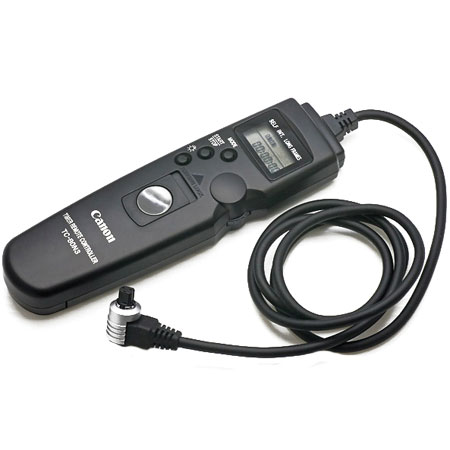
I've fixed the mode to Av (Aperture priority) and pushed the ISO to the maximum value "H", which counts for 12800. This is just to take the reading for the time needed at this level at 0EV. The time reading was about 20 seconds, taken while setting the metering to Center-Weight. I used this metering because, logically, I want the whole area to be measured and averaged and not only one spot of the scene. However, with some calculations and keeping in mind that going up and down in ISO in stops, will increase or decrease the time in doubles or halves accordingly (a stop = 2x), all what was to be done is multiplication (20 seconds X 128, or 27, that is 7 stops) and the result was around 2560 seconds (i.e. 43 minutes approximately). The ND2 (one stop) was stuck to the front of the lens hoping to increase the time of exposure and keeping the exposure as it is but seems I've done some wrong calculations here and there was no need for it. With my intervalometer remote control then I've fixed the exposure time to 44 minutes, and changed the mode to Bulb of course for such long exposures (and had to change the battery to be on the safe side).


TC-80N3 intervalometer (remote control)
Image Source

Snapshot from ACR (Adobe Camera RAW editor) with the time of exposure circled.

The histogram above is not a good histogram under the light of what I've read recently in Keimig's book. It is better, as mentioned, to have a histogram pushed toward the highlights (to the right that is) as much as possible (and clipping would occur most of the time) and it's just a rule of thumb, as this would grant a good exposure for the shadows. The histogram above was adjusted to avoid clipping from both sides. Few minutes after fixing everything and after opening the shutter (with a timer to give me time to go to bed first!), I've heard a sound of something falling down, and no wonder, it was the ND filter. I knew it would fall down with this bad quality of tapes! I didn't try to fix it but rather left it like that to see the results later on and the fact is, it didn't change much of the exposure.

Sleeping Ghost
general view

Sleeping Ghost (cut)
zooming into the blur movement


In fact during the exposure I did indeed get up to do something with my PC and get back to bed but such movement was not recorded in this long exposure because I would need to stay more into one position and then move to record my image on the sensor. My movement to the PC and back to bed was fast so it was not registered on the sensor, but instead all what there is to see was my flipping in my place. A nice experiment that makes me somehow confident about my approach to this matter. Hope I can target the sky soon.

Another trial took place, with my little gift to my niece for her birthday. Well, I have to say it is a cheap one but I guess she wouldn't mind :). The take was to take a picture of it with a candle light, simply because I was sick of using that softbox I've made myself. It's clumsy and bigger than it's supposed to be I think. The shoot was done with Tamron 70-300mm Macro lens, as I wanted to get a closer look on the stones.


Juveler (jewels)

Juveler means "jewels" in Swedish. Why I chose Swedish? I don't know. Probably because I have now many Swedish online friends via MostPhotos, anyway the sound of the word was appealing to me. Yu-ve-ler. Has a sense of Turkish if you ask me (plural article in Turkish is -lar or -ler)!.
Despite its simplicity, the white balance here was hard to pick up and I had to adjust it by the RAW editor. Anyway, I preferred the hot tones to reflect the goldish hue (gold is attached to money and jewels and richness in general) even though the bluish hue when using Tungsten WB was appealing as well. Many ideas were crossing my mind just to shoot this simple bracelet, like long exposure (but there was no need for it really) and focus stacking. Focus stacking was probably more reasonable to do, because in such macro lenses the shallow depth is common and it depends on what kind of effect you like to achieve. If you want to increase the depth of field, then, focus stacking is the solution (and more work awaits) to include the whole subject into the depth. After looking at this result here, I think I can say I'm satisfied. The blurring effect at the back is nice enough. One thing I'm not satisfied about is, the luster of the stones. I wanted them to sparkle but I think I should have changed the angle of the light or the camera. I need to read more on this topic specifically.
Still working on some vertical panoramas and trying to understand more about the looks and trying to make a decision what would look good or bad about them. I can say that I've discovered that not all locations might be suitable for this. Naturally! Not all structures are suitable for such panoramas (or for other types of techniques as well). This is nature I believe. There are often times though when flipping (rotating) the point of view (the roll) would be better, but you might sacrifice some aspects. This is exactly what happened to me.


Alice in Thornbrook
Considered, by me, one of the worst panoramas I've ever made. This panorama can't be stitched directly in HDR, but I had to go around and tone-map, then stitch. However, what I like is the light lamp in the ceiling which gives an illusion of a tilt while the ground is straight still, and the window on the right which gives a depth to the inside. The image is for the dining (or breakfast) room in Thornbrook House (B&B) where I stayed for 14 days. Miss those days.
Another panorama, which was a bad too, and even worse than this one because of the shake and shifts of the tripod and the VR-head rotating my camera. This panorama even got severe stitching errors even after stitching the tone-mapped version instead of the HDR version.


In Terra Horologiis (in land of clocks)

I like the tones, and the window on the left, which like the previous vertical panorama gives some depth into the inside, but the bad part is that it has so much distortion in the chairs and clocks, and other furniture pieces. Unlike the previous one, which was a simple room, the lounge was filled with objects making distortion in such locations appear so severe. Conclusion: Always check the location and see if you can re-arrange objects in case you would think of doing such vertical panoramas. Also, don't forget the roll part, which can be a good trade between good features (like a window in perspective for example) and the good looks (not much distortion in vital parts).

It's Thursday, finally. I'm praying for some rest now after a week of unexplained fatigue. Words are stuck in my mind and can't put them on paper or on monitor. A sense of panic and fear occupies me from time to time but I don't know why, and my daydreams are having a great toll on my mind with negative thoughts. I'm going to hit this Post button and try to forget the world while reading a book... by the way, did you know that I hate Internet Explorer? Yeah...

Serial Photography: Using Themed Images to Improve Your Photographic Skills