Showing posts with label extension tubes. Show all posts

Thursday, May 4, 2017

Stacked…

It's a slowing down time, and summer is hovering heavily with its beginning here. Air breezes are slow and barely enough to breathe here, with waves of dust suspended in the air. I miss winter already. I didn't do much photography lately but few video shooting, again, as I'm waiting to settle down with a topic for the project of the month of May. We'll see what that would be. I had some work with macro shooting too as I was trying my old rail to do some focus stacking, which I have to say from now, it was a fail for many factors. However, I got still some nice out come as well.

VaVaVoom...

Let's head first to the video. In my last post in this blog I've posted mainly 2 infrared videos done as I was driving. It was about time, however, to do the same while using my B+W 403 Black UV-Pass filter. I didn't want to use the old and cumbersome 18-55mm kit lens which fits this filter perfectly and I didn't have any wide angle lens better than my Voigtländer 20mm semi-manual lens, which has a diameter of 52mm, and thus a step-up ring is needed.


Without going into details here with the settings I've been using (basically automated), you might have noticed vignetting around the corners. I need to do a thorough check up and comparison with my other B+W 092 infrared filter and Voigtländer 20mm lens, as it seems that vignetting happens only with this lens, for which I use a step-up ring to fit those circular filters (all of them are 58mm in diameter while Voigtländer 20mm is 52mm). If vignetting appears with both filters then, of course, it has to be the step-up ring, but if not, then it has to be the filter itself and its nature and make. However, in regular single shots, fixing the vignetting is quite easy but with a video clip, I'm still not sure about my capabilities in that venue. 
Sigma 12-24mm for Canon.
I thought I was over with videos until I've noticed that some of the infrared images online are actually, and most likely, images taken with a converted camera but without any filter, which produced a strange hue of colors because of the full spectrum involved (specially when the sun is shining), and then colors would be converted (sometimes) and the resultant image is something "fantastical," so to say. This is what I planned to do then specially after acquiring a new lens (but an old one) from a friend who converted to Nikon. The lens is Sigma 12-24mm. It is a big and a bulky lens but the range of zooming here is quite useful for me specially for recording a video inside the car, and with the absence of any 18-55mm kit lens in my collection (it's there, but it's old and hardly used).


Again, sorry, I have to remove the audio here (for your own safety trust me). I was lucky and unlucky in the beginning of this video as you can see: I was trapped between my brother's car (which is red but turned blue with channel swapping) and our neighbor's car on the right, yet it was a good chance for some interesting footage! Anyhow, I think I'm going to like this new old-lens. There are some problems though which I'm hoping to find a solution for later:
Rokinon 800mm f/8.0 Mirror Lens
  • The lens with its case is too large for my camera bag, even if the case is to be removed.
  • The lens front is fisheye-like, meaning no filters can fit. But there is a special hood to cover the front of the lens and provide a base to attach filters, yet it can hardly be used for now since it's 82mm in diameter.
  • The rear of the lens is large as well and it might be hard to stabilize any gel filters at the back.
Nevertheless, I still think this old lens will be of great use in the future. If only I can find a proper place to store it. This brings me memories of my Rokinon 800mm mirror lens which I didn't use much as well and I have to see about using this lens as well and getting active with it too! As you can see from the video above, the colors are pretty close to, for example, many portraiture shots that are said to be taken in infrared. This makes me think that many of these infrared shots are actually, simply, taken with a converted camera without an infrared filter. I've seen some pretty colored infrared shots that are said to be taken with Hoya infrared filters, with threshold of 720nm; Yet, I don't understand the vibrant colors which I don't even get with my B+W 092 infrared filter of 650nm in threshold. This needs more research!

Minute

Min-Yoot; to be precise about the pronunciation. Along with my videos, I've taken my chances to work with my old macro-rail for a while, as some tiny plants are blooming at home and I didn't want to lose this "rare" chance without documenting some of them. Got to say that the aroma that spread around the place in the early morning hours is just refreshing (despite the bad weather of dust and humidity sometimes).

Beauty Explosion
Canon EF 50mm + 56mm ET, f/11, 10-1sec, ISO250.
Focus Stack

I have to say though that all my trials with the rail were a chain of failures. Yet, some people liked some shots despite the errors like Beauty Explosion, which was shot indoors (after moving the pot inside). Yet, I made a mistake for not using higher f-number. Despite being inside, the branch was still shaking because of the slight breeze from the AC! This was so obvious even with 1.12X magnification, so I can't imagine what kind of shake I would be witnessing if I went over this ratio of magnification even! The 20mm and 36mm extension tubes would be used for every railing experiment still. It can be noticed in Beauty Explosion how some areas are smudges; those are specifically some merging errors probably cause of the little shake of the branch and changing the position and also there might be some missing millimeters along the way as I was rotating the knobs of the rail (making more than 20 shots along the way). The colors here are, of course, a result of swapping Red and Blue (the shoot was done using my converted Canon EOS 7D but without any filters).

SpectraOnion
Canon EF 50mm + 12mm ET, f/22, 30-1sec, ISO100.

Away from that plant, outside under the blazing sun, I got some memories back of me doing some of my first 3D with onion blooms, and we have it again! I didn't want to skip the chance so I tried my luck with it, this time with my converted camera. In SpectraOnion, I've the 12mm extension tube just to get closer to the bloom, as the 50mm lens has a minimum focusing distance of 45cm, and I needed to get closer than this distance. My aim wasn't really going into the field of macro here, yet I got a nice close up, despite the back-breaking situation (very low) and the blazing sun. Of course,  I didn't forget to aim for a 3D rendition so I've taken several shots by nudging the whole tripod to the left gently.

SpectraOnion (3D)

I've examined doing the 3D anaglyph on both, colored and B&W versions and, despite the distractions with the colored version, it seems that it stands out more than the B&W version. Not sure why, but it is kind of weird to see such thing with my own eyes, because it is believed, typically, that B&W images are better for anaglyph rendering to reduce the color distractions in general! Anyway, it looks fine to me specially at the base of the little stems as they stand out when viewed with anaglyph glasses. Moreover, I had a go with swapping the channels as usual with such images specifically.

SpectraOnion (Red-Blue channel swap)

Being beautiful as well, but not favored over the original by some, probably because the original has a strong color contrast between yellows and blues (the two are opposites on the circle of colors). However, another trial took place and this time I've done it outside (for the same plant) in a somewhat quite evening with barely some breeze. The light outside was strong so I was relying a bit on the fast shutter to stabilize the image with the same settings for the previous experiment: 50mm lens and 20+36mm tubes.

Stacked Bloom
Canon EF 50mm + 56mm ET, f/22, 5-1sec, ISO400.

As it can be seen, I was wrong. Though I increased the depth to f/22 but the shutter slowed down significantly. For this reason, I had to time my shooting, holding the remote in one hand and trying to block the air current with the other, and shooting only when I feel the branch was stable enough. The ISO had to be raised significantly which meant more noise. However, I can say that the range of proper merging here is better than my first trial despite the fact that I was doing it outside in the fresh air. Here in Stacked Bloom we see that it's all blue after channel swapping unlike the very first trial, Beauty Explosion. This is probably related to the change in IR levels from indoors to outdoors (outdoors being more, naturally).

Crystal Bloom
Canon EF 50mm + 56mm ET, f/16, 10sec, ISO100.

In my final trial, Crystal Bloom, I've decided to cut a portion of the branch and it take it inside then stabilize it further by holding it with a paper binder. The length was small so AC air breeze wouldn't have an effect on it, which encouraged me to go mad with the exposure! At that moment I've remembered my problems with my Canon EF 100mm f/2.8 macro lens, and thus decided to work with f/16 instead of f/22, as I thought it might be a factor playing in the mishaps with merging the focus stack. In average, the exposure for each shot in the stack was between 8 seconds to 10 seconds and the total was about 40 shots. Tried to be precise as much as possible with the rail this time and moved 1mm between each shot and the other. However, in merging the focus stack, things went OK except at some portions close to the edges away from the center of the image. This leads to me think that what is happening here is a change in the virtual size of the image beside the change in the focused area, and for this reason the stacking doesn't go well. There is, of course, some room for human error, always. Also, it might just be that using many extension tubes like that doesn't go well with the rail method? Not sure. Too bad I didn't think of doing reversing lens back then since I have the proper gear for that. According to calculations (which I hope are right!) if I'm to use Voigtländer 20mm lens in reverse, the magnification power is supposed to be about 2.5X. The question remains though about how practical the focusing distance would be (it is REALLY close already with extension tubes and 50mm at 1.12X magnification!). Seems we'll have another round with that. I didn't forget as well to render a 3D out of these images!

Crystal Bloom (3D)

Finale

This was a... brief (?) about what was going on with my life lately. Excluding the ups and downs and the mood swings. There was a bubble of eagerness to write a poem with all that mix of feelings inside me, yet I couldn't find the power nor the mental order to pin it down. I think my dreams of seeing Morocco must be kept for some other time. I've signed in for a leave for the whole month of Ramadhan and it will start by May 28th and will end by June 22nd. Thus, I'm not sure if there is any chance for a vacation this year either. All what is left for me here, I presume, is the company of my own thoughts, and projects…


Stock photography by Taher AlShemaly at Alamy

Thursday, January 10, 2013

Game Time!

Ouch, Ouch, Ouch. What a fast and a busy week it was. I miss sleeping so much like a lover missing his heartthrob! I'm missing this opportunity even on weekends (but that's not something new).
My schedule had been busy; so much that I barely had the time to think about my camera and process new images. However, I had the chance to test my new toys a little bit - yet more testing is needed. More to come about that later.

Splashing:

Dimensionality
Canon EF 50mm, f/16,
60-1sec, ISO 100.
By last week we had one of our first practical outdoors workshop in part of the Philosophy of Light workshop with the group. The appointed location was Shuwaikh beach area. The day was windy and really refreshing. While everyone was struggling with jackets seemed to be I'm the only one who was satisfied with a T-shirt!
I was the first to arrive and started to work straight away with some shots of high-speed flavor trying to freeze the water splashing on the rocks. But soon I've moved to long exposures and ND filters.


Nature Paints
Tamron 70-300mm @228mm, f/40,
0.5sec, ISO 100.
Maybe the exposure in some of these shots didn't exceed 30 seconds but it was hard to achieve even a one second exposure with the sun being tough. I ended up setting up 6 stops of NDs in front of the Tamron lens and trying several shutters. I've cut back to do more high-speed shots and then back to long exposures, and then was able to achieve 8 seconds (mainly because the sun was approaching the horizon and level of light was going down), but after all, I've found out that a half second is just fairly enough to give a surreal look. With the waves being so strong and splashing against the rocks (and almost made me have a full shower too!) it is not necessary to make very long exposures. Even times less than half a second might be quite enough to give the desired look. Lengthening the exposure time with strong water waves would erase most of the features on the rocks and too abstract. After exhausting all my options with the waves, I've simply stood up on the concrete barrier and started to shoot with minimalism in mind as in Dimensionality. To me, at least, this image seems a breakthrough because it is a simple structure, but yet has a depth with a vanishing point in the horizon. Maybe I was lucky? One bad thing back then though is that I didn't get my polarizing filter yet.

Der Sanfte Zorn
Canon EF 50mm, f/1.4, 8000-1sec, ISO 100

Let's Play!

My new toys have arrived with the beginning of this week, and I didn't have much time to test them thoroughly, but few clicks here and there.

Source: B&H
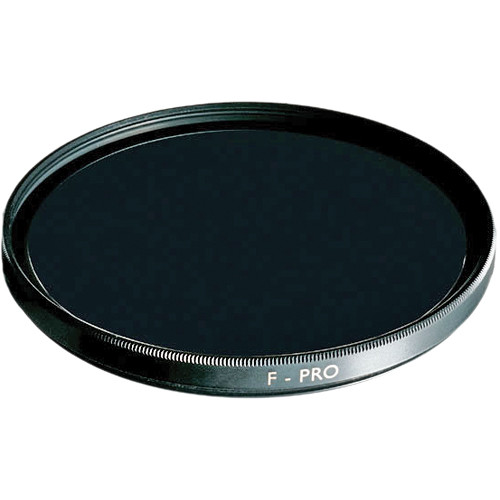
One of the toys that I was eager to try and learn about is the Infrared B+W glass filter. Even though my camera is not converted (i.e. sensor adjusted to receive IR radiation), yet after some surfing about the topic a bit, seems the only problem with this is the long exposure times required, while the converted cameras would react normally with normal exposure times as in normal cameras. This is what I understood so far.

Canon EF 50mm, f/1.4, 200-1sec, ISO 100

The title-less image above was captured as I was waiting for the TV crew who were supposed to do an interview for a program on TV with the group's members. As I was waiting I've decided to try some aspect of this filter and even it was hard to be done without a tripod. One of the hard things to do is to match the exposure metering done without the filter to the exposure metering after fixing the filter. In a quick inspection seems the difference is 4 stops. However, such calculations are not quite correct, because the type of the light to be received by the sensor (specially unconverted) is completely different. I imagine metering the light and doing a correct exposure would be done nicely only when the camera is converted, or maybe if there are special light meters that read IR only and compare its level to 18% gray!
The image above looks a typical black and white shot (after being converted from a completely red image), but certain details made me think it made some difference, like the details of the tiny clouds (which were hard to notice in reality) beside the building in the horizon on the far left which looks hazy.
I'm reading more about it for the time being and seems I could achieve more interesting shots by adjusting the white balance instead of converting to black and white. This is what I've inspected by reading so far.

Source: B&H
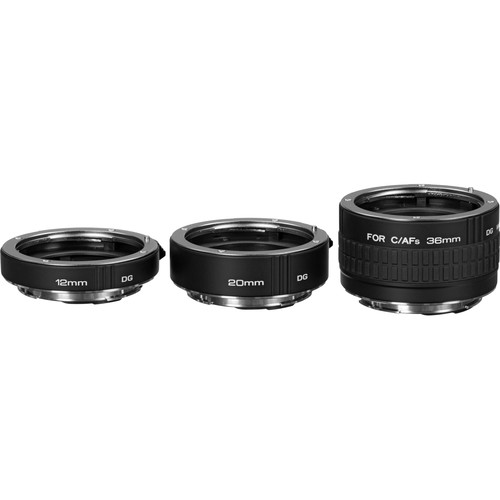
I didn't get the chance yet to test the polarizer thoroughly, but I got a little chance to test the Kenko extension tubes set. Extension tubes works by allowing the lens to focus in a distance closer than it is on the original lens.
After doing my part with the TV interview (which barely went on well), I've stayed away doing my own trials with the extension tubes on some plant leaf. It is a hard task to shoot with such degree of closeness and zooming without using a tripod of course.

Lamellae
Canon EF 100mm macro + 68mm, f/8, 25-1sec, ISO 100

I've found it mandatory here to use the on-camera flash to fasten the shutter speed and reduce the shake effect. In the beginning I thought it won't work because usually with such long lens combination, the on-camera flash would cast a shadow on the subject, but probably not here in such close distance. It could be time to use rails (or maybe some parts of my VR-head) to move the camera smoothly on the tripod for- and backward.
This test is still not enough, and I'm eager to implement this with reversing lenses technique and see what effect does it yield, specially with my new 58-58 adapter ring which arrived along with the new toys!

Reality of Shadows
Canon EF 50mm, f/1.4,
50-1sec, ISO 100.
Away from testing the new stuff (and mainly because it was night time already), the TV work was not over by then and boredom filled my head. Yet, my eyes weren't.
I noticed some decorative plant in one of the corners which inspired me for some shot with a shadow, but the problem was that I didn't bring my speedlites, thus, I had to use the available data-show device with its blue/purple light and projected it onto the pot or vase from the side (after hardly stabilizing it over a couch!).
Maybe what I personally like about Reality of Shadows is the fact that I've used the Fluorescent WB to add more bluish streak to the already-blue light. Yes, I needed to adjust the WB little bit later and reduce/add some saturation for some colors, but the starting point was fair enough. No HDR rendering.

Now for the coming week,  I might have some plans, and a busy schedule too. For sure I need to test more procedures with the IR filter. On the schedule, there is giving my own tips about Photoshop in a special session; it is not a paid service of course, but a friendly help. Also on the schedule, there are plans to get involved in more local expos, and one of them is supposedly sponsored by Kuwait University. Bearing such responsibilities do feel heavy though. A shoulder for a burdened head, is all what I would ask for in such days...