Showing posts with label RawTherapee. Show all posts

Thursday, July 2, 2020

Urú!

Well, I think I will delay my supposed vacation from blogging just a bit and will be posting this blog post, hopefully.
Meanwhile, we were supposed to get back to work partially with things going gradually in the fight with COVID-19. Suddenly, though, things started getting out of hands here and the number of hits is increasing by day as I'm typing these words in what seems to be a second wave. So, Phase I, which was supposed to be ending by June 21st, is extended further to some unknown time till this moment. Who knows, maybe till the time of posting this, Phase II would in effect (and probably I'll be heading back to work).
Anyway, I was planning to post about a series of shots, which I'm going to call The King Series, but I think I will delay that for now in favor of the shots I've shot on June 21st for the solar eclipse; My FIRST ever solar eclipse shooting!
However, I have to notify you in advance that this would be a rather short post (or maybe I should say a boring post) because shooting the eclipse was kind of "monotonous". Or in other words, no big deal about it; Nothing special!

Urú!

Sigma DG 70-300mm.
Just before I start, Urú actually means "eclipse" in Irish; Just so you know. Now, I really wished that I would have taken these shots within the framework of a landscape, but this was not possible (of course). Thus, I had to satisfy myself with what I can do at the moment. I Just picked my Sigma 70-300mm lens fitted with B+W 403 UV filter and Kenko's IR Cut filter, and my modified EOS 7D and headed out. I had an idea of using my Rokinon 800mm f/8 Mirror Lens, but abandoned the idea when I remembered the hurdles and hardships involving its focusing (manual) and also no filter would fit that (except for the solar filter maybe), but I really wanted to shoot in ultraviolet here to experience what the outcome would be. Not a big deal though, for sure, but still, it was an experiment to be done!
Rokinon 800mm Mirror Lens,
a.k.a. Barrel lens.
The solar eclipse started around 7:20 a.m. local time, so I was there with my tripod. The other unpleasant part about this eclipse is that it was partial only and not annular. Anyway, I guess I don't have the right to complain here since it's my first time to shoot a solar eclipse.

Triple Eclipse

Kenko's infrared cut filter,
to stop the infrared leakage in
the ultraviolet pass filter.
Now, the ultraviolet and IR cut filter did a good job in blocking the sun, in addition to the high f-number (but this one I was fluctuating between f/11-f/22) and the high shutter speed (settled down later to 8000-1s). However, the first few shots were bright (too bright) as can be seen from Triple Eclipse. Also, this brightness showed the inner reflection problems (common when you stack filters on a lens), and for this we see here a triple image for the eclipse; One real image and inner reflections in between the filters and the lens. Can serve an artistic purpose but definitely not always.

Stages

As I've stated already, the shoot was a bit boring really: Shoot a series in burst mode, adjust the camera tilt, shoot again. The thing kept on and on. I was hoping though that I would get some details from the sun or its halo when I process the ultraviolet images but I think I did need an extra zoom here (I was shooting at 300mm of course). I wanted to use a teleconverter to shoot at 600mm but then I thought, well, it's my first time; I better shoot with what I'm sure that would work. Adding a teleconverter would reduce the amount of light significantly and adding an ultraviolet filter is not quite a friendly thing, since UV wavelengths are quite sensitive to the glass and are drastically reduced. All in all, it was a good idea to reduce the amount of glass through which the UV must pass. Anyway, the good thing after all is shooting different stages of the eclipse where the moon gradually covered more and more of the sun disk. So, I decided to merge some of these images all together in some artistic way and so it was Stages. Of course, this is not the real path of the sun in the sky; Things were harder in reality as I was following the sun at 300mm. The event started to get closer and closer to the zenith point and things started to get harder for me to look (I was covering my head and the camera's back with a towel). However, at the end, I've decided a video, just so I might do something with it. And I did!


Note: The music comes from Free Music Archive website, and titled Magic Hour by Three Chain Links - Hope I got it all right!

The original video was almost 8 minutes long. Around the end, I got a signal on LiveView warning me about sensor heating, and that's when the video ended as I had to switch the camera off, of course. Anyway, shooting was getting harder at that point as I said as the camera got almost pointing to the zenith.
The problem with the video is that it was not easy to deal with and correct the color shift. I had to process the video several times to make it smaller in size to be dealt with and correct the color using "traditional" approaches (I've edited the video in Photoshop to correct the color in fact), and used OpenShot Video Editor to speed up the video. For some reason this one kept on crashing when I wanted to add the audio track so I had to close it down and head to the traditional Windows Movie Maker to add the audio. Such a mess. This said, I'm not really planning to venture into the world of video yet. Maybe never. Still, this is not the first time I do shoot a video with such filters and correct the colors, I just wish that correcting the White Balance for videos was easier than it is, just like the case with RAW files.

Finale


Well, after this little post about the past solar eclipse, I'm thinking seriously about giving myself a bit of a vacation from blogging for the time being, even though there is indeed some "good" material to post and discuss as I've mentioned before; The King Series, which sadly seems to have been abruptly stopped at the moment. Meanwhile, and for this short vacation from blogging (which I think would be around 2-3 weeks), there is much thinking to be done, and try. Just a side note, I've downloaded GIMP lately and I'm tinkering with it to see how I would adapt to this editor.
In case you don't know what GIMP is, it is a free opensource editor. And like how RawTherapee is somewhat a mimic for Adobe's Lightroom, GIMP is the mimic for Photoshop.
My initial trial with it leaves so much to be desired though it has some sparkle about it and things that got me interested to try out, but first things first and there are some essentials that I need to get around with, like how to edit a RAW file and changing the workspace color (it's dark gray which is not suitable for judging colors). I'm digging still through this and for sure I would need to be going through a lot of Help files and topics.
Beside all this technical mess, there are also some issues I'm working on but maybe it's not a good idea to talk about them right now as I'm actually unaware of the "end" of these issues and whether they are going to lead where I want it to be or not, but it is something that I better work on slow for now, and when the time comes, I'll talk about it in this blog, maybe.
And as with the ongoing crisis and home quarantine, which is more or less active despite the gradual opening and going back to normalcy, I've realized the fact that the hardest thing about isolation is not being isolate or alone at all, but hardships lie in being forced to be with others. I believe this is exactly the real problem with jails and imprisonment; Not confinement itself, but being with others and bearing with them, specially if a person does not get along with much of them.
Despite the lengthy period of time spent at home and not going to work, despite all of that, I still feel the need to get a vacation as if I'm not ready yet to get back to work. As I'm typing these words it has been confirmed that I should go back for one week at least starting from July 5th to supervise some cleaning and disinfection work, and probably check on some devices. For such a little task under such circumstances, I still do feel not ready for the whole thing as if I didn't take a vacation for months. Which is true in some sense because the months in which I've stopped going to work were mostly spent at home coping and fighting against mood swings… severe mood swings. Maybe this whole thing is a signal that I need to find something, change jobs or resign, or anything. An idea that I had since long time but never been able to step it up further because, simply, there is not much to do out there for people like me. On the other hand, there are even more pressing matters that I deem more important than work and its situation which do require more attention from my side, and yet, they are just afloat without any real vision nor a solution in the near future. These matters are more or less related to the fact of how am I supposed to enjoy life for real, away from the network of mood swings and depression, and re-discovering what love is, in a time when I'm approaching 40 already… if love still exists, that is.

Thursday, May 2, 2019

AstroFails - Reflections…

It has been a semi-idle week. I had many hopes but they were crushed down; Regarding astrophotography that is. However, I might keep trying after a while, but right now I need to focus more on some ideas I'm trying to achieve and do for a while but I was simply lazy to do. What I liked about my trials with astrophotography is the fact that I can do it at home just in the yard and I can have a decent time alone even when everyone is inside the house. Reminds me of that time when I used to climb up to the highest point on the roof just to shoot the cityscape of my area from there or do time lapses for the sunset. Unfortunately though for me now, I can't go to the roof, and in the yard, my field of vision for the sky is limited by the surrounding houses which somehow limits my good view to the zenith above me alone. But that's another story anyway. Yet, I will post here some of my failures with astrophotography, which is still under studying and learning processes.
Before heading to my failures in astrophotography, I'd just like to list here my results certificate from Treierenberg Circuit, which was emailed to me on April 19th. I wouldn't call it a success, nor a complete failure, but I was hoping for more brilliants results than this actually.

A=Accepted, R=Rejected (for exhibition).
Click to enlarge.
 First of all, if you have OCD please don't look at the list because I didn't have the time to organize it with my copy/paste process! It bothers me as well but I have to do with this right now. As you can see from the list, lot of images were rejected (and some of them were kind of unexpectedly rejected). However, I'm happy that my first time with "Series" photography, entitled Syrian Girl, was accepted; All five images. This series was shot some time ago (I think in 2017) for a project with the group which I was a member in back then, and it was not really dedicated to the topic of a Syrian girl at all, but was more general about how a girl would remain a girl even in adulthood. But somehow the meaning can be twisted as well to reflect the status of a girl, who lost her parents in war.
Anyway, no gold medals this time, but I'm happy that my shot Anxiety got accepted. I can't post all images here but probably you can roll back to my previous posts where I posted some of these images (and I made a quick video as well for one of the posts).


AstroFails

As I've mentioned earlier, my trials with astrophotography from the yard at home were prone to fail mostly and I couldn't catch but a glimpse of some constellations or stars. My real target, though, is to shoot something exciting like a nebula or a galaxy.
In the course of learning, I had my hopes up for various reasons, as well as learning many other aspects that might be beneficial for the photographic vision and processing as a whole later on. Specifically, the power of RawTherapee! I still have my hopes high despite the failures that I've had already. I've read and still reading from time to time about the trials of many people in shooting high ISO and in the city bringing the space to life with their images, without even using a tracking mount which typical for a serious professional astrophogoraphy, Despite following their steps, I didn't come up with anything serious though and I guess it's all laid on my own problems with the location and gear.

A trial with 50mm lens on April 21st. Probably Leo constellation appears here.
The black spots are probably passing clouds or just stacking artifacts.
So far, I didn't exceed the limits of shooting constellations only, even with the range of 300mm, which I've read in some pages that it is fine for astrophotography. The downside though of using my 300mm lens (Sigma's) is the small diameter compared to more professional photo lenses (62mm) and the high f-number (f/5.6 @300mm) which limits the passage of light (specially faint beams) even while shooting in high ISO. Using my Rokinon mirror lens is of course out question here (but I tried it anyway!); The lens if 800mm but with a fixed aperture of f/8. A catastrophe even with high ISO. But I like to imagine how the situation would be if I would be using a tracker with this lens? Then I would be able to shoot for a longer time and would for sure collect more data and more light!

Trial at 100mm on April 23rd with Hα filter. Unfortunately,
I couldn't work out what constellations are present here. I've spent hours trying to check
star maps! If you can help, please feel free to comment below.

My trials in the beginning were always at 300mm with Hα filter to suppress the light pollution. However, reading more about the topic, I've realized that most professionals would shoot normal, without such a filter, even in untracked astrophotography like what I'm doing right here, and shoot Hα to collect more data in that region of the spectrum and merge it with the normal images. It's easy to be done digitally, complicated to be done in practice! However, I've shot with the filter and processed some images and some of them yielded some good results with Deep Sky Stacker (DSS). Seeing how things are hard with 300mm, I've decided to go all the way to the beginning; Shooting with 50mm, then 100mm and then maybe 200mm and 300mm. My trials are still going on while typing these words actually but I've stopped for some time to do other photography projects on the side!
This experience in shooting astrophotography, despite its failures, as I think, did teach a number of things and opened my eyes to another venue. I like to organize my thoughts in points here:
  • Shooting with high ISO: I'm not afraid to crank the ISO to its highest point. Not only in astrophotography but it could be in other genres as well. A number of things had changed when it comes to dealing with such images and such noise.
  • RawTherapee: It turns out, beside DSS, that this open source editor would be (and is) the best friend one can have away from Photoshop! The noise reduction algorithms and the capabilities of adding a dark frame and a flat frame to the algorithm of noise reduction and image correction makes it ideal. This is beside the "demosaicing" algorithms, of which two are dedicated to high ISO images. I'm thinking seriously of visiting some of the old images I've taken (specially those from 2015 from the Monodrama festival back then) and try to reduce the noise with RawTherapee. Some professionals, as I've read in some articles, make a point that it's bad that RawTherapee does not allow the addition of more than one dark frame to take the average for noise reduction (like DSS does) but I think this is something specific to DSS and the nature of astrophotography, and RawTherapee is a general editor of some sort and should not necessarily go on the same path as DSS. Another good point for RawTherapee is the ability to work with 32-bit images as well (HDRs), and in various algorithms as it seems (linear and rational).
  • Ball Heads: I never imagined that my worst enemy in shooting would one day be my best friend in shooting! When I started my trials with astrophotography, I used a panning head; My preferred head to work with ease. I've neglected all the advice I've read about using ball heads in those online articles from professionals. I was wrong, completely. Ball heads in this situation IS the real and the only candidate for shooting the sky. Thinking about it, I might even consider integrating such a head in my usual workflow (but not in panorama making for sure of course).
Probably these are the major points that changed or added to my knowledge about photography and my usual workflow in processing images after shooting. At this time, I'm still trying to cope and enhance my practical workflow when shooting the sky but I have to admit that I didn't achieve much progress in that arena. Here are some of the problems that I'm still trying to find solutions to:
  • Focusing: Having a good focus to a completely dark sky with unseen stars (until the images are processed) is quite a struggle. I've been even taking test shots just to notice and see if there are any bright stars in the image and move the focusing ring accordingly. Reading articles online about this matter did not help much, and applying the principle of the hyperfocal distance is not achievable somewhat (specially when the f-number is quite low). Probably the most significant advice I've seen online is to focus at some light source or a subject which is around 100m away or so, and that is not possible to do in my case (I don't have such a space as I'm shooting at home).
  • Locating: Currently, I've been using an app on my Huawei android phone called Sky Map, and probably this is the best I could find. The app is fine, but the problem is in matching the field of view on the phone with that of the lens (i.e. what does the lens see). The lens' field of view is a measurable angle (according to the sensor size), but on the app there is no scale for that. I tried to check for a better app but seems this is the best I could get so far. 
  • Pointing: With the problem of locating, comes the other problem of pointing in the right direction into the dark sky. A cumbersome method I've came up with is to hold my phone against the LCD of my camera (as if it is the LCD itself) and look at the map on the phone to know what stars are in view. This is not an accurate method of course but maybe a good approximation. Moving the camera cannot be done while holding the phone against the LCD, unless with some help (but I'm working alone here, as usual).
  • Tracking: The method of "untracked astrophotography" depends on moving the camera manually and follow up the movement of the object in the sky. But the sky is dark already and I'm not sure how would I follow up an object that cannot be seen even on LCD when the shots are taken! For this, I depend on some visible clues like a glittering little star and check its movement before changing the orientation of the camera. However, maybe this star is not anywhere near my original aim in the sky!
  • Gear: Not talking about a tracker mount (which is favorable actually), but a good lens would do wonders. In the images above, shot at 50mm and 100mm, all were actually taken with my Canon EF 50mm f/1.4 USM lens, with just the addition of a 2x teleconverter to reach 100mm (and adding another one to reach 200mm even). Teleconverters double the focal lengths AND the aperture. Thus, f/1.4 would naturally go up to f/2.8 (and surprisingly stops at this value even when adding another teleconverter). Most of the articles I've read online talk about Canon's 70-200mm lenses with f/2.8 and adding a teleconverter to that to reach 400mm to shoot nebulae and galaxies. Makes me really wonder whether my Sigma 70-300mm is any good to the task with its f/4 at 70mm and f/5.6 at 300mm (and adding a teleconverter would raise that up to f/11 at 600mm!). Baseline: f/4 is not good enough. But anyway, I'm willing to try my best still with what I have.

Those are, probably, the most dominant problems in my work with the sky so far. I'm willing to try and try again. For the time being, I'm just having a break to type this blog post and also to work on side projects (which, again, starts with chasing my gear around and locating lost items). I was hoping though to get some decent results for a galaxy or a nebula, and start typing an Arabic blog post about my experience with it. Guess this has to wait till I get concrete results. I am aiming also to take wide angle shots and try to catch the milky way in such light-polluted area, so I might leave the comfort of my home or try to reach the roof. We'll see about that.

Finale

Summer is arriving here and the weather is getting hotter and hotter. It's such a mess in my workplace right now, and such a mess in my brain right now. The idea of just resigning and leaving everything behind me really tickles my brain from time to time. I really need some kind of eternal rest, from useless routines and work, and people as well. Is that a result of not traveling for such a long time? Maybe. Not sure if I will travel this year though despite having some ideas already. The laws here, also, are getting up to some ridiculous degree, and around me I see many people and instances of people trying to survive in this turmoil of a thing that is supposed to be a homeland.
Meanwhile, I'm looking at my poetry writing and I feel sorry for myself for not being able to write down anything or do anything about it for months now. It feels if my soul, rather than my body, that is so tired deep inside. Tired of everything. Tired of even pinning a smile on my face wherever I go and keeping my cool temper. All that is blocking my way of expression, verbally, and in writing. All I'm wishing for right now is to have the mood and power to work with my camera as much as possible and trying to put my mind off the problems that hover around me…

Thursday, August 23, 2012

Grease The Engine...

Here we go; back to the old life pace, and old fashions, and the old life style. Ramadhan is over, and now I have to work again on forcing myself to keep being awake in the afternoons after a period of a month of hibernating after work, everyday.
Many events took place here: My Birthday, Eid, and (most importantly) Speedlite experimenting. I'll show those slowly now!

I. Enlighten Me!

First things first. Still experimenting with my Speedlites, and I guess I didn't include some images that were done already before the last post. I think working with flashes or Speedlites is sort of an addiction-drag; once you start, you want to get more and more. This is said from someone who used to hate working with the flash (even though I had one already back then). Of course, I'm not saying all situations would require flashes, but, having 2 Speedlites at least is something awesome!

Pasión Pasando
Canon EF-S 18-55mm @46mm, f/5.6, 1/250 sec.
ISO 100

Pasión Pasando II
Canon EF-S 18-55mm @46mm, f/5.6, 1/250 sec.
ISO 100

Even though in both of these experiments I've gelled the Speedlites with blue and red gels, but the blue hue was weak (problably because of the WB, which I've set to Flash). The experiment was done in High-Speed mode, but the shutter speed in fact didn't exceed the sync speed (1/250 sec). I had some trials trying to adjust the power ratio (as I was working in Manual mode for the Speedlites and not E-TTL). Well, can't remember exactly what are the ratios, but seems I've set the 430EX II (on the left) to some power level higher than the 580EX II (on the right).
In the first image, I had to edit a bit and fix the colors as the blue gel didn't give a strong effect, while the second version was directly out of camera without any editing in the RAW file. I do like the second one though, not because it was not edited, but because of the smoke's shape. My aim was to have a smoke in the air going upward, but the ambient air didn't help (Central AC) and the smoke, any smoke, would automatically point downward because of the air movement in the room!

Explosive Candle
Canon EF-S 18-55mm @55mm, f/16, 10min
ISO 100
In a different day I've decided to work with the candle again (well, another one), and this time do some long exposure. An experiment I've done before, before I get the knowledge about the timings as I do now. This time, the atmosphere must be dark and I've configured the flash on second curtain sync just to give a pulse at the end of the exposure to emphasize the candle's body at the end. Here, unlike working with High-Speed, I have to turn off the lights and turn on the candle a bit to take some metering reading and do the calculations.
The meter was done to the area adjacent to the initial flame. Of course it was fluctuating and the metering reading was changing constantly, but of course an average or a value in the middle of the range would do. Now, I don't remember how much was that, but I needed 4 stops to lengthen the exposure to 10 minutes, so I'm expecting the value was somewhere around 30 seconds.
If you ask why the metering was done beside the flame and why not ON the flame itself or even on the body of the candle, well, I needed something with a medium luminance between the two areas; not so bright like the flame, and not too dark like the body of the candle. Simple logic from my side that I'm not sure it is quite correct, but it did work out in the final result (with some editing of course).
Editing was aimed at lightening some areas and darkening some, and emphasizing the edges of the flame by darkening or burning those areas, with some contrast addition of course. At the end, noise reduction, as usual.

II. Don't Cool Me Down!

Unfortunately, still till this very moment, my trials to cool down the sensor are not going well as planned. But, however, it gives me some further ideas that I might consider working on. All what I need now is someone who got some expertise in electronics! Anyway, no need to unfold this by now.
Just before the Eid (feast), or the end of Ramadhan, I've headed to the beach for one more trial in a long exposure on the beach, as usual.

Shooting Stars
Rokinon 8mm, f/16, 53min.
ISO 160
Because of the moon's disappearance the exposure was quite a long one - REALLY long one. Initially, the estimated time was to be more than one hour, and I had to do many adjustments and re-calculations to come around one hour exposure. However, just before I start opening the shutter, I've decided to increase the ISO for 2/3 stop, that is from 100, to 160. This is just to increase the chances for recording more highlights than shadows. I've wrapped the cool pad at the back of the camera sticking it to the LCD by rubber bands, but after 30 minutes only, I've realized that the cooling pad was already warming up. I think big portion of this freezing point was lost due to the fact that I needed 30 to 45 minutes just to adjust the camera. I've expected at this point that the chromatic noise will be peaking.
I've ended the exposure 6 minutes short from one hour, at 53 minutes, and as I've expected when I've uploaded the image - it was full of chromatic noise.

Working with RawTherapee, I've managed to eliminate a big portion of the chromatic noise and again cleaning a bit of noise when editing the file in ACR. I've tried many methods around as well with DxO, but after all, maybe the best result was the first one I've made. However, it is not something to be made into a large print! A4 size is enough I'd say to have a normal-looking image! Lot of features and sharpness got smudged out because of the noise filtering - luminance and chromatic noise altogether. This said, I need to have a serious step to reduce the heat. Winter is coming, so in hope that I will try more long exposures for comparisons.

III. Digging...

For the many activities on Flickr, and the new capabilities with DxO, I've been digging back at old shots and been investigating new capabilities, if possible. But as a beginning, I have to begin with a shot that I've done 2 weeks ago almost from the Free Zone.

Lines, Blocks, and Colors
Canon EF 100mm Macro, f/8, 1/160 sec.
ISO 400

Despite the excessive cloning, it is still an image that could rejected from some stock sites for some trade mark signs (I think the red label on the red container). Anyway, it is a close shot to my heart despite all the hardships, like the ISO 400 which added to the noise level - beside the problem with the perspective point on which I've spent a significant time trying to fix. Well, this is not a deep dig out from the past, it is just something I had to share from the last post!
Most of my dig out were from Ireland's archives, from 2009 and 2010.

Bleak
Canon EF 55-200mm @140mm, f/5.6, 1/160 sec.
ISO 250

Digging out images from the past is not necessarily something I've done to check on new capabilities of those programs and software, but there was a great push forward to do this by the fact that I have a Flickr account now and I want to give some feed to that account.
Images like Bleak for example, was done into HDR and tone-mapped. Back then I did like that version but now when I look at it again, I don't feel a thing; I do even hate it!

Endearing
The HDR version

Thinking about it, I really don't know how did I like the HDR version, or why I did it that way. A simple explanation is, my feelings were just like that! However, in the new version, Bleak, and after editing the colors in DxO, I've decided to do the reverse of the color splash technique, where everything is black and white and only the subject matter is colored. In Bleak I've made the subject matter black and white while the rest of the scene is colored. I'm not that happy about it because of the distractions in the background, but it was some happy experimenting to break down the typical rules of editing and doing effects, like color splashing (or as I like to call it sometimes, selective coloring). It is all a matter of feelings and how your mood relates to the image at hand. At the end I've added just a glamor effect (one of the old tricks in my bag) to add a contrast between something angelic in looks and yet bleak. How would you relate to such contrast? I'm regretting now that I didn't color the pot and keep the flowers in black and white. I might work again on it when I get the mood to work further on this image.

Gothicum

But maybe one of the most intriguing dig-outs is a panorama that I've totally forgot about since 2010. Generally speaking, this panorama had a lot of problems that made me just forget about processing it. Taken with 15mm fisheye lens on 4 vertical levels (4 shots that is), this panorama had a strong chromatic aberration, and perspective problems. Chromatic aberrations specifically were exaggerated because of the HDR tone-mapping. However, looking back at the slides, I've realized there is a potential in the sky. Many ideas raced through, and all lead to one answer at the end: Black and White.
First of all, the first problem to fix is the perspective. In PTGui it was a struggle somehow, and in fact I didn't even imagine that I could align the base line of the church in that way. To make a dramatic effect, we need a dramatic light, and here comes the HDR tone-mapping. The rest was a play of adjustment layers then and converting to black and white. The noise specifically was hard and with the help of layer masks, I've managed to blur the sky slightly, while sharpening the structure of the church itself (by NIK plugin) to extract more details. However, I'm not sure this would make up for a good large print; I'm not quite sure of how this would look. I have to add that the Gothic architecture here did help tremendously in the process and adds to the feeling of mystery and being ghostly if I should say.

As Caisleán

Now, after the comments I've received for Gothicum, I got encouraged to check on more of those forgotten shots and try to do something about them. One of these shots was a shot taken from one of the rooms in Cahir castle. In this shot, I was specifically aiming for HDR in the first place back then because, naturally, outdoor light and indoor light do not usually mix and to get details from both, HDR usually comes here for the help (or doing a manual blend). I thought of converting to black and white as well but I thought it might not be as dramatic as Gothicum after all, so I just kept it in colors.
The problem with As Caisleán (Out of Castle) is the fact that I've raised the ISO to 250 to compensate for my handshake, and also there is a not-so-negligible movement in between the frames and aligning those in Photomatix in the beginning was not so successful because with a fisheye lens, a slight nudge would make a big difference, specially on the edges. However, DxO came in for the rescue again, specially with the fact that Canon 15mm fisheye lens has a profile already installed in DxO, so technically, I didn't do anything other than load the images and then save them again as DNG files (to keep the RAW data within the files).
OK, aligning was not so perfect as well but better this time and with Photomatix v4.0 and the Ghosting manual tool I could tell Photomatix what areas did show ghosting and it worked like magic; but resulting in a skewed image little bit - easily fixed later in Photoshop.
Now goes the long story:
  • To bring details out of the window, I've used Curves and dragged down the highlights, and with its layer mask, I've applied it only to the window and the small squarish portion at the exit door (where the light comes in through the niche).
  • Gaussian blur is applied to the layer mask to make transition in between areas smoother.
  • With Noise Ninja, some noise was removed but not all to keep some details.
  • With NIK sharpener, the whole image was sharpened to pronounce the details of the walls more.
  • Curves again to adjust the contrast.

Well, it might not be good with a large print as well. I'm not sure if such level of noise is acceptable in large prints, but I think in small size like this here, it is OK to look at, even though the noise level on the wooden door is annoying!
There were lot of other images that I've been checking out but, maybe these 3 are enough for the time being!

IV. Fiesta...

It all came along together, being 32 on August 17th (and how ironic that I will be 33 in a day from this post according to my lunar birthday), then the Eid (feast) after Ramadhan - and also a shoulder pain that almost got me to commit suicide! All in all, they were occasions to do some photography, just so to try those social gatherings and how would it feel to shoot an event (but in a careless manner).

A cake for my sister, my nephew and myself.
All of us were born on August 17th. Bleh.

The Eid, however, was a greater opportunity than my birthday to do snap shots and to try out my Speedlites. The challenge was not in the lighting after all, but it was to carry the bulk of the camera and the Speedlites altogether with a pain in the shoulder and neck!

My Canon EOS 7D,
and 580EX II with 430EX II,
all attached to Vello bracket.
Ironically, no one was there to take a picture of me so I thought of shooting a picture of myself in front of the mirror. I think the weight of the whole set was something around 3kg (more than 6lb). In the beginning, as family members started to come in by early morning, I've tried to use only my 580EX II with a cable. With the fast focusing of Canon's 100mm macro lens, and holding the camera in one hand and the Speedlite in the other hand, I was able to catch some moment with some nice and soft light (mostly bounced off the ceiling). High ISO (mostly at 500) was a must as well.

My niece. She was running as I was shooting this!

I did many shots carrying my Speedlite in one hand, but then I realized I need both hands on the camera for more stability, and also for changing lenses, and that's when I've decided to put on the bracket. Initially I was thinking of just keeping the 580EX II off-camera, but then I've remembered that I do indeed have another Speedlite, the 430EX II! Why not use them both!?
As you can see from the picture above, I've mounted them both and I've kept the cord just to avoid the direct contact between the shoe of the flash and the bracket (which was metallic as well) to avoid firing the flash by mistake - which happened a lot!
Then, and only then, I've discovered for real, why did Syl Arena discuss and dedicated a chapter or a full section in his book about batteries. Batteries were indeed a problem and Energizer was not such a good brand; well, it is good power-wise, but not durable. Only then I did consider having rechargeable Energizer batteries with their specific charger. I've checked some Power Packs; those specific batteries made specially for Speedlites, and ironically, their prices were higher than the Speedlite itself!

V. The End...

Now, after a period of tranquility if I should say, it is time to grease the engine as I am preparing already for my travel on October. I got myself a new laptop with no operating system in order to twitch things as I like instead of having everything ready (and mostly in ways I don't like). There are plans to have a new PC with upgraded specifications, and that means of course a lot of headache (and maybe a period of unblogging). Anyway, such plans for the new PC is not for now or the near future; but most probably I will do it after coming back from my travel in November.
There are some meetings and some projects that roam my head and just don't know where to begin. I need some guidance and a push; a push in merits, but lately I've been doing all of that all by myself, which left me exhausted.
Where am I going for God's sake?

Thursday, August 2, 2012

Ahoy!

One weird week. Sad, terrifying, and weird. A mix of feelings that doesn't taste any better, but bitter. With this week beginning, on Monday specifically, we got the shocking news of the departure of a cousin in a car accident. He was 18. A memory glimpse passed through my mind, of all the times (even though short) when I had this boy in my lap.With all the sadness, there is a feeling of being lucky to be 32 (almost), and sad again to know such time passed, and sad again to know such a young fellow passed away, and terrifying to know death is lurking. Death, has no alarm clock.

I've finally finished what I was waiting for; the visa interview in the US embassy here. Easily done even with sort of a long wait. I just have to wait now to get my passport back (via DHL?). On the other hand, I didn't book anything yet; not a place, nor tickets. I better work little bit on this soon. Also, I need to plan and figure out how I'm going to move my camera and other stuff with me. It will be a heavy load for sure.

I. Cool me down:

Still struggling with long exposures, and realized now that the weather is one big challenge. With this heat (38oC~43oC at night), it doesn't matter if you take a Dark-Frame exposure and subtract it from your shot, the noise will remain a big issue still.

For those who don't know, a Dark-Frame exposure is an exposure that can be done by the camera before recording the data of the image and it is simply an exposure taken at the same time period of the original shot with the shutter shut, i.e. doubling the time of taking the exposure. This Dark-Frame exposure can be done separately by the photographer, simply by capping (closing) the lens and running the exposure and it will be saved as an image. In Photoshop, this Dark-Frame image is blended with the original shot in Difference blend to subtract the noise. I prefer this method because I can keep the image file for later uses when needed. One issue though, the Dark-Frame exposure must be taken around the same temperature.

Now, with my latest shot that took 33 minutes, I've realized that the Dark-Frame method won't do here, specially with such hot weather. However, I did some trials on cleaning the noise with a free software called RawTherapee.

33 minutes
Canon EF-S 18-55mm @30mm,
f/22, 33 min, ISO100.
Now, away from the technical talk about what RawTherapee did here, just don't be fooled for the smoothness of the image here. It is just minimized, hence the noise effect is not apparent (click to enlarge and yet it is relatively smooth). The exposure itself was dark, I guess I was fooled by the LCD, and I've totally forgotten to base my judgement on the histogram.
However, there are certain mistakes done here that I have to pay attention to next time. First of all, the rocks that were apparent in the beginning disappeared later because of the overwhelming tide. In such darkness, there would be no trace of them at all except of few dark spots beside the main rock (or crag?). Secondly, I should've counted for the advancing water, as I almost got my camera dipped! The advancing tide could have even shook the tripod slightly (even with its excessive weight). Thus, it is better next time to stay away as much as possible for the line of water and zoom the lens if possible.

RawTherapee played a great deal in reducing the noise after all and frankly I didn't mingle much in it because there is a conflicting interest. As much as I wanted it to reduce the noise in my RAW file, as much as I want to edit my RAW in ACR. RawTherapee has all the controls but they are not as flexible and user-friendly as ACR is.
Anyway, one particular option in RawTherapee that was unique, which is the ability to load the Dark-Frame file into it and it will work out the subtraction (even better than the Difference blend in Photoshop). Thus, I've uploaded the Dark-Frame which I did at 33 minutes as well but at home after coming back from the beach (in the balcony) and RawTherapee used this file to subtract the noise from the shot. Despite the relatively good results, there would be still some noise that were hard to remove with any removal plugin like NeatImage and Noise Ninja.
I've realized and remembered how the noise was a lesser issue (but still an issue) when I did a long exposure at the beach in one winter night. Thus, I've decided to take a different (and a serious) measure to reduce the effect of the heat on the sensor.

The Experiment:

Simply put, all what we need is to put down the temperature. This said, I've just got the light bulb upon my head glowing while wandering in ACE store (don't you love this place?). The idea struck as I wondered in the aisle of camping stuff (well, I was originally looking for bubble wrap, but who cares anyway) and remembered the stuff we used to put in our iceboxes when we used to leave for field trips with my work place staff; cooling gel.
Back home mom got some of those gel pads. made for medical uses, in the freezer and ready to be used. Directly after going back home I've decided to do something with those and see the effect, and I guess I wasn't disappointed. The only one thing left here is to put it into practice and see for real.
My experiment was simply to use those frozen gel pads on my camera to cool it down, and for comparison, I've ran the same long exposure of 33 minutes with the pads on.

100% zoom crop of the two slides (warm & cold)
Click to enlarge.

I think the result is astonishing. Just to avoid any wet drops on the camera that might come from the ice on the pad itself, I've wrapped the camera slightly with a plastic bag. Now, that was not the end of the story. As I was trying to make this image above for comparison, I was going to Assign the color space to sRGB (why would I use ProPhoto here?) and by coincidence I've picked Adobe 1998 space and the noise was reduced significantly too! However, sRGB noise profile was much like ProPhoto but with less saturation maybe?

Both slides are on Adobe 1998 space
sRGB slide was converted (not assigned) to keep the visual look as it is in sRGB originally

Anyway, seems this reduction in noise is only apparent or visual, as some pixels do change their color code but not really eliminated as it is the case with Dark-Frame subtraction. Now, why the noise in sRGB and ProPhoto are almost the same, yet Adobe 1998 is lesser apparently, is something beyond me for the time being.

Just to recall the color spaces and understand why it is a surprise for me, the sizes of the spaces are ordered as the following: sRGB < Adobe 1998 < ProPhoto; with ProPhoto giving more flexible adjustments and more vivid colors, as it is more forgiving. Logically, one would expect if ProPhoto is high in noise level, and Adobe space is lesser, then sRGB should be lesser too, but this is not the case apparently!

This experiment is done for now and only a real work is needed to celebrate it! But that means more work to be done in moving my stuff to and from the location. If only there is someone to help, or even cares for what I do...

II. Digging The Past:

Now with DxO Optics at hand, I've discovered new capabilities (far away from the simple Photoshop) and that sparked in me the urge to re-discover the past images, specially those from Ireland. Also, I've been visiting these images again to post them to my Flickr and share them in groups.

Cashel Rock Graveyard
Canon 15mm fisheye, f/2.8, 1/800 sec., ISO 100.
 Corrected with DxO Optics

The joy of working with DxO is to be able to correct those images taken with Canon lenses automatically (and also those taken with Tamron 70-300mm, with many others of course). However, doing all the adjustments in DxO is not that easy still because of some... I don't know what to call it but let's say complexity of design a bit. Reducing the Highlights, for example, is still an issue in DxO and cannot be done in a simple way, while in ACR it can be done simply with the Recovery slider.

Fields and Graves
Canon EF-S 18-55mm @34mm, f/4.5, 1/2000 sec., ISO 100, EV-3
Corrected with DxO Optics

Images like Fields and Graves were re-discovered as well, and despite the fact that they were taken with the simple 18-55mm lens, yet DxO Optics did correct the perspective slightly (and resulting in an image out of the usual aspect ratio a bit). Yet, as usual, not everything can be done in DxO, thus the files are saved into DNG and re-edited in Photoshop for more flexible editing.

Green Mile
Canon EF-S 18-55mm @18mm, f/22, 1 sec., ISO 100.
Corrected with DxO Optics

But shots like Green Mile were completely like new to me. I remember that day though and what I was trying to do, but I've never considered this shot for editing at all. Even though it was a bracketed shot, I've decided to take only one RAW file for editing here with DxO, and then with ACR, typically. I've dug out a lot of old photos (and sometimes I do think how did I dare to make this or that!) and now I also see that I need to clean out some space in those old hard disks!

III. Ahoy!:

I couldn't resist the temptations. I've finally placed some orders online and I'm waiting now for the arrival. Two new books (and yet I didn't finish those from the previous order last month), and some stuff from B&H.

Source: Amazon
As for the books, the first is another book by George Barr, and again, from RockyNook. My first encounter with George Barr was with his book Take Your Photography To The Next Level. A really nice book about aesthetics of photography (away a bit from the technicality of the work with the camera). This book now, seems like a mix between the technical and the aesthetic ventures.
Let's hope it wouldn't take me much time to finish the books that I'm reading still. I'm trying to dedicate more time to those: in the office my flash book (by Syl Arena) and before any nap in bed I'm reading Thomas Kida's book, about skepticism. If, only if, there is any travel outside for a vacation, most probably I would be taking one of those books (present or upcoming). I do believe that when reading a book it is important to keep a chain of thought by reading it till the end without stopping for a significant period of time.

Source: Amazon
The other book, now, is something not related to Photography at all. In fact, it is a book that George Barr (yes, again) advised me to read. Just a note, George Barr is a physician. Since I've been a follower of his blog, he did mention in one of his posts something about ADHD patients, thus I've decided to ask few questions about this case. He replied with some tips, and one of them is to read this book and compare my status to what is mentioned. Frankly, I didn't read the table of contents of the book (it is like I'm surprising myself here), but from the title it seems about giving tips to overcome the ADHD rather than a book of diagnosis. However, this is even better!
I'm not saying that I do have ADHD, however. I'm just not sure. I never did an official diagnosis with any professional in the field. Yet, I can't just deny the traits that I've been witnessing since I was in high school, and were a major abyss for my bad grades (even in college times). The inability to focus, and the (later discovered) daydreaming trend that can't be stopped easily and sweeps through the mind; all of this got to be happening for some reason, and there is something I need to know, and overcome. Yes, there is the Maladaptive Daydreaming (MD) even though it is not yet announced to be an official disorder, but referring to the most known case I believe ADHD comes closer to the symptoms I'm talking about and would be better to work on this for now.


Source: B&H
Now, to the fun part! Far away from books and the boring stuff (pardon me, books I like aren't boring to me anyway). I consider this order, somehow, to be my own birthday gift to myself. Well, it is in August but I can celebrate earlier anyway, can't I? I've placed an order for a set of few simple stuff (wish if they were simple in prices as well).
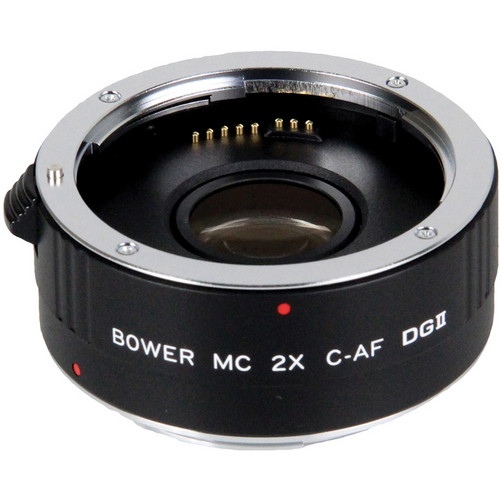
However, one item is another teleconverter: Bower 2x DGII Teleconverter. Even though I do have one already, it would be nice to have another one and compare and maybe combine the two to work as a quadrupling set! Two were available, a 4-element lens and a 7-element one. I preferred to order the 4-element type (and it is relatively cheaper) even though as it is mentioned in the specs that the 7-element type is sharper. I thought that a lesser number of elements is better (and could even reduce the chromatic aberrations problems). Vivitar's 2x teleconverter did show a strong tendency for chromatic aberrations.


Source: B&H
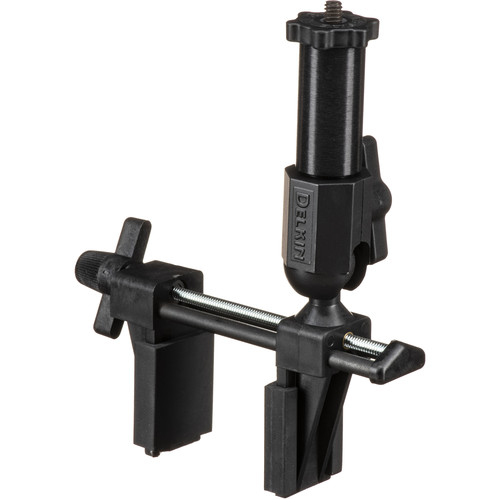
My second item is the Delkin Devices Fat Gecko Gator Camera Mount, which I was reluctant to order for some time now. With the presence of a gorillapod (I call it spiderpod sometimes) at hand, I've thought this item won't be necessary, but after some trial now, I think it is better to have both. I'm eying some sturdy performance better than the gorillapod, as it failed me in some instances recently. Even though this vice takes up to 1.36kg (3lb), I think it would take up to 2kg (4.4lb) in practice. The camera body, alone with no lenses, is almost 1kg (2.2lb). Just hope I won't be disappointed here. But hey! it can be used for other purposes as well!


Source: B&H
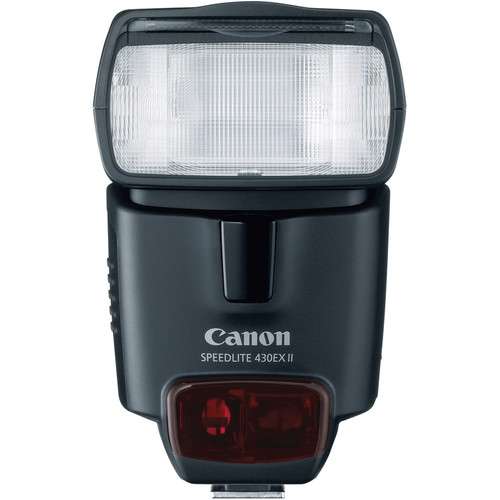
Now with the sweet stuff, my own real gift to myself. A little Canon 430EX II Speedlite to keep company with the big 580EX II Speedlite (well, not that big after the 600EX-RT). After reading Syl Arena's book (and still) my mouth got watering for more experiments and trials with Speedlites. Not aiming at portraiture yet, as it is a field that requires more than simply two Speedlites (plus the interaction with the subject). Yet, it will help in lot of occasions, like the High Speed venture. I'll try to come out with more experiments when I have it at hand. The 430EX II is generally cheaper than 580EX II (around half the price), and has a lesser guide number as well, yet I think it is a suitable choice for now because I'm thinking of using Speedlites in close distances in general and no need much light power. In fact, the opposite might be needed; a minimum power. According to the specs, minimum power (when working in manual mode) for 430EX II is 1/64, while it is 1/128 for the 580EX II - but they might be comparable because of the difference in the guide number after all.
Source: B&H
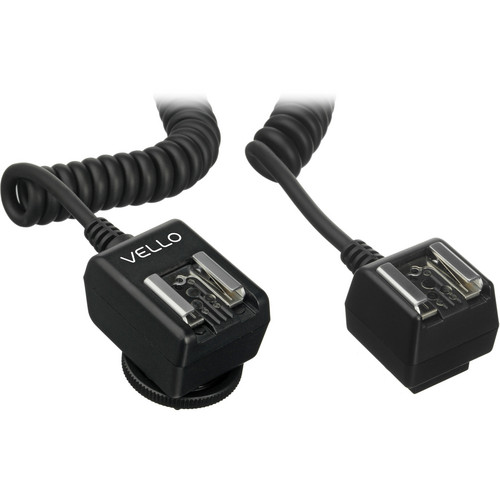
Further more, and to have more fun with my new (expected) toy, I've placed an order for Vello Universal Duo TTL Off-Camera Flash Cord (6.5'). The reason for the cable (for those of you who don't know yet) is that when it comes to E-TTL operations (let's say the automatic mode of the Speedlite) not all operations are transferable via wireless, and also for some aesthetic reasons, you might want to use your Speedlite as a master AND off-camera; something you can't do in wireless (because off the camera operations in wireless requires that your Speedlite must be in slave mode to be controlled). I'm lucky to have the Canon EOS 7D because the pop-flash (in camera flash) can work as a master for wireless operations.
All I have to do now is to sit, and wait. In hope I can get it ASAP. This seems the only joy I can get so far...

Now on the side of conlangs (and remember the main reason for having this blog is Ayvarith conlang itself!), I still didn't plan my next move yet. I'm supposed to work with Geltani though and design the phonetic scheme and maybe a syllabic system to spell out names, but with the occupations of the mind right now I can't be bothered to work with this right now and I'd rather work with my camera for the time being. However, that doesn't mean I'm forgetting about my dear conlangs! After all, I need to get busy as much as my body allows me to. As Edison said once: As a cure for worries, work is better than beer. Yes.