Showing posts with label stroboscopic. Show all posts

Thursday, May 14, 2020

Strobogenic IV…

As things are going crazy, and my continuous trials to calm myself down and take every day as it is, all I can say is: I'm tired. I'm absolutely tired. And guess what? Even though I don't have to go to work now with the lock-down, but still, I do feel so much pressure on my time, specially that I spend most of the daytime sleeping. Otherwise, things are going easy, sort of. Despite the total curfew or lock-down that had been issued and activated on Sunday May 10th (it was partial for a month or more I think). All what I'm worried about is my coffee, and chocolate.


Strobo-Faces

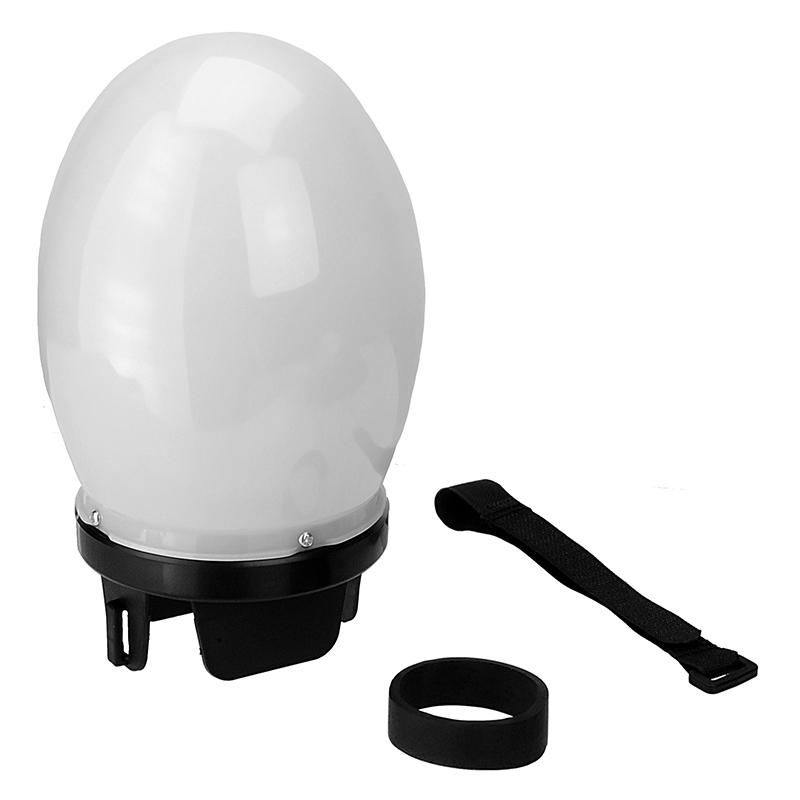
And, again, I had an appointment with myself, doing some work with stroboscopic flashes, and this time a kind of a selfie. I did a number of selfies which I've posted about in previous posts, which were done using the stroboscopic flash, but back then, it was about the hand movement. This time, it would be about the head movement with a little change as well, and that is, fitting my speedlite here with a my (new) trusty oval diffuser!
One of the stroboscopic selfies made some months ago.

Oval diffuser from Impact.
Probably I've mentioned before in some old posts that I've lost this diffuser just a time when I really got used to it and started to love working with it because of the nature of diffusion and "atmospheric" light that it produces. Anyway, I've ordered this again some months back and now it is the first time to use this new one! As I've noted before, this time the selfies would include the movement of the head instead of the hands like before and I have to say it was challenging little bit. Despite being comfortable, staying in my chair and working with the camera (unlike other projects I've done like the chess project for example), still it was hard to pin the light, I guess one of the reasons was that I was shooting INFRARED selfies this time with my modified EOS 7D. So just imagine the hassle: Stroboscopic flash + Infrared filter on lens!
اِلْتِفاتْ
(Turning)
Despite setting the stroboscopic flash for 5 strikes, yet the number of ghosts always seemed to be less than 5. A simple movement like turning the head from the side and towards the camera did look harder than it should be! Eventually, anyway, I had to raise the power of the speedlite, as I'm working with infrared here and needed more power, plus the diffuser which of course would naturally need more power. These factors, of course, limited the number of possible strikes at the given frequency, so I had to satisfy myself with 3 or even 2 strikes alone. The results after all were not that bad and conveyed the needed surrealism.
تَجَلّي
(Manifestation)
Of course, things should not stop at the level of such a simple movement as turning my head around, right? So, the work started with doing some extra moves; Up and down, near the lens and far, or the reverse. But at this level I think I've dimmed the room a bit to have some space to lengthen the exposure time even for fractions and be able to adjust the number of strikes accordingly, and the frequency probably. One (digital) drawback of shooting with stroboscopic light is that such info (i.e. frequency, number of strikes) are not recorded in the EXIF, and I fail drastically when it comes to memorizing these settings with precision!
هَسْتيريا
(Hysteria)
I wasn't troubled much with the shortage in the number of strikes as much as I was troubled with the post-processing, as the grain or noise level was not comforting my eyes, despite using ISO100 for most or all of the shots (didn't check the EXIF thoroughly here!). I have to say though that the grain in infrared images is somewhat like a "brand" back when infrared used to be shot on special infrared film, thus it might be considered a typical look or something familiar, but I doubt many people know this fact anyway! Nevertheless, in the digital era things should be different I suppose. Anyway, I must admit that my editing practices to the RAW file here did add a spike to the level of grain here; I've been a bit aggressive with my approach! Nevertheless, the dark attitude and atmosphere did serve my purpose for presenting a psychopathic state of mind despite the grain or noise. If you ask why did I not try to clean the noise, well, the answer is obvious I guess, simply because it will degrade some details.
اِنْسِلاخْ
(Secession)
However, speaking of grain or noise is not all bad. In some shots like انسلاخ (Secession), the grain provided a pretty much needed texture to the skin and mimicked (unintentionally) the effect of changing skin or sloughing (as when the snake changes its skin). Adding a bit of sharpness to that, despite the grains, made quite the mood. Here we also see the virtue of shooting in infrared (with relatively low threshold value), where a brown eye like mine would change to blue; Higher threshold would get the shot closer and closer to be monochromatic with almost no hint of color. I think Secession is the best I did get out of this series in this experiment!

Surreal Appetite

I was going to leave the coming set of images for a later post but I realized that they are kind of connected, besides being a somewhat off-shot from the previous work with the stroboscopic flash. The thing with working with stroboscopic flash kind of triggered my appetite for more surreal portraiture work, but this time without the flash part; Simply, a camera and a lens.
جَدَلِيّ
(Argumentative)
The surreal work here involves the camera movement as you might have guessed already. I rarely use such techniques for anything in my photography, but with the lock-down and staying at home for weeks without stepping out, made me think of things that I didn't even thought I would think of… am I making any sense here?
Anyway, while virtually you can try such techniques of camera movements with anything, I preferred to do "portraiture" for my experiments. I wished to do selfies but this is kind of… impossible (I guess), so I picked my typical target: My brother.
وَسْواسْ
(Delusion)
Equipped with my Canon EF 50mm, I've set the camera on (TV) mode, and probably this is one of the rare occasions where I would use such a mode to shoot. Typically, I'm on Manual, Av, or Bulb. This is because I know the time that I need, so I want the camera to adjust the aperture for me. The time was set to 1 second only, which was enough for a quick twist to the camera. The aperture then was somewhere between f/11 and f/16. I have to say, producing some good lines with such movement is not as easy as I thought, and probably it would have been easier with light sources, but nevertheless, it was a good surreal experiment.
اِخْتِلاجُ فِكْرٍ 1
(A convulsion of thought 1)

اِخْتِلاجُ فِكْرٍ 2
(A convulsion of thought 2)
The processing of such images proved to be a challenge as well. But maybe this is more affected by the subject rather than the nature of the style itself? I'm not sure. I was struggling to strike a balance between adding contrast to the image to emphasize the motion blur lines and yet keep some dark areas untouched; A lot of dodge and burn and layer mask work.

Now with all this work with these images, there had been some photo-shoots on the side and I've started a series (somewhat) for some of these while planning to do so for some others as well, but I'll keep that for later times. I'm not sure though I'd be able to do a post in 2 weeks time from now, as I would be busy in preparing a blog post for my Arabic blog, or so I'm thinking for the time being!

Finale

Maybe I never imagined myself saying this, but as an introvert, this lock-down and situation is starting to suffocate me. Even though not much has changed in my life, and even I'm relaxing as much as I can (even with Ramadhan ongoing). But the stress that comes from the circle around me is pushing my buttons to some extent, specially with the regulations and the curfew (which turned to be almost full curfew for 22 hours a day) that makes going out for essentials a bit difficult (a permit is needed to go to the nearest supermarket and only to the nearest supermarket). Children on the other hand are also some hassle as they are gradually and slowly seem to lose sanity for not going outside like before, and not meeting their "comrades" in mornings like before. Keeping them amused is a hard task, and they are pushed to spend more time on devices; The thing that their parents were telling them not to do just some weeks ago. Strange times indeed…
Number of hits here is increasing by a ridiculous rate because of the stupid and careless people, which pushes me further into depression. Meanwhile, I'm trying as much as possible to think of ways to invest my time with my camera, and even to do something that might give me some extra income on the side if needed (but I didn't conclude anything yet). I've also started to follow some of my interests in astrology reading and watching videos, but mainly in a trial to understand myself before anything else.
On a positive note, it is May here and I don't remember the temperatures being as low as 33oC in daytime like that for years. I've started a routine (if I can call it so) to stay in the yard for 20 minutes under the sun and read some e-books on my tablet. The real test for the temperature would be in June. Last year, June was the hottest month of the year with temperatures reaching 70oC in some places here. We'll see if the coronavirus fixes this weather now, and minds as well.


جاحِظْ
(Pop-eyed)


Thursday, April 30, 2020

Checkmate…

Strange, weird times are coming through. As much as the time appears to be slow because of the idleness, yet it is kind of pacing fast simultaneously. I feel like I didn't have much time since I finished my last blog post in Arabic, and feels like it was not weeks since I took the following shots that I'm going to talk about here! And guess what? Ramadhan is here already.
I'm actually grateful that Ramadan this year comes by while we are home, supposedly, instead of having to go to work and maybe sign up for a leave during the month to take care of my hysterical sleeping habits that get confused greatly during Ramadan, every year. It's such a bless for me, really.

Marbhsháinn

Well, this is just checkmate in Irish. I've mentioned in my previous post (or posts) a glimpse about my work with the chess set. I got this set specifically for photo shoots; I'm not a chess fan! Anyway been some time since I did something with this set, and so I thought it is time to work a bit. The annoying part though, working with chess can be quite noisy and loud unlike working with the feathers! If you are going to try to do anything like what I do here I hope you don't risk bothering anyone with the noise.

Воздушная Битва (the air battle)

Just as a starter, all my plans were set ahead to make these photos in black and white. Why? Well, let's just say it gives strength to the sense of drama here and also because black and white are strongly attached to the game of chess (in my case, the pieces are made of wood, and reddish and milky in color). In these shots, I've used 6 speedlites: 5 to flash, and 1 master to trigger the rest without shooting. This leaves me with one extra speedlite, the old 420EX which I didn't use here because it is, well, cumbersome to work with. I've checked the manual for this one and seems the only way to control its parameters is to be connected directly to the camera, but I might be wrong here. I got this speedlite for cheap from a friend. Anyway, adding this last one would not add much since I have 430EXII and 580EXII on both sides of the set, and 430EXII on top; Thus things were symmetrical. Why so many speedlites? Well, it was a high-speed session!

The chess set before adding the rest of the speedlites on left and right.
The white boards on right and left are for bouncing the light from the speedlites.

Now, the first shot, Воздушная Битва or the air battle, got me into a tiny trouble, which I had to solve by merging shots instead of doing everything in a single shot as I was planning. Well, several problems in fact:
  • My hand shadow from the top speedlite did cover and obstruct the shadow of the falling knight piece. Specifically the black one because I was holding the remote with my left (I'm a leftie) and dropping the pieces with my right. The problem was minor with the white knight but was a major one with the black knight.
  • As you might have inferred from the first point, I could not drop the two knights together. Working with a timer is not as precise as triggering the remote with my own hand, and holding the two knights in one hand and dropping them made them so close together which is not what I wanted. I really needed them to face each other. Thus, the only solution for this was to drop each piece alone (several times to pick the best shot) and merge them later.
Luckily, I've taken a shot before I work as a reference and that one was the base upon which the knights were merged, so in total, 3 images put together, with some edit to the shadows of the knights. Well, beside the total edit for the whole shot of course. In Воздушная Битва specifically, I like the luster on the flying black knight and in fact I've toned the luminosity of the colors when I converted to black and white specifically to keep this luster on the flying knight piece.

Фантом Кони (Phantom Horses)

Over with a high-speed shot (or composition to be precise, I guess), I moved further to the Multi or the stroboscopic flash. It's funny how this type of flash was unthinkable to me when I work with my speedlites, but now it is a favorable option when I work with such experiments. Again, I tried to throw 2 knights or horses together in one hand while triggering the camera with the other hand, but the results were not fascinating, to say the least. Thus, I needed my brother's help here and voila! It was perfect from the first shot. I had though to use also another shot for the background to merge it because my brother's hands shadows from the top speedlite. I'm not sure how many strikes of flash were there but I'm guessing 5 from the number of "ghosts" in Фантом Кони, and surely the frequency was low, probably 50Hz. In fact, 5 strikes of flash when working with stroboscopic light is now my standard and my starting point. It seems to yield some reasonable results in most cases. One thing I regret though in this shot is that I didn't ask my brother to hold the horses opposing each other face to face, so as you can see they are falling here and both looking left.

Кто Стоит Последним (who stands the last)

Next in order comes a simple shot, yet hard in the same time. At this point, and in order to shoot Кто Стоит Последним, I had to change the lens. In the previous shots I've used my Sigma 12-24mm and that's out of necessity a bit because the perspective needed to be adjusted a bit because of the tripod's stance. However, with Кто Стоит Последним, I had to change the lens and use Voigtländer 20mm lens so that I can use my polarizer. The Sigma lens is 82mm in diameter and I don't have a filter that fits, and converting rings (step-down) would be problematic. Thus, it was safer to just change the lens to Voigtländer 20mm which has a diameter of 52mm. The polarizer was needed here to emphasize the reflections of the pawns or pieces on the board.
The general idea for Кто Стоит Последним here does not involve any speedlites, but simply some dark atmosphere, dark enough to give me a long exposure. Meanwhile, as the exposure is on, I would be changing the placements of the pawns and keeping the kings in the middle without touching them. I was pretending to play a game of chess (don't know much about chess anyway!), so I kept knocking some pieces down and changing the placement of some others. All of this mess of course produced some ghosts, as needed. Good thing though that I didn't knock over the kings or move the board by mistake; With my Retinitis Pigmentosa in dark places thing could go... astray. Total exposure time was around 4m30s; And I guess this is exactly the time needed to defeat me in a game of chess, if not less!

Báisteach na Ridirí
(the knights' rain)

Then I had this idea, which was kind of "crazy" a bit, but I'm sure not as much crazy as other people I've known (nor my life). The trigger for this idea was that: since I've been editing or composing and merging my previous photos (except for the one using long exposure above), then why take a step further (just a bit!) and make a rain out of knights!?
I realized from the beginning that I'm going to need a lot of work done here, and as if it wasn't hard already, I had to struggle with batteries and power resources for my speedlites as I was preparing them to shoot high-speed. A LOT of high-speed shots.

Идет Дождь Коней
(It's raining knights)
My thought for working with this "project" was to divide the work on separate sessions, with each session being dedicated to shoot a specific portion of the image:
  • Shooting the 2 kings at the center of the board (and fixing the focus at that point).
  • Shooting the plain board.
  • Shooting the dropped white knight piece on various locations from the back to the front and sweeping left to right each time.
  • Doing as with the white knight but this time with the black one.
  • Doing as with the white and black knights but this time dropping them both together.
The last point here was actually eliminated later and I didn't touch it because of the crowded image that later became to be when I worked with the white and black sets separately. The plain board shot was kept as usual as a backup; I didn't really use it. All shots were done with the same light, same shutter speed, as much as possible. Because I was dropping the pieces on the board, there had been tiny movements that would be visible only on comparison but they didn't have a great impact on the merging process; Excellent!
I won't go into details here about the way I organized the files and merging them, but I'd just say I've followed a systematic way (and the file size was enormous). Not all images (more than 52 in total) were used; Some of them had to be canceled for various reasons. You might have noticed in the image above that there is a knight blocking the black king and I left it there intentionally to give depth and dimension to the image.

The white and the black sets separately when combined. Of course there is a number of them that were removed in the final image shown above. Merging them alone makes some nice shot it seems so I will try this later!

Unlike the previous high-speed shots, I've slowed down the shutter speed here to 1000-1s, down from 8000-1s (max for Canon EOS 7D). I was hoping to capture some motion blur for the falling pieces, which it did, but not to my desire. The view on the camera's LCD was not good enough to judge, but anyway, I continued working as it is. After finishing the merging of the white and black pieces layers, I've tried to do the same with the doublets (those shots I've made for dropping the white and the black knights together, using one hand) but the image looked crowded already and no need for more. I'm keeping this set though for some editing experiments!

The Falling
One of the "doublet" images that I decided to not include in the final image.
Using the polarizer really paid off.
I had some ideas also to do an experimental light painting on the set before I move on another idea in my work with the camera but I couldn't find a suitable method or idea to apply here, and probably I don't have proper tools to do such delicate painting for small pieces like that. Most of the time, as I've encountered so far, light painting is done on a larger scale a bit and not a delicate one like a pawn and a chessboard.

Finale

Crazy times, and I'm trying to use every minute I could to the max, with my camera. Well, maybe other things as well (gaming for example?) but I'm on the go and trying to try more and more with my camera, in hope of creating something unique still.
Meanwhile, thoughts of leaving my work and do something on my own still roll around my head, as I'm not sure how stable my current job would be still. yet, I'm grateful for the situation now, but nevertheless I cannot guarantee anything in such times. Not sure where I'm heading but I'm trying to take it one step at a time, and enjoy as much as I can. If only I can control the damn mood swings.
Being in lock-down and home quarantine might not be as a catastrophic for an introvert like me, as it would be for an extrovert. Yet, I do have my feelings towards it. In such times, my eagerness for traveling has increased ten-folds than before, even though I didn't know before this crisis whether I can travel or not and probably I wasn't ready for it, but now I really need it to just change the scenery and be away from people. As for me, I don't go out of home much already as it is in normal days so a quarantine or home-stay won't make much difference, but it s the general atmosphere and the people around that would just push your buttons up and down and screw up that peace that I've been trying to work on for quite some time. I need to travel probably to change the people, and not the scenery. It is in such times I just so wish that I have a home of my own, but in a place like this, how would this be possible at all…

Thursday, April 16, 2020

Strobogenic III…

Keeping myself busy here by typing some blog posts. I got some ideas for my Arabic blog which I didn't post into for quite a while. Suddenly, I'm filled with ideas and busy typing stuff for this blog and that blog, as well as doing some photos (or, trying to). All that with a heck of sleeping pattern. Anyway, the good thing is that I do have some stories to tell here, about experiments and shots that I've worked with a month or two ago before even the quarantine and home stay issues! These shots or experiments are actually a continuation for my experiments with the stroboscopic flash a while ago, when I did several selfies using this mode, as well as some "impressionistic" work with some roses, which I've posted about a while ago.

Fluffy

As I've just mentioned, this is a continuation for my work with the stroboscopic flash, and this time I've picked a very traditional item (for me) to work with: Feathers.
I kind of have a long history with feathers. I do like working with them in various situations: Macro, abstract, Still Life; And now, Motion.
This session was done on two parts actually. The first part was somewhat a failure because the speedlites were pointing directly to the set, where I kept a glass jar filled with water. Despite placing a paper to diffuse the light, but the distance between the speedlite and the paper was almost null and to have some good diffusion a space is needed between the material and the light source, so I had to shoot it again using a different method. In the second attempt, I did place some white boards to bounce the light from the speedlites and then onto the jar, but still the reflections were kind of harsh. Thus, the majority of the work here needed a heavy load of Photoshop work to enhance the reflections to some degree, beside the other adjustments of course.

The first setting before using white boards.
Just by luck, 4 feathers dropped down forming two Xs!
Hope this is not a bad omen!
In my previous attempts with stroboscopic shooting, I didn't get the chance to have a black background. This time, though, I do. And now I can say with utmost degree of assurance, that a black background for such shots is a MUST! This black background plays a grand role in enhancing the saturation of the colors and helps to show the movement much clearer. There might be some details in the black background but that's OK; These can fixed in Photoshop most of the time.
Red Chaos
Before I head to the bulk of my work here, I just need to talk a bit about Red Chaos because this image belongs to the first attempt, and not along the rest of my work in the second attempt. However, the image itself was not created until later in time, when I finished (mostly) working with all the shots that I've shot in the second attempt. After working with the second attempt, I did get this idea to examine the possibilities further with the images that I've taken in the first attempt; Because I didn't see any chance when I examined the images the first time, besides the hideous reflections on the glass. Red Chaos, however, is composed of various images overlapped together; A technique that I've been using a lot lately on various occasions and in old and new images. This technique is also one of the major tricks that I've used with the second attempt collection here (and these triggered me to think back at the failed attempt in the very beginning).
Raining Feathers
By the second attempt, I've decided to add more feathers of various colors instead of working with red feathers only as I've planned first (as apparent in Red Chaos). I have to say, Raining Feathers is one of my favorites despite the off-center alignment here as dropping the feathers was a random action and controlling the point of falling down cannot be set precisely. I realized, doing these experiments, that throwing off feathers is not an easy task at all! Also, the drier the hands, the better. The water at this level turned reddish because of the dye on one of the feathers that I've left from the previous attempt, but that was fine with me; The colorful, the merrier.
The Falling Red
Back with the red feathers, I did many drops and shots, all stroboscopic, and honestly, I didn't find much of the results amusing. In The Falling Red, I do like the movement of the feathers here, with movements like a dancer on stage, but the problem is that the tip of the trail at the bottom was not perfectly on the top of the jar, but behind it. I thought of fixing it but I decided not to lose much time on it and work on other shots. Probably Rest In Peace is the one with some acceptable result here, and it is worth noting that I've fixed the basic feather already on the jar (i.e. it didn't just land like that on its own).
Rest In Peace
At this level, I've shot a lot (and needless to say how much power I've used for the speedlites!), and I've realized that despite the movement, as recorded by the stroboscopic flashes, the shots were somewhat idle in some sense. Something was telling me that they needed some action; Some movement of some sort. I could have slowed down the shutter speed maybe to add some motion blur, but I've preferred something stable. So, it occurred to me to add some movement manually, without changing the shutter speed and see what happens. Sometimes, stroboscopic flashes do have an effect like the high-speed flashes in terms of freezing the motion. The final result was "creating" two images.
Eruption

Red Escape
The motion was easily recorded by dipping the tip of the feathers into the water in the jar and hitting them hard to make a splash, which was created successfully but without any presence for these feathers in the image in fact! So, it was time to be inventive as usual and compose images together. Adding to that, only one image for the splashing water was to my liking, while the rest didn't seem interesting much, so in the two images here, Eruption and Red Escape, the splashing water is essentially the same image put with these two, but got edited in different ways depending on the position of the feathers in the two images. In all of these images, and specifically in the second attempt of shooting these stroboscopic images with feathers after using a white board to bounce the light off, I had to edit the image and work on these white areas on the glass jar caused by the light reflections from the white board. I've tried to fix those in reality (i.e. by changing the shooting conditions) but that was almost impossible with the setting I'm using because diffusing light do require some space, and even though I'm bouncing the light off white boards, the boards themselves are not distant from the speedlites to give the chance to the light to spread. Actually all this work with the second attempt images made me realize that I could maybe do something about the images in the first attempt, and this is how Red Chaos (above) was created.

Methodology:
In my final work with the camera and speedlites, I've noticed the tendency within myself to take it easy and to just try and compose things by editing in Photoshop and such, like the previous shots for example; Eruption and Red Escape, as well as more that will come in future posts, hopefully.
This really made me think: Was I too hard on myself trying to do everything in-camera and with little processing? Or was I on the right track and I'm going astray right now? I don't really know the exact answer and probably there is no right or wrong here, but what I think of myself is that I was highly affected by the nature of my photographic life in the past few years, specifically when I was a member in a photography group, when there was much focus on doing "authentic" work with little editing because, naturally, these are the regulations usually for photography contests. However, when I see other people online do their photographic work, specially when it comes to commercial and product photography, those artists don't see any shame in editing their work to represent what they are working on. Many photographers out there do edit their work in composites to create some surreal images and deliver that WOW effect to the viewers. It is editing, but an estimated and carefully planned one, and not just a random one. Not everything can be fixed in Photoshop.

Now, to be specific about the stroboscopic photography, I've started to make sense of it all indeed. On many websites that I've encountered online, it might be stated that such type of photography is subject to trial and error. This is true to some extent but not completely as there is a window of calculated guess at work here, starting from the formula providede in the speedlite's manual:
Frequency = Number of flashes ÷ Shutter Speed;
(f = N/t)

From this formula, I can start, indeed, planning for the shot just as I plan for a regular shot based on the aperture I want to pick for the scene. The starting point here though would be either the number of flashes I need, or the shutter speed (or time). Mostly it would be the latter depending on the situation, and probably it is the most flexible factor here.
As for the number of flashes, I usually fluctuate between 5 and 10, and this is the simply the number of replications you want to see of your subject in the image. Condensing an image with so many replications of any object as it moves is not a good idea on most occasions actually and find a number between 5 and 10 is quite suitable for most situations.
Now, depending on these 2 factors, the shutter speed and the number of flashes (replications) required, the frequency is yielded using the formula above; But lo and behold! Sometimes the frequency exceeds the limit (199Hz for Canon's speedlites) or even simply that the batteries or speedlites power is not enough to support the operation, and here raises up the important of having a dark room or place to work; Because with this, you have the flexibility to increase your shutter speed as you like, and since the shutter speed is in reciprocal relation to the frequency, that means the more shutter speed you add (slow down, increase time of exposure), the lower the frequency would be - this said in case of fixing the number of flashes or replications.
And believe it or not, the frequency of the stroboscope is better be down and not high! This is because, the higher the frequency you use, the closer the beats of the flashes would be and the closer the replications of the moving object would be. If you care about showing details in your work for that moving object, then it would be wise to add some distance between replicas of the moving object in the scene or photo. By definition, the frequency is the number of beats per second (that's why we divide N by t), so the higher the frequency, the beats per second are going to be more, meaning more replicas in such a short period of time which essentially reduces the distance between these replicas in the image. To summarize all of that:
Number of flashes (N): Number of replications
Shutter Speed (t): The total time of the exposure
Frequency (f): The distance between replicas

Of course, all of this talk does not include the power of the speedlite(s). The more speedlites, the better, of course. Sometimes, one might find oneself forced to change the whole stroboscopic settings to meet the power requirements, specially if the speedlite(s) is/are running on batteries alone without any external assistance.
So, these are my thoughts about how to build up the initial settings and idea for working with the stroboscopic flash. Adding to that the very first remark I've mentioned above, that one must also think and include composing a number of images altogether if required and if it is not critical (e.g. for photo contests which usually require authentic work rather than composite photos). I hope the information here is useful for dear reader.

Finale

Well, at the end, I think I will be preparing these images here to be uploaded to the stocks since I didn't upload any images for a long time. There is a number of images too related to chess, which I might post about here later. I worked with chess for a long time and I think I will put it all aside for the time being and start something else.
In times like these I'm really not sure how I feel. I do feel relaxed at one point for staying home, but in the same feel upset because I cannot move around as I like as well (specifically for shopping and getting snacks and some necessities). But beside all these mundane everyday matters, I'm trying to focus on the bigger picture and what about to be coming next. Great uncertainty lie here and I can't figure out any heads or tails out of it. This even had me re-think, again and again, about my career possibilities beyond my current job. Is there anything I can do during this time to have some cash on the side? Moonlighting? Preparing myself to leave my stable job? This said, I have to say that things are fine so far with my work since I've already had my salary for March without going to work, but would that continue? I don't know, like I don't know many other things about the situation here. I'm supposed to go back to work by April 26th, but even that date, might be pushed forward further if things didn't calm down.
Many things, and ideas, are chasing through my mind and I really need to work with my camera further to help me calm my brain down. Also, I do have some plans to play some games. I'm enjoying this home-stay thing because this is what I do already before all this had started, but some annoyances are inevitable. Oh how I wish to have a walk in some lavish garden right now, and rest in a shady gazebo…

Thursday, March 5, 2020

Strobogenic II…

Things are going so fast that it feels like I didn't post here for a month or so. Because of the nCoV-19 pandemic, people are going crazy here. My workplace decided to give everyone 2 weeks off until things calm down. Thus, more time to work with my camera hopefully, until March 15th. Probably because of that, it does feel like ages since I've posted here and actually time is kind of passing slowly. However, I'm not complaining; I'm counting my blessings here and thank goodness for the fact that I don't have to drive in that daily mess!
Anyway, I've been working with my camera and doing many things with some old photos trying new editing techniques but I'll save that for later. For this week's post, I just want to focus on my work with the stroboscopic lighting which I've established by my last post (or before?).

Strobogenic II
In continuation for my work with the stroboscopic light, and after doing a number of selfies which I've posted about last time (before my RP post), I've kept on working on a little experiment, with roses this time. Initially, this was not my idea; I was thinking of a real model (I mean, someone posing for me in general not a paid model), but that didn't happen unfortunately (still seeking that goal though!). Nevertheless, it was a good experiment somehow from which I've learned from some mistakes (or "misfortunes" if I can call them so).
Grungy Passion
The idea was simple, throw a rose and record that in a stroboscopic manner. However, I've read online in some texts about the topic that the background should be black. For me, I've neglected this particular point simply because I don't have a black background, but I thought working in a dark room would somehow solve the problem. Also, doing my calculations in relation to the shutter speed, the frequency, and the number of flashes, I've realized practically that I do need a dark room to lengthen the exposure freely; Lengthening the exposure here does not really have to extend in terms of seconds or anything. It can still be parts of a second but still considered "slow" in terms of motion (does that make any sense?). Speaking about something in the order of 1/30 of a second and up to a second and beyond.
Side note: Using a shutter of 1/30s with the maximum frequency of 199Hz on the speedlite yields about 6 strikes of flash, which means the motion can be recorded on the sensor with such shutter speed and frequency on 6 moments during this exposure time. Notice that I'm not talking here about anything related to the power of the speedlite. In fact, at some point and under some settings, the speedlite options would limit the number of strikes that can be set in the configuration menu, and this is in relation to the expected power consumption and some issues related to the protection of the speedlite from overheating. Trust me, the heat is a serious issue even with such small units. For this reason, using multiple speedlites with each dialed to relatively low power is a good choice to overcome these limitations.
Receptive
Thus, with a shutter speed of 1/30s it would be better to work in a dark room as much as possible to avoid unwanted ambient light and leave the speedlites to take control over the whole recording of the scene. Nevertheless, I had my own problems with the white wall here, for obvious reasons! Anyway, in the processing phase, the amount of grain produced was great at times, beyond repair, so I just made it part of the image, as in Grungy Passion. Worth noting here that this image specifically was flipped upside down to make the rose as to be falling down, instead of being thrown up. In fact, the gesture here probably helped a lot. Along that line, in Receptive, the image has been turned for 90o to mimic that receptive motion as if the rose is falling from above, and I tried to emphasize "the visual reading" from the right side here by flipping the image to let the hand start or initiate from that corner. Generally, most of these images were processed with saturated colors but saturating the Red tones only. Cropping as well was a vital tool here and I went beyond the typical cropping limits of Photoshop (remember, I have an older version which has nothing but the rule of thirds embedded to help in cropping).
Side note: In image design, or let's say it is generally accepted, that a viewer, any viewer, would start reading an image "visually" and try to analyze its elements starting from the "natural" direction for that viewer in terms of writing and reading, usually. Thus, if the viewer comes from a culture that reads and writes in left-to-right manner, then "reading" an image would naturally start off from the left. For this reason, I'm trying to emphasize my vision and my background culture by trying to emphasize the direction of reading on the photos I create, as in Receptive (and in Passionately Reluctant as will be shown), where the reading should probably start from the right side because the hand is anchored towards the lower-right corner. 
Passionately Reluctant
This trend of moving things or flipping things to the right side continued with Passionately Reluctant, which is apparently not in a square format (or 1:1 ratio) but rather in some weird elongated ratio here and the reason for that is I tried to keep the motion of the rose inline and coherent with the rule of the golden spiral. However, I had to change the aspect ratio here a bit to fit the curvy line for the golden spiral with the motion of the rose, which ironically, takes away the "golden2 out of it (in case you didn't know, there are other spirals named after metals and each one of them have a different ratio attached to it). This one though didn't appear as throwing the rose up (though I actually did but holding the tip of the stem only). It appeared as if I'm moving forward and backward with it. It doesn't matter anyway; I like the motion after all. Probably the grain here is not quite pronounced but it is there still. I'm not sure though if I did some noise reduction here or not, but for sure I did emphasize the red tones for the rose.
At this level, I've realized that a single rose is not quite "pronounced," if I can call it so. I had this impression that just one rose was not quite enough, specially that the images that I see and judge are viewed from the LCD of the camera; Those images you see here been subjected to a heavy work of dodge and burn and contrast enhancement along the way. In the original RAW files, the trace of the single rose was barely visible. So, in order to enhance my chances, I've decided to throw the whole bouquet of roses!

انْفِراج (relief)

I'm not sure why I named the last shot in the series in Arabic really but I just felt like it. This image as well puts more emphasis (in my opinion) on reading from the right, because if you start reading the image from the left, it would be as if the roses are being caught and not released, in opposition to the title; and again, as I always advocate, the title of the image is part of the image and an essential part of it - NEVER leave your image without a title. Thus, to convey the meaning of releasing and relief, one must start from the right to understand the image properly!
Technical: I didn't go through the technical details in the beginning, but here how was the setup: I've used all my speedlites (7), but one of them was for controlling the other six. So, in action, 6 speedlites were shooting; The seventh remained on-camera to trigger (the in-camera wireless option doesn't work in Multi mode). The speedlites were pointed to a wall in front of me to bounce the light from that wall onto the scene. The room I was in was small so this move did light the wall in the background in these images - for this reason, a black background should be a must in making shots like these. Not saying a white background won't be artistic in any way though, it is definitely a delicate matter and it often gets out of control.

Finale
Now, this is a second patch of the stroboscopic work. At the time of typing these words, I did indeed produce many more images and did other experiments, as I've stated above. During this holiday though I must also invest some time in other important things... like playing games!
With all the fuss and mess going on about the Coronavirus worldwide and the fear spreading over people, I do find myself having some strange feelings deep inside. I don't know what are these feelings, but something makes me calm, and chilling. Some annoyances are there for sure but the general theme here is, quiet. Could it be because of being away from the daily jams? The workplace? The lone nights that I got to spend wandering alone with my thoughts or working with the camera? I don't know. With this tranquility, though, comes a sense of worthlessness for this world. Maybe it is a time period of re-evaluating my life? Memories are visiting me a lot lately, lifting me to some status between soberness and drunkenness; A happy ecstasy and yet a sad one in the same time. Such weird feelings that I'm not able to translate at all for the moment, nor any help could be sought from Google Translate for that as well…I'm just here, waiting for happiness to happen.

Thursday, February 6, 2020

Strobogenic…

February! It really exists! If some other month like January is to be visiting us any time this year I'm kind of sure that half the population of Earth would be begging on the roads for their bread. from my side, I just hope that this month becomes an active month for me somewhat. I've been taking shots already and having some ideas here and there, and as usual, I won't put the eggs all in one basket in this post, but I'll be talking about a specific series of shots that I've done about 2 weeks ago; All by coincidence! Anyway, beside the series I'm going to talk about, there are some new editions made out of old shots and I've been posting some of those on my Instagram. I'm not sure though if I'm going to post about them here but there is one specific old shot that I need to post about here in relation to the series of shots I'm going to talk about.

Chain of Events

As I was looking at my images from 2018, and looking specifically for some photo that I didn't post before to my Instagram, I've encountered this shot, which is a selfie, but a regular one somewhat. The special thing, though, about this selfie, that it was an experimental one, taken with 2 speedlites holding them by hand on left and right, and each one of them had a black cardboard with a thin slit opening only. And that what made the shadow line at the center of the face. Since a selfie like that might be a bit "regular," I've decided to work a bit on it and transform it to something else.
Nach Mitnacht
Naturally, my first choice or the first thing to think about in such instances is to examine the B&W possibility and what it would yield. Tweaking the sliders around and voila! Some weird creature was created here, in addition to the eyes brightening. This was the beginning.
Some days later, as I was testing the stroboscopic (multi) flash properties with one of my 580EX II speedlites, I've decided to take a selfie or two. I was actually lazy; I was just there sitting on my recliner and taking shots. My aim was actually to make out some sense for the relation between the shutter speed, and number of flashes and the final outcome. I really did not have any aim about creating an image at this level; It was all still some testing only.
Anyway, without  going deeper into much technical details and talk,I was up to a surprise later on; I'll come to that.
As I went through the photos, I've started to filter and delete some of them which had no significant move. There are some with some good hand gestures. I kept those and started to work with them in Photoshop.
Avoidance
Typically, my first step when converting to B&W in Photoshop, would be using the Infrared preset from the list and start adjusting from there. Usually this preset do get to my taste in some way so I find it appropriate most of the time to start adjusting the tones from there. Surprise surprise, and as I was trying to suppress the background using the tones to turn it to black, weird things started to happen and I've remembered Nach Mitnacht right away. This was the spark that initiated the series, started from Avoidance and ending up with The Weekend Selfie. Some of these shots, like Avoidance, did require a significant crop (using cropping guides as much as possible). Despite the movement of the hands in some of these images, like, again, Avoidance, yet, the focus might be scattered away and I thought it might be better to ensure the focus and guide the viewer to the eye, and that required a great deal of a crop.

De-Focus
Not all images, though, did require such a big deal of cropping as I've stated above, but there was something to be done about some lines in the corners or the edges and such. For such instances, I tried to place the eyes exactly at the center of the image, as it sounds it is the natural placement for them, specially with moving ghosted palms, right? And let's not forget the horizontal placement of the eyes which I've tried to place on the upper third line via crop.

The Multi-Takser
Personally, I do like the brightness of the eyes in De-Focus more than their brightness in The Multi-Tasker but strangely, and this is the surprise, this image got popular on YouPic and even gained a star for being "inspirational". Not only that, but YouPic also published the image to their Instagram feed for the B&W category! I didn't know about its existence before. On Instagram itself, the image did gain some likes, but typically not much (yet better than other images I post daily now). I take it that this surprise might have been caused by the movement of the hand which is clearer and denser here than in De-Focus, and they take a bigger portion of the image in general.
The Weekend Selfie
This "liking" and push in (some of) the social media did give me a bit of "hype," if I can call it so. It did really make me think of future work using the stroboscopic flash often (which I did later, but that's for another post). But maybe the most important moral here which I need to remember, and keep remembering, always is that: Just grab the camera, and shoot, even when you are lazy. You wouldn't know what will be the results. In addition to this, I might be adding one extra point to my "style" with such processing, which makes portraits dark in a somewhat UV Photography style. Could be something to venture on a bit further. But probably shouldn't exhaust it to the limit of turning it into a cliché!

Finale

The Weekend Selfie
Sketch effect
Well, it is February already and the time has come, as in every year, to make up some photo shoot for Retinitis Pigmentosa. Believe or not, I did already make this shot and it is published, but I'll leave it for another post in another week or so. The shot was relatively simple and I tried to apply some elements from the designing tips I've re-learned lately. I'll come to that in time then, though.
Some variety of flash cords
Meanwhile, I'm hoping and wishing to get more time to work with my camera, specially with schools starting here and we are back to the cycle of traffic jams and the extremely-tired body. I have some ideas out there and yet I need to think them through and think on how to apply them. To add to my hardships already, my flash cord (which allows me to trigger the flash off-camera) seems corrupt and is not functioning well lately. It fell off. Is it time to get a wireless trigger? I mean one that can work under HSS and Multi or Stroboscopic modes, as well as 2nd Curtain Sync? Even if I got one, I'm not sure I would be able to trigger other speedlites that way unless I get a receiver for each one of them; A lengthy and an expensive task. I'll need to do more research in that venue.
I would be going on and on with my mood swings already but maybe I'll keep that, too, for another post. I'm so tired of everything here, literally, so much that I find it hard to chew the food I eat sometimes. January is over already but probably we are not over yet with the bad news still. In the meantime, I'm considering meditation (which I'm not sure when to do) in hope that it would teach me how to focus again. I miss writing poetry; I was supposed to write one for my late friend, Paula, who departed last November, but I couldn't find the mental power yet to compose. Maybe I should make this a priority over my work with the camera. As for now, it's time to close my eyes a bit…

Thursday, October 24, 2019

Speed Gambling II…

I'm typing this in a very short time so I guess it will be a short post. Many things are going on and big part of that is vexing me, but some good things are happening (or happened actually by last week) when I posted my Arabic post about high speed photography in my Arabic blog.
I was not going to type anything here for this week and call it off, but I'm gathering my power (and mood) to do so. The whole week was busy and amazingly annoying with many things caused mainly by people not being able to regulate their timing and don't really know the value of time. I thought I was guilty of that myself but with this passing week, I guess I'm far way too wrong to judge myself like that. Anyway, among these tasks that I had to do, I had some time to process the last bits of my dice images which I've started 2 weeks ago, and also had the chance to filter some and even tag them (put information on these images) in order to upload them to stock websites. And there were strange events there but I will recount them later. Let's see first the Phase 2 of dice photography here.

Stroke-Stroke-Stroke

As I've posted the week before last, I was working on some high speed shooting for dice falling into water, and I've been fluctuating between the macro lens (100mm) and my trusty 50mm. However, the bulk of the work later on continued to be with 50mm since it was easier to deal with mistakes with this lens, while the macro 100mm lens needed precision (lot of it) to throw the dice exactly in place, in the viewing field of the lens.

Picasso's Dream
However, with 50mm lens, I do get the privilege of cropping the image and place the dice almost where I want in the frame. The drawback though is that the details in the water movement is not quite clear at times. Nonetheless, interesting shapes can be produced at this level. However, after some time, I thought why not speeding up the flash strokes instead of the shutter speed? In other words, what or how it would look like if I used the stroboscopic (multi) flash option? Which I did, and the results were pretty interesting here.

ارتطام (Collision)

I've started as usual with 100mm macro lens but soon I've changed to 50mm again. I realized right away that to get some nice images somehow similar to the high speed shots i can do this work alone by using regular shutter speed (far slower than the sync speed even) and simply go around that by using the stroboscopic function of the speedlite. Unless, of course, having a multiple occurrence of the object is not the aim, then the typical HSS methodology is the thing to go for, even though some shots I've made with the stroboscopic mode do look similar to HSS, as in the case of Three and Two Threes below.

Three and Two Threes
I'm guessing here that to get a closer look to HSS and eliminate multiple images is to quicken the shutter speed a bit. In the speedlite's manual, there is actually an equation to calculate the appropriate shutter speed required for a combination of flash frequency and the number of flashes. However, I've actually played around with these numbers and if there is one thing I've learned in this experiment is the fact that one should not lose oneself to the technicality and just do it. Things are not supposed to be perfect and things are not supposed to be taken with a single shot only; So, there must be a trial and error and experimenting. Calculating things can be useful as a rough estimation but NEVER decides what the end result should be nor the final outlooks.
Also, one more thing I've discovered here is the fact that increasing the number of strokes is not necessarily a good thing. Sometimes having 5 or 10 strokes of flash in a single exposure is just about enough to record the movement in a clear way, while too many strokes can or might stabilize the object more or even congest the scene.

Dice Race

Another thing I've learned, the hard way, is to keep cleaning the lens after each drop of the object! As you can see in Dice Race, there are some octagonal flares caused by some water droplets on the polarizer filter over the lens. I was able to crop it out in some images but the majority persisted and it was not easy to remove them, and the best I could do to some is to reduce their "weight" in the image by cropping, and sometimes eliminating them by adjusting the curve and contrast.

Now at this level, I think I'm done with the dice experiment and I do have some ideas to further experiment with other objects and ideas. Anyway, I've taken the time to fill in the information for these images which I've prepared to upload to the stocks (31 in total). To do so, I've prepared a list of keywords and 2 descriptions to use (one for HSS shots and one for stroboscopic ones), while changing the name of the images only. It was a long process to edit these info with every image in Photoshop and I'm not aware of any software that does the work in an easier manner. However, I've uploaded the files to my main outlets: Canstockphoto, Dreamstime, 123RF, Mostphotos.
The weird story here comes from Canstockphotos. If you click the stream at the end of this post to get into my gallery (at the moment of typing and posting this blog post) you might notice 2 images being accepted ONLY. The rest were rejected for "inappropriate keywords". This took me by surprise because the keywords are the same for all images, so why accepting two of the series and rejecting the rest? This is something beyond my "intelligence". The other thing is that they don't specify really the keyword(s) that caused the problem so it is like a gambling game to adjust and re-upload and wait and so on. Thus, I've decided to delete all my images and leave only these 2 which were accepted for reasons I don't understand yet. Meanwhile, the whole collection of 31 images is available on my Mostphotos (they don't review images), which is a relief. Now, it is just a matter of time and waiting for Dreamstime and 123RF to either accept or reject. They usually take a long time; Sometimes, pretty damn long time…