Showing posts with label bruce barnbaum. Show all posts

Thursday, November 12, 2015

The Rant…

This is a quick wrap as I'm having a break from working on a new set of panoramas, in what is supposed to be my first commissioned work!
I got the job via a friend, but I will tell more after the whole thing has worked out. It is an interesting place and I'm already having the typical technical problems which accompany panorama-making usually. The work is needed by next Sunday, thus I'm trying to invest every second of my time, and every available space in the memory of my PC! As I'm writing these words the job is not over yet (that is the photo shoot) and probably more to come.

Architectural Anatomy
Meanwhile, I've been trying to dig more into previous panoramas, specifically those from Oman and Malta.One of the interesting projections I've "discovered" so far can be seen in Architectural Anatomy. A friend wondered why I didn't put the huge circle (originally an arc) down; the reason behind this is, when I formed this projection (planet projection), the view seemed to be like a head (and some did indeed comment that it looks like ET!), and hence the name. To imply this vision, I had to keep it that way as can be seen here.
Backbone
Also, there are the panoramas taken from Sultan Qabus Grand Mosque still awaiting for their turn of projections (even though I did extract most of these). One style that was favored by a number of people was Backbone, which for me does somewhat give a sense of Gothic architecture (despite the purely Islamic nature of the architecture in normal format). I guess maybe that's why it was liked by many westerns? Who knows! It was done in 3D as well (and it was liked mostly in 3D anaglyph format). In this specific vertical panorama, I've decided to go with the typical spherical projection instead of the Mercator which I've been using lately for vertical panoramas specifically. For some reason not so clear yet for me, it seemed that having an elongated vertical panorama with this one adds more strength (and probably this is what increased the Gothic effect).

L-Orizzont

My timing is a mess lately because of many preparations with the group (and I really hate it when this happens) - always jobs done to the last minute. Surprisingly, some of my accepted panoramas (in sorting) for some contests, was later discarded (but I'm uploading it anyway), namely L-Orizzont and some others. My experience tells me that some judges are way too much of a burden for no right reason. Same judges did already exclude some of my most renowned panoramas, like Easnacha, which is not displayed in Trierenberg's Luxurious Coffee Table Book Edition (which is printed in a limited number of 500 worldwide). For this reason, I'm giving a deaf ear to these comments and judging, and to some limit, I'm uploading what I see appropriate.

Easnacha

This coincides with my e-mail to Bruce Barnbaum, an author or 2 great books about the art of photography (and currently in the process of reading the second). It was great to have him reply to my e-mail. I asked him about his ideas about Panoramas, and Photography contests. Somewhat, it didn't differ much from my view (excluding the panorama part). Here's his reply directly from my email:

TJ,

I agree with you about panoramas: it seems that most people are doing them today simply because the CAN do them. I've seen virtually none that excite me.

Photography contests are utterly useless: It's much like asking, "Who is better, Rembrandt or van Gogh." The question, itself, is stupid.

Thank you for your nice comments about my book!

Bruce Barnbaum
I tried to let him judge some of my work with panoramas despite his disinterest in them, but he apologized about it for his busy schedule. No wonder. I do consider this man one of the cores of arts! Not only at the point of contests do I agree with him, but also in other stuff mentioned in his books (like he does not do much portraits and does prefer abstracts and landscapes). I'm greatly happy that he did answer my e-mail, and also having something in common with him somehow. Ironically, after sending this e-mail, I continued reading his book and I did read exactly what he expressed in his e-mail about photography contests.
I'm emphasizing this point because I do feel like I'm doing a job for others with one exception: it's not commissioned, but quite the opposite. I'm paying for these contests. Why? I know it's all about the reputation in the field and that makes a way for other relationships and revenues, but looking at the limit of the stress and the efforts done to get a single acceptable image (by the members of the group or myself), makes me feel that it is just unworthy and far from "art." We are, literally, spending hundreds of dinars every year just for such contests. Things are worse my way, since not much of them does understand or have some support to the art of panorama. They say you should do (or photograph) what you like most because it makes you indulge easily and get creative - and this is what I'm trying to do with my panoramas; yet, those who are supposedly to be the art-patrons, do not understand or simply neglect this art. That's it... ranting over.

Triq tas-Sema (road of heaven)
طريق السماء


Thursday, August 6, 2015

Toys Toys Toys!

Here are they! My new toys and gear! Well, forgot to mention anything about them in previous posts but I will dedicate this post to them. Up until this moment I'm trying to find some time to test what I got here and write a review for them on B&H website. However, this week has been hectic for many things (and believe it or not some of that because of work despite the dormant summer season). Add to that, a turmoil at home because of renovation work that I just can't swallow.

Toys!

Now, to the business. All in all, beside the toys there is a side order of 2 books but I'll keep those for later down. Most of the items were actually from the wish list I've stored on B&H website and I've just realized that I was just "window shopping" for more than a year without thinking of upgrading anything in my arsenal of "toys!" Most probably it is all related to the downgrading financial situation worldwide.

Source: B&H
Anyway, first things first. A camera and lenses case or bag, from Think Tank. This item was on my wishlist for 2 years or even more! Now it is the time to get I thought, specially with the deteriorating conditions of my own bag right now. It has lot of pockets and the main inner body can adjusted to many positions to fit even a bazooka lens (sarcastic term for telephoto lenses; sorry photographers' joke). I can even fit my Rokinon barrel (mirror) 800mm lens in it instead of leaving out as I used to do before. The bag is supposedly made to accelerate your airport experience (a hassle every photographer might have encountered already). However, with many metallic stuff and batteries inside, I'm not quite sure if this will work with the increased security issues worldwide now. The best thing here even is that I could attach my tripod and I don't have carry it by hand... finally!

Source: B&H
One of the interesting items here, and I mean "very" interesting, is what I've discovered on B&H as I was surfing looking for some other items. A UV filter. Usually when "UV filter" is mentioned, people would think of that yellowish filter that enhances the colors of the scene by blocking the bluish UV haze. This one is completely different and acts like a cold mirror in the case of infrared: allows UV and blocks visible light. This is a completely new field to me and I still need to discover and try. One thing for sure though, Long Exposure. It does require film or converted sensor as well just like in the case of infrared photography, but the sources here can be different. One of the interesting facts here is that flash tubes (e.g. speedlites) can be used for UV photography but some protective layers must be removed (hence it would be a good idea to get a cheap flash and adjust it). Till the moment of writing this, I've tried the filter only once in the outside in my workplace just to test the length of the exposure and I have to say... it's long!

Source: B&H
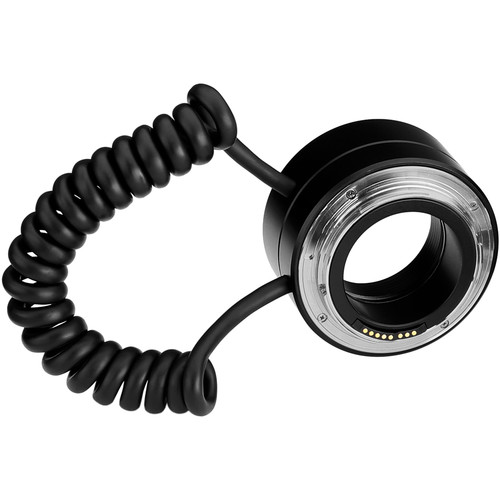
Then we arrive at the next major toy! The Microfier from Vello. It is relatively cheaper than reversing rings from other brands and it offers the essential control over the lens when it is reversed and mounted on the camera for macro photography. It does offer somehow a greater magnification level more than extension tubes (by calculations) specially when used with 18-55mm kit lens (the smaller the length, the greater the magnification). There is still the issue of the closest focusing distance which I didn't experience or read about yet. However, I did take a simple shot for my fingerprint which does look good (with high ISO here though). Left to say that it comes with several mounting rings to accommodate for the various diameters for lenses.

My fingerprint taken with Microfier.


Now, the rest of the toys are simple accessories, and some of them are really needed though, specially as a replacement!
Source: B&H
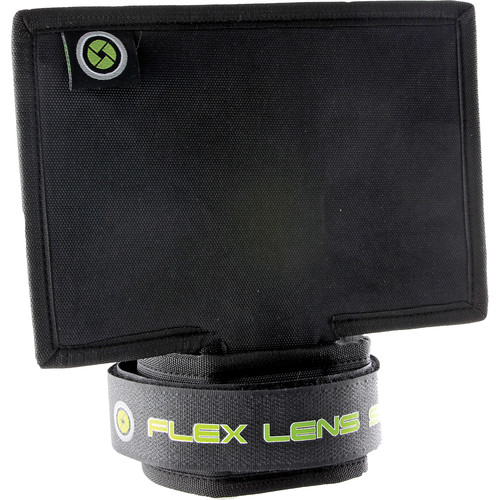
First, we have here the Flex Lens Shade I guess the name says it all. Anyway, one can also argue that even lens hoods don't do the job perfectly in blocking the light flare (in the description of this item by the manufacturer, they state it can be attached to hoods themselves!). Anyway, this is not only for daytime photography, but also for nighttime to block the remnants of street lights. However, the real test would be with fisheye lenses and their excessive field of view (specially the Rokinon 8mm that I own). Seems a night shooting session is due, despite the horrible weather!

Source: B&H
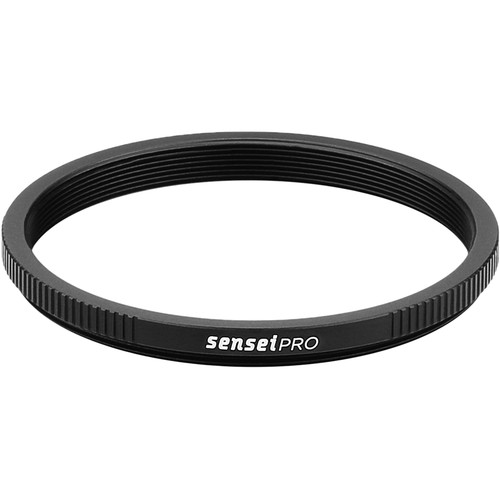
The next in line is something I needed as a replacement. A step-down ring to fit a small filter on a large lens diameter (58mm onto 62mm). The comedy here is in the fact that I've only found one store which sells those here in Kuwait, and for my fantastic luck, they don't have this particular size. Please note the sarcasm when I said "fantastic." This ring though is better than the one I've lost already since it is made from aluminum alloy and not plastic. I've ordered 2 rings just in case!

Source: B&H
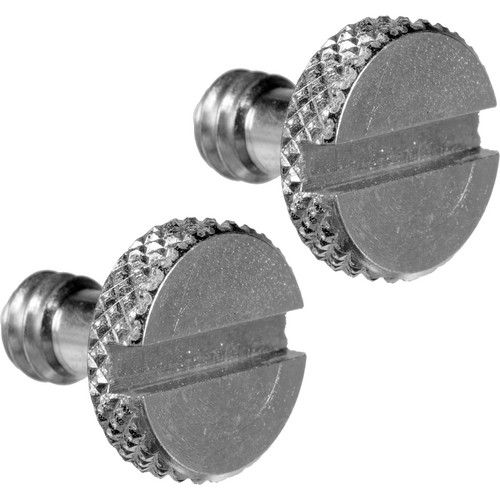
The last item in this list is just some Manfrotto 1/4' screws to keep as spare parts. I've kept this time in my wishlist for a long time, specifically when I noticed one of the screws in my Manfrotto VR-head was missing (and during that time I was using a spare screw from Manfrotto macro rail head). However, I did find that missing screw later on! But nevertheless, it would be a good idea to keep some of those available whenever needed for such "disasters!"

Büche

I don't know why I used a German subtitle for this section, but oh well. I didn't read photography books in such a long time I guess, and still I do have a queue of Arabic books that I need to go through still. I'm planning to stop reading a novel in Arabic in bedtime and replace it with one of the photography books I've recently ordered.

Source: Amazon
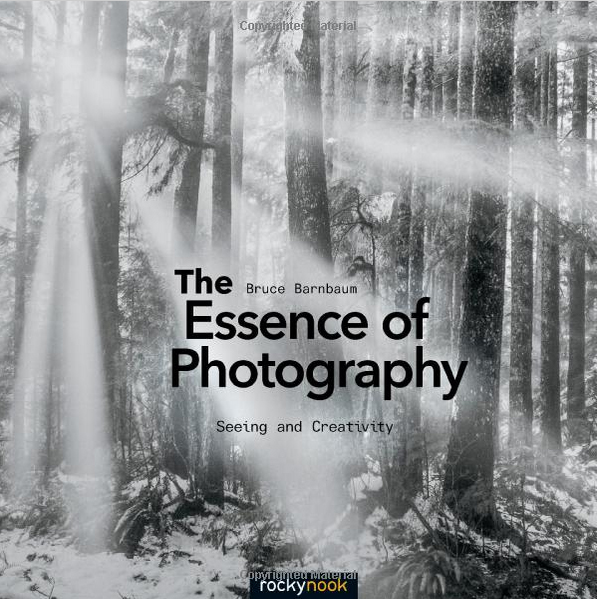
The first book on the list is by Bruce Barnbaum. This is the second book I have from him. The previous one was The Art of Photography; a very intellectual approach beside a long and detailed technical description for the chemical processes done for films development. It was/is such an amazing book and I thought this is the time to rejuvenate my eyes and vision in photography after such a dormant period. Thus, I'm hoping that The Essence of Photography would be like its predecessor. It is not only about the information in a book that one would stick to it, but also to the style of writing and the order and organization of the book itself that one might lose him- or herself reading it.

Source: Amazon
 The second book is supposedly about the art of using flashes (speedlites) in a creative way. I had other books about flash photography, specifically those by Syl Arena, but this one seems different in essence, since it discusses ways and methods instead of the technical aspects as it was in Syl's books. I will keep this book for later reading. I think I will be taking one of them anyway with me when I travel... I need something to pass the time with from time to time.

Finale

Things are done and ready, almost, for my travel. All what is left is... the visa! After completing my papers, I've set an appointment to "submit" the papers and complete the procedures - I heard an interview is involved. So, we'll see by next Monday, August 10th. Good thing that Mom has no dialysis session on this day. Because of all this hassle my ongoing Geltani documents are on hold, again. I just can't wait till I start my vacation and off the country. One thing though I do wish for... a specific someone to be with me on the way…

Thursday, December 13, 2012

Affectus

After a staggering stormy week, seems this week is pacing down a bit as I'm trying to hold on to my horses and getting my life to normal, specially with photos. On the marital front, not much news and my waiting seems to bore the hell out of me, but there is nothing I can do for now. On the other hand, I'm trying to finish the load of books I've purchased some 2 weeks ago. These books are all in Arabic and I got them from the 37th books fair here, and I have to say, somehow and probably because of how the language is processed in my head, I do find myself faster and easy when I read these books. I would even forget my world while reading! Too bad not much technical books are there in Arabic though and still I do have to go back to English (and any different language if I have to).
Funny thing was, when I finished this book, in Arabic, about The Great War (WWI), I wanted to make some comments about it to the author, Omar Al-Dirawy [عمر الديراوي], but then I've discovered while surfing the net, that he died 45 years ago! R.I.P.

Cover of The First World War (Arabic)
By: Omar Al-Dirawy
This is an older press release.

Maybe if you are reading this, you might be wondering what do I have to do with WWI or WWII. The fact is simply, I like history, specially these two events. I believe our current political entities and all the mess in this region specifically, is a direct result of something that happened almost a century ago, the WWI. However, despite the gruesome facts about this war, I do believe that there are lessons to be learned from the past. Anyway, let's get back to the photography vent right now...

Flora and Flickr!
Two weeks ago, I've been into some greenhouse selling plants and other planting accessories. There is one complete block that is full of such stores and my photography group organizers worked on gaining a permission from one specific greenhouse to have a photography session.
I've said it before and I'm going to say it again and again, floral photography is not really my thing. However, I just went with the rest of the group because I didn't indulge in much activities with them lately and even though I brought almost all my tools (specially the speedlites and the modifiers), yet when I got inside the greenhouse, I've just brought a tripod and my camera backpack with one modifiers that can serve as a reflector - yet, I never used it and gave it to a member as a help.
So, where does Flickr come in? Simply, 4 images were added to Flickr's Explore pages (and one of them is not from the greenhouses anyway). Those and other images made me think about lot of things lately...

The Gentle Crown
Canon EF 100mm Macro, f/2.8, 640-1sec, ISO 400.

Peaceful Solitude
Canon EF 50mm, f/1.4, 400-1sec, ISO 200.

Zu Meinem Herz
Canon EF 100mm Macro, f/5.6, 30-1sec, ISO 200.


Raining Tenderness
Canon EF 100mm Macro, f/2.8,
500-1sec, ISO 100.
Thoughts: The fact that floral photography is not my type of thing and still getting stuff into Flickr's Explore, makes me think of how much I can do if I would really concentrate on a topic that I do really like (mainly architecture and panorama). However, on the other hand, seems it is just people nature that floral arts attracts them for its gentle approach. It is a happy thing as well because, in a world that we live in right now, who has the time to meditate at the beauty of a flower or a rose? To see people commenting and liking these images even though I prepared them without a prior thinking about the settings that I want to use, made me feel that people, even those solid types, do have emotions but probably they are just suppress them in some way and don't show it off, or probably don't know how to show it off - and all of that is exploited in a simple photo of a flower. I won't talk about my emotions right now in these lines, since they are already a mess. But yes, I do tend to suppress my own emotions and never show them off easily.

More Flora:
Other snap shots from inside the greenhouse are abundant and I'm still processing some of them. There is not much space to put them all in here, but there are some significant ones that provoked my thoughts a bit.

The Lonesome
Canon EF 50mm, f/1.4, 800-1sec, ISO 100.

The significance of The Lonesome does not come from the composition or the beauty of the image (that is if it has beauty in your eyes) but from a simple event that took place during shooting this simple isolated branch.
In fact, when I went into the greenhouse, I used my tripod a bit but then I started to take most of the shots handheld, simply because it made me feel free to compose, and (even though I was using low f-numbers, i.e. wider apertures) I was using higher ISO (200-400) most of the time. Also, despite the fact that I've brought my speedlites, I've never used them in the whole session there.
As for the shot above, my teacher criticized me (or let's say advised me) for not using a tripod and for the high ISO, and for my composition with this branch. In fact, I didn't reply directly, but what I was aiming for here is simplicity of design and a form of minimalism with an expressive mode in mind. It is true that I was using low f-numbers and the shutter speed was enough to eliminate the handshake (most of the time not always) - yet I always like to play the assurance deal. I pay less attention to the shutter speed when I work in Av mode, thus raising the ISO from the beginning makes me safe as my work and thought line go hand in hand. Another thing about the high ISO is the fact that I might need to change the f-number (increase it little bit to have more depth) thus a high ISO (but not so high) would ensure that I'm still in the handshake compensation region without having to look and do some measurements. I've became now more confident with my plugins and the way to eliminate most of the noise in my images which made me comfortable somehow to raise the ISO.

Thoughts: What my teacher told me about is true. He even mention stuff about a proper background (because other photographers in the group brought their own black board). However, I do see that I didn't use my speedlites like others did, and while I was working on giving an isolation by means of bokeh effect and shallow depth, my teacher on the other hand was thinking mostly of a solid background. While I was thinking more about abstract and simplicity (minimalism), my teacher was more aimed at the conventional composition aspects and having more elements in the scene. All of these opposites make me think if I am right in my approach. In art, there is no right or wrong, this is something I do believe in, but is it possible that my teacher is not aware of these aspects? Or maybe he doesn't want other members to "leap" into a next level without having their feet firm in a specific ground? From comments, and likes, seems photos like The Lonesome is gaining the expressions that I was working for when I took the shot in the first place - but how am I supposed to respond now to the criticism (or advices)? 
It is clear for me now that I can't use the speedlites randomly without thinking prior to their use. In other words, if I didn't plan before leaving home on using them in a certain and specific way, then taking them out with me is fruitless (as well as with the light modifiers). This, I've discovered by now in practice when I went to the greenhouse for shooting on flowers. Even though other members did use speedlites (ring and regular ones), yet my brain could not comprehend how to shape the light with a speedlite and my sole concentration was on using the light that is already there and available to make dramatic and emotionally effective images. This proves to be a challenge now: how to brainstorm an idea on location using speedlites?

Blanco y Negro:

Source: Amazon
Black and White is not something new to me of course, but after reading Bruce Barnbaum's book, The Art of Photography, I've became more influenced and more in hunt for capabilities of black and white scenes. Bruce's book is a treasure trove and so heavy with technical information concerning films and how to develop films, which made me really eager to do film photography like in the old times. Unfortunately though, this is almost next to impossible for the time being - it needs lot of chemicals and a special room to be prepared besides lot of expertise (which takes time to develop). One great advantage for film (black and white films that is) is their wide dynamic range which exceeds that of a sensor. This is one of the reasons that established HDR photography with digital cameras generally, but it is not always feasible and possible.

Intimacy
Canon EF 100mm Macro, f/4, 40-1sec, ISO 200.

Gentle Flame
Canon EF 50mm, f/1.4,
1000-1sec, ISO 200
Despite these (digital) limitations, I've been concentrating my effort on creating effective and dramatic black and white - but I have to make an announcement here that "dramatic" is not always an ultimate goal, but merely an expression to some images that I feel they need to be so.
Even though I worked before with Black and White, but after reading Bruce's book, I'm now more aware of the capabilities and the expressions that I would be able to implement using black and white photography. Right now, it is job to be done beyond the simple Curves adjustment layers to add some contrast; it is something to be thought in a whole domain of processing just like colored images, and as it was before, using burn and dodge to bring out the details from highlights or shadows, it is now thought of dodge and burn as a dramatic and a selective contrast tool.

Living from The Dead
الحي من الميت
Canon EF 50mm, f/1.4,
800-1sec, ISO 200
And of course beside the Black and White comes the tinted Black and White (not necessarily sepia) which is a weird amalgamation of colored images but in a black and white suit. I've found it that it is really hard to choose and decide for your mood when working with some images. Even though I could have done Living from The Dead in two ways, but I was determined to decide on one and only one version. Thus, I've found myself more inclined to accept the sepia version for it gives me a depth of mood and sense to the image. it might not necessarily be so for other viewers of course, but the initiating point, i.e. my feelings, should be set aright from the early beginning.

Off To Work!
As the past week was bitter in the home and personal front, I've decided to take my camera with me to work more often. Even though I did take it with me several times (along with the speedlites and the tripod) but I didn't necessarily work with them single day - simply because there were not many ideas in my mind. I've tried deliberately to work with it after my work time is over if possible, just to have some time with myself without the need to get back home so early.

Passing By
Canon EF-S 18-55mm @21mm, f/22, 60sec, ISO 100

However, it wasn't until December 5th, when I've noticed the abundance of the cloud in the sky which sparked an idea for a long exposure. I had a plan to do such clouds long exposure long time ago but never got the chance to and I didn't find any other place better than my own work place.
In the beginning I was aiming with my Canon EF 50mm lens but then I've changed my mind and changed the lenses. I wished to use the 50mm lens first for a reason: a) the stable focus ring which can make me attach filters with no external shake, and b) it is a prime lens that would provide a sharp image; sharper than zoom lenses. However, because of my location I had to change to 18-55mm to control the framing accordingly. From the early beginning I wanted to make this shot in Black and White.
Anyway, because of the bright sun, and after doing some calculation, I figured I would need 10 stops for 2 minutes only. I do have a 11.7 stops welding glass, but I didn't want to use it here and increase the time significantly (that would be more than 4 minutes). To be on the safe side, I've done 3 exposures as well: 2 minutes, 1.30 minutes, and 1 minute. Ironically, the one that worked best was the 1 minute exposure; not because of the level of brightness or overexposure, but because it recorded a nice movement blur in the sky (while the others were too washed away).
However, because of my level and the tilt of the camera, I had to correct the perspective and stretch the image. I've used DxO first but for some reason it didn't match my view, thus I had to do the perspective fix with my own hands, manually, in Photoshop. The rest is a well-known story I guess - adjustment layers, turn black and white, crop into square...etc.

Entflammbar
Canon EF 50mm, f/8, 25-1sec, ISO 100

Stinging Memories
Canon EF 50mm, f/7.1,
50-1sec, ISO 100
After finishing my long exposures and just before I pack my stuff into the car, I've noticed the shape of the little trees around the building. They were cut recently and the branches inclining upward made a good target for some abstract work. In the beginning, I didn't really know how to shoot at these trees and didn't know with what lens - beside being attached more to using 50mm. However, I've figured that the best strategy here is to shoot from various angles and sort the ideas out at home. Thus, Entflammbar and Stinging Memories came into being. Entflammbar specifically been processed heavily and I tried as much as possible to make it look like a sketch made of linear strokes from a pen. I used some burning and dodging too, and I had in my mind a vision of a banded tree top, but that didn't work well and I had to get back to the original with little burning and dodging for some areas that need some details back.

Finale:
Now, with a heavy head, I'm trying to progress through my projects slowly one by one. I've even been trying to put a daily program for myself with processing 2 images daily. I'm not sure I can keep up with this program strictly, because I know that there will be moments when I have to break this routine. I hate routine in the first place!
Ayvarith, Geltani, and even more now with the monthly competition of the group for December; pictures of coffee-related topics. Too much to blend into my brain, needless to say, into my heart too...

Thursday, September 27, 2012

Architectural Amuse...

(Some large files in this post, please give some time to load!)

The days are running fast, and the travel time is getting closer, and yet I'm not sure what to prepare first. I feel lazy and sluggish in these days and now I do wish if I signed for my leave from work earlier than I did already. My leave starts only 3 days before my travel on October 10th. However, I'm trying to use my time there with reading the books that I've received already and I'm digesting them now slowly. It is just the matter of sleeping more that makes me wish for an earlier leave.

Amuse
After some struggle and almost dipping myself in water, I've managed to take a full panorama from the gazebo, of the secret spot. Upon reaching the place, I've realized that I cannot expand my tripod over the diameter of the fountain, thus, the best choice I had is to stay close to the edge; a dangerous situation for sure. Talk about stress, people looks, clumsy movement (and I'm renowned for that) and fearing to dip the camera into the water... all in all, it was an uneasy process. Why close to the edge? Of course, to have the dome centralized as much as possible.

Radiosus

Working with this panorama alone was tedious, or maybe I should say more tedious than I've previously encountered. Because the location was a delicate one, I had to think about shooting the nadir point. The ground bears interesting details that can't be missed like any other place - we have  fountain there. For this, I've brought my monopod and my lateral arm.
Now, the rewards of doing a panorama is several sets of projections. But, initially, some parameters must be set right. In this workflow, I've tried to centralized the camera and align it exactly with the fountain's outlet. However, I've realized later that my alignment was not really precise and I had to adjust some angles when checking out the panorama stitch. For each projection I try, I save the file as is for later stitching - because my mind was burning for visual stimuli and I didn't want to stop it for a long process (that would take 6 or 7 hours sometimes).

Radiati
Well, I'm not going to talk much about the stitching errors here. If you are a follower, I guess you already know the tedious part; not to mention the fact that I'm stitching a nadir here beside a zenith. Taking the panorama itself was a struggle by itself because I had to wear my backpack and move my monopod and lateral arm from one side to another (because I kept it prepared for the nadir before I proceed with the usual shoot); all of that to keep the scene clean from my stuff. The nadir was taken at the end with a slightly different point of view (of a different elevation from the original position of the camera during the panorama shooting) but seems PTGui took good care of perspective fixing.
One of the good decisions I've made here is to raise the camera above my head level for this panorama. One of the bad decisions? Well, it was to raise the camera above my head level! We'll see about that later.

Radiosus Rectus

As you would notice here, I've made 2 flat versions of this panorama (originally 3 but stitched only these 2); Radiosus and
Radiosus Rectus. The main reason for the former is a flat panorama that shows some details of the dome and the fountain together, while the latter is a simple regular flat spherical panorama, to be used later for QTVR rendering. I like the wavy columns in both versions after all! However, 3 projections that I've considered, personally, as masterpieces.

Radiatio

The first masterpiece (to me) to be created was Radiatio. It is a typical tunnel view like I did before with many other panoramas. I was going to name it as Spaceship or Mothership, but to keep it consistent with the rest of the panoramas, I've decided to name as Radiatio; Radiation.
I've mentioned previously that one of the good decisions I've made here is to raise the camera above my head level, and it is also bad in the same time. It is good because by raising the camera's level I would include some space for the nadir point and also it helps the perspective in such projections - the bad point is operating the camera at such level is difficult - specially when I have to look at the number of degrees on the rotating plates for the camera's tilt.

Planeta Columnium

The other projection, which I had visions for since the early beginning of my work is the planet projection, as you can see in Planeta Columnium. In this projection, I had to crop the outer zone to remove the remnants from the dome and leave the columns dangling in the air in a surreal form. It was not possible to remove the dome by changing the perspective alone, but however, in PTGui itself, I can set the limits and boundaries for the zone to be stitched.

Astracolumnae

 The last piece is what I called Astracolumnae. It never occurred to me to use the circular projection in PTGui. However, I do wish if it was rendered in some other way other than this. I think it would be great if the symmetry was sustained on all axis of pillars pair. Anyway, I have to satisfy myself here with this result for the time being, and I'm happy that I've discovered some new point of view! such points of course would be more interesting if the panorama was taken under a common central point (hence I think it is more useful indoors rather than outdoors). In Astracolumnae, I've removed the background and saved the file in JPG and PNG for web usage. However, some websites don't identify the transparency in the background and replaces it with white tone. The embedded image here is PNG and needs some time to load (~2MB).

QTVR

The QTVR was rendered from Radiosus Rectus, and luckily for me the nadir point was stitched gently despite the difference in the perspective. Some cloning was needed of course to hide the legs of the tripod (which I used to support the monopod holding the camera with the lateral arm).


The original Radiosus Rectus produces a larger QTVR of course which sized up to 9MB, and it has more details than the smaller version (and more crisp). The smaller version of Radiosus Rectus is soft somehow because of the noise cleaning process which was done more than once. I didn't care much about details at this small size anyway! Most of the details relate to some dust particles or faint cracks in the floor, and some cavities in the pillars which can be hardly seen anyway!

Toys!

Source: B&H
Source: B&H
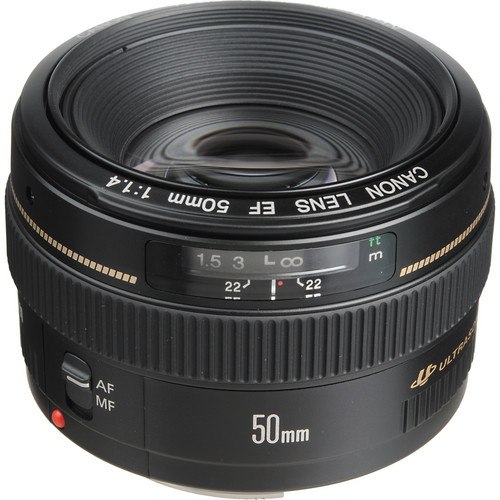
The toys are finally here. Namely, the Canon 50mm (normal) USM lens, of f/1.4. I'm already thinking of some work to do with this lens before traveling. As a fun activity (and a challenge), I'm thinking of taking my camera with this lens alone - no accessories, no other lenses, no tripod. Just me, camera and 50mm lens - and head out looking for some photos to catch on the way. In hope that this activity would spark some imagination and enthusiasm for more productivity. The 50mm lens is called Normal usually because at this focal length the lens matches almost the human vision (in terms of the field of view). However, with a cropped sensor like mine, it is not exactly normal. Anyway, it is a prime lens after all and  I should satisfy myself with the quality that can be produced from such lens.

The other toy is the ExpoImage Rogue Master Lighting Kit, which consists of some light modifiers for speedlites. So far so good, and the modifiers are nicely designed. However, for each type of modifier there is only one piece, so you won't be able to use the same modifier on two speedlites in the same time - but I don't think it is a big deal right now.
Just as a simple test for the kit, I've tried to take a head shot for my brother using some reflectors and a diffuser on my two speedlites (580EX II, 430EX II) and formed an oyster-like formation - with 580EX II on-camera, and 430EX II held by hand below the camera's level. 

Canon 50mm, f/8, 500-1sec, ISO 400.

You might have noticed here that I've used a shutter speed exceeding the typical sync speed (250-1sec for Canon EOS 7D). I was simply using the speedlite in High-Speed mode, to kill the ambient light and light the face with the speedlites alone. The overall goal was to give a soft light to light the face, and brighten the eyes as much as possible. Well, we are Middle Easterners and typically our eyes are dark brown and hard to be lit in that way I presume. I would say I'd need another speedlite with a snoot directed to the eyes. I tried here not to adjust too much in Photoshop - only few edits in the RAW editor (e.g. contrast, clarity) and in Photoshop some noise cleaning and sharpening without trying to lighten the eyes (as I usually do in my spare time with girls' head shots!).

Digesting!
Source: Amazon

Then come the books with the arrivals in the last shipment. They are two books and I'm trying to read them both in -somehow- scheduled manner. The first book is Build a Better Photograph by Michael Stern. This book is relatively thin and I think I would finish it in a course of a week or so! In the first chapter there was somehow a heavy load of Photoshop talk and making composite images - interesting but not quite what I was looking for, as I think right now I'm in a developmental stage where I care for aesthetics and ideas more than I do care for working around Photoshop. However, the technical aspects mentioned here are good and can be kept for a reference. The surprise was on the second chapter, when Stern talks about 3D scanning and how to make some art through regular desktop scanner! Inspiring for some ideas (specially that I wanted to do a scan for my ring long time ago!). So, the book really is not about camera work specifically, but about visual artistic talents in general, if I should say.

Source: Amazon
The second book is The Art of Photography by Bruce Barnbaum. I was surprised, sort of, for the size of this book and its weight! I'm reading this book slowly now (dedicating the last hour in my working time to read some of it). This book now is heavily about aesthetics and how to see a photograph. It is about the philosophy behind photography - exactly the type I was looking for. I think I will be taking this book with me when I travel to read some, if I got the time to (or maybe at night to force my eyes to sleep!).


This has been the journey for this week. There are some thoughts other than the travel and the camera that had been occupying my mind, and they do cause a huge unrest. I need to travel for now for the necessity of a vacation, but also for the necessity of going on with my life - there had been a lot of plans in my head that I've postponed because of this travel. 
My sight for the coming future is shrouded and unclear - if only I can sleep as I like right now. Without nightmares...