Showing posts with label sun. Show all posts

Thursday, July 8, 2021

Kika XI…

Honestly, I was too tired to even start typing this blog post. Thus, probably this one would be somewhat a short post. I think there is nothing weird with being tired, recalling my usual back pain sometimes, and my hectic life or routines everyday. There had been days that I wouldn't eat any lunch or dinner even. Anyway, it is time now for Kika's photo challenge, and this time with Week 11.

Kika XI

At this level of the photo-challenge, I got very busy with my brother and his studies and I barely had the capability or that piece of mind (pun intended) to work with the camera or to think of something new, or even to just edit. Well, editing is what I did but after some long time of searching and reflecting. The theme for the 11th week challenge was "Weather." And of course, you can't speak about weather, in Kuwait, without speaking about the sun and summer. Because, well, this IS the weather of Kuwait! What else do you expect here?

Sunny


For this photo-challenge, as I've stated before, I didn't take any new shots, but I've referred back to some old shots, specifically some of those that I've shot in the shining morning sun of May of 2020, during a total lock down back then. I remember I was testing all my infrared filters back then and this particular shot was probably made with Neewer IR950 filter (and of course using my modified Canon EOS 7D). To be honest even, it seems, for some good reason, the shot was taken with B+W 043 black filter (UV-pass filter).
If I remember correctly, this image was processed differently back when it was taken in May, but for this particular photo-challenge, I've processed it again with a huge crop to the image to let the focus go to the eyes specifically. Not sure what type of processing I used here but I'm sure it is not the typical IR processing that I would usually follow which typically turns the image into almost a monochromatic one. Adding also some more emphasis on the luster of the eyes.
With this, the photo-challenge almost comes to an end with only one week left. Actually I could've done week 12 here as well but I'll leave it for another week. The last image posted for Week 12 is, again, an old one.

Bubbly

At this point, I come to the bubbles project which I've postponed previously. It's a photo shoot that spanned several days; Trying a new method or technique every now and then. The final result was more than 90 images (which have been processed and published).

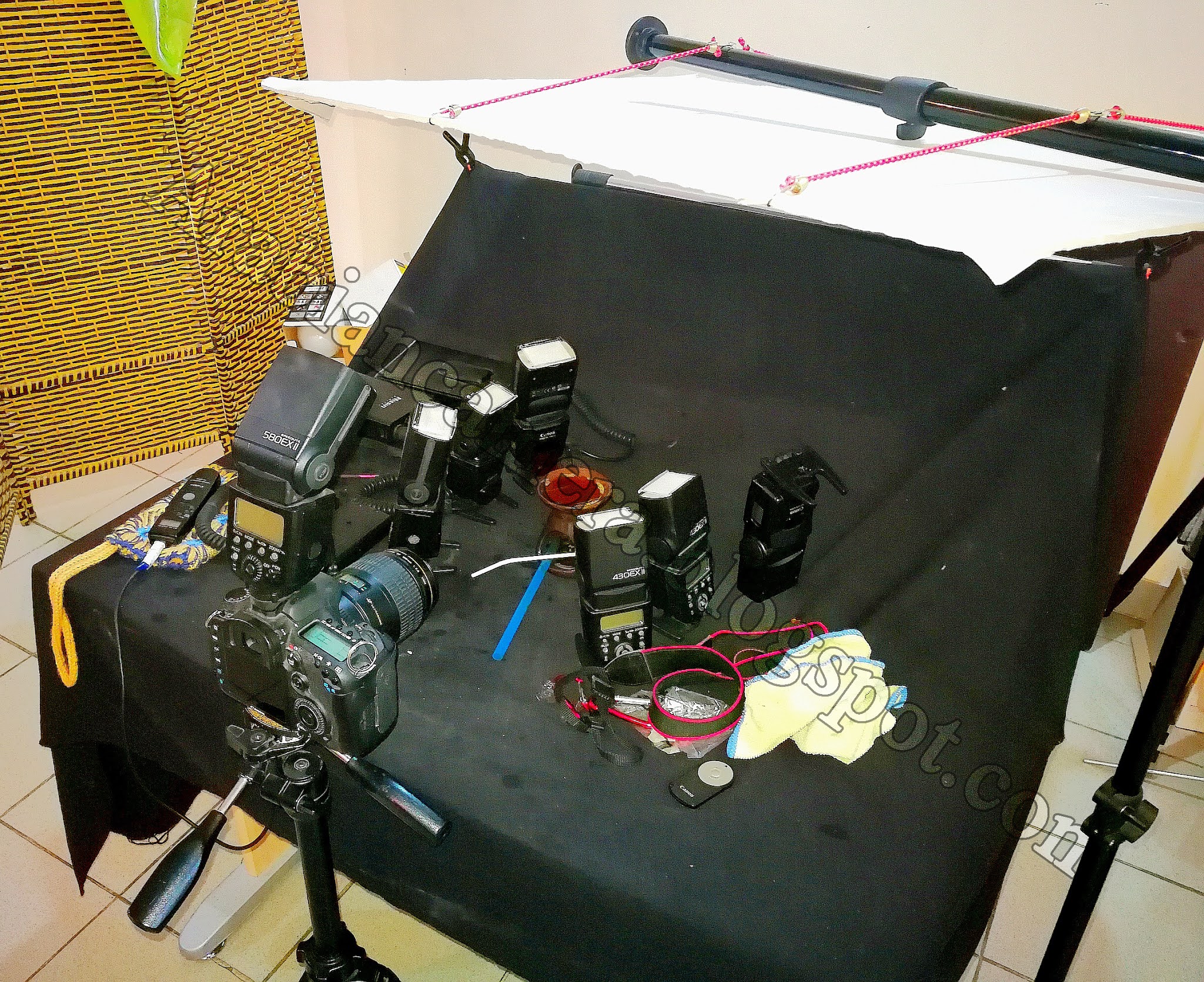
Final setting

In the process, I've tried several ways to light the bubbles and also worked with 2 lenses (50mm and 100mm macro). I'd say though that the 100mm macro did fit most of the shots. Those shot with the 50mm needed a great deal of crop. Now, I don't want to go on with the story in length, but the goal initially was to shoot a bubble at the bursting moment. Though I succeeded only with 2 shots but nevertheless, the collection of these colorful bubbles was worth the lengthy work. 

Bubblosphere LXVIII
(one of the bursting bubbles shots)

It would have been better if the bursting shot was done in midair but unfortunately, as usual, I had to work alone. So, most of the work was done on a stable ground (used an oil burner as a base for the bubbles) and I've been moving around, blowing the bubbles and taking the shots.
Speaking of bursting, that calls, of course, to the usage of high-speed. However, that was not done right away. I was actually having some trial-and-errors with the lights and I've been using several lighting methods, and even a handheld beauty-dish to light the bubbles. Anyway, turns out that the perfect lighting angle for the bubbles is to be (as seen in many videos on Youtube) from above. The  final setting can be seen in the image above, where I used a white board hung over the work area to bounce the light from all my speedlites below. I had to do it that way since I don't have a softbox.

Bubblosphere XX
(shot with handheld beauty-dish)

Worth noting that despite this number of speedlites (and the supplies of batteries!), I still needed to raise the ISO a bit to get a proper lighting level in the images. Normal I'd say, since bouncing the light or even diffusing it would cause such loss of power anyway. Though at such moment I would appreciate some light source with AC input instead of DC batteries! Ah well…

Worth noting also that I've been doing some stroboscopic experiments before all of this work as well but the results were not quite to my liking but I've merged several images into a single ones (and I've posted about them few posts ago in Kika's photo-challenge about Colors).
Anyway, to summarize it all, I've made a video containing all these images. If you are reading this and wish to get any of these, you can find the full collection on my Canstockphoto profile (you can also click the signature at the end of this post) and some of them had been accepted as well on 123RF


Finale

As I've stated in the introduction of this post, I've quite lazy (or tired) to type down this post. This makes me think of having a break after doing the last post about Kika's photo-challenge in two-week time from now. Not sure how long this break would be but I think I just need it not only for physical reasons, but also to build up some content as I'm actually too tired to hold my camera or even to think of anything new.
As time is ticking, it seems that I will be back to work around the end of July or the beginning of August. I don't want to start talking about the stress that I'm already living in since I heard the news. I'll be back to the rush hours, and even more, more stress at work because of the events that took place there during our days off (around one year and a half). I'm all alone there and surely ugly things will be hitting the fan. Meanwhile, I'm still waiting for sparkles of hope to shine as I'm looking forward to get my medical retirement if possible for retinitis pigmentosa, specially before moving to the new location which further away from my home, and it will surely cause me hectic time in driving to there. So many ideas, so many thoughts, and all cramps my brain rendering me paralyzed. All I can do is pray, and send my heart with hopes across Heavens…


Thursday, November 21, 2019

Ave…

The weather is getting colder here, as well as my heart along the way I presume. It would have been such good news and feeling, if not for the passing of a dear online friend that suffered from a long battle against diabetes. Though we never met really, but we still shared all the jokes and laughter together and she was quite fond of my photos. She dreamed that one day we might meet up in Ireland and even do some photography in front of her. She made me feel as if my photos from Ireland made her re-discover her homeland; As if she was not Irish already, living her final days in the US.

Rest In Peace, Paula Doak


Mearcair

Last week the news were out about a transit of Mercury over the disk of the sun. Not a rare event but it definitely is not the average event that would happen every year. I think the next transit for Mercury of this sort might take place in 2032 or sometime around that if I'm not mistaken, and I'm not sure even if it would still be visible in the sky here. Rarely even more than Mercury, are Venus transits. I think the next transit won't be happening in my life time at all!
Anyway, the adventure was set on Tuesday. I had a very limited time to prepare for the shoot as the transit would occur only at about 3:30 p.m. local time, and then in about one hour the sunset would officially start. To gain some time, I've actually prepared my gear the day before and made everything ready, so all I had to do is pick up the gear and head to the roof of my house. I still had some fears back then that some objects would block the view as the sun goes down in the sky but luckily none of that happened. So, in a nutshell, my gear was composed of:
  • My modified Canon EOS 7D.
  • Solar filter.
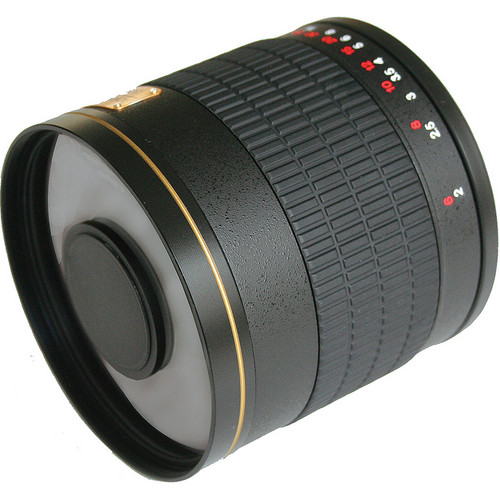
  • Rokinon 800mm Mirror Lens (fixed at f/8).
  • Flexible cable (will explain why below).
  • Cable remote.
  • Tripod of course, with ball head for easy and quick movement.
I had to refer back to my old tripod which I didn't use quite a while mainly because it extends quite high compared to my other most-used tripod, without needing to raise the central column or the neck.

The gear I used and you can see the cable around the mirror lens,
while the clips hold the solar filter over the lens front.
The shot was out of focus because the flies were really, really, really annoying.
Yes, that much annoying that I couldn't focus properly with my phone.


I was reluctant to use my old mirror lens with its cumbersome control mechanism; Just a complete manual lens with a primitive telescopic design crammed in a small volume. However, knowing that Mercury will be such a small dot over the sun disk, I've realized (and I've done my own research as well) that I do need a very long focal length, and here I had two choices. Either:
  1. Use my Sigma 70-300mm with teleconverters, OR,
  2. Use my Rokinon 800mm Mirror Lens.
Rokinon 800mm Mirror Lens f/8
Comparing the two, the scale tilts towards the Mirror Lens further. Because using teleconverters would reduce the light quality further (beside using a solar filter here) and this might not be such a good idea and the overall size of the whole lens/teleconverter combination would be too long and I'm sure it would give me some hard time in movement (specially with my external telephoto lens sleeve which is not quite as flexible as a regular sleeve on a real telephoto lens). Adding one teleconverter to my Sigma lens at 300mm would extend the focal length to 600mm. Adding another one would make this jump to 1200mm. Juicy! However, my previous experiences in shooting the sun with such a long focal length were quite cumbersome specially when it comes to moving tiny amounts of degrees to follow the sun (remember: the more you zoom in, the faster the celestial body will virtually move). So, imagine here that I'm jumping to 800mm with a single lens only and without much light quality loss; As simple as that.
Now, we come to the story of the cable. Since the focusing with such long focal length and cumbersome mechanism would prove to be a challenge, I got myself these multi-purpose bending cables or wires long time ago solely for this purpose; To wrap them around the focusing ring of the mirror lens and use it as a level to move the focusing ring gently. It didn't stop the shake though but it was quite useful nevertheless.

Mercury, after processing the image (cropped).
The lower right line is just some dirt.


Anyway, my main aim was to shoot a series of shots of Mercury crossing the sun disk but unfortunately after one hour of shooting or so, I just got plenty of images with the position of Mercury almost not moving. After being attacked by flies and sweating waterfalls I had to get inside and stop the whole thing (at that point it was past 4 p.m., and still didn't have lunch then!). So, technically, despite the many many images I've shot, I didn't quite get a serial sequence after all. Probably one of the mistakes that I've committed here is that I've focus on the sun (by checking the edges of the circle on LiveView of course) thinking that because of the great distance between Earth and the sun, Mercury would virtually be in focus as well. This seems to be not the case here though! When I've edited the images, Mercury was not quite that sharp dot on the disk of the sun, but more like a blot of ink!

100% Crop of one of the images. Mercury is the small black dot,
which I think it could have been more in focus. In some images, Mercury
completely disappears.
(click to enlarge)

What amazed though is the presence of dirt and other artifacts. I thought first that those are only on the solar filter from the outside but it turned out to be they are sensor artifacts. This is despite cleaning the gear (lens and camera) the day before and making sure all are clean (and using the loupe to check the sensor specifically). I'm not sure how this got in, but definitely I need to check and clean it later. Didn't have time to do so yet.
At this point, my little "silly" adventure with Mercury transit was over and I'm still checking the images Ivé shot (counted more than 2400 images) to see if I can do anything artistic about them! We'll see.

Finale

The departure of a friend, an online friend, is not in any way less drastic than a real physical friend's departure; Whether met or not. This departure was sudden to me, because she was supposed to be coping well with her new condition after amputating one of her legs because of some blood problems. Such a drastic and sudden change of events.
All these feelings actually are pushing me to write emotionally from the first moment I've heard the news, and typing an eulogy on her feed on Facebook. Now, I feel the urge and the necessity to really focus to write one poem at least for her sake.
All these ideas seem to clash now in my head though. I do have other tasks and other ideas of photography that I want to work on. One might consider typing or writing a poem is easy but that's not really the case at all. It needs dedication and time, and foremost, an immersion into your own feelings. Now my feelings are there hovering in the air as well as my words, but I have to turn my mind into a lens to focus these into proper and rhyming words on paper (or monitor that is). Goodbye Paula. May we see each other one more time, in peace…


Thursday, July 14, 2016

Post-Ramadhan…

Ramadhan has passed, and so did Eid (The Feast), and now I'm back to my normal pace. Well, almost. If you can call my life normal anyway.
As much as it was idle, I had the chance to do some experiments during Ramadhan, and the majority of my work with photography was actually visiting old photos and doing effects or re-working panoramas I've done in the past (mainly from Malta). All this experimenting did actually trigger me to place an order, which I will explain later.

An Ghrian

An Ghrian, the sun, in Irish. I did try to take shots for the sun before (and almost got my sensor fried too!). However, this time it's a bit different, with my converted Canon EOS 7D and an ultraviolet-pass filter. Though I did some trials using my Rokinon mirror lens which I didn't use much, but most of my trials were done with my Sigma 70-300mm plus two teleconverters (yielding a total of 1200mm in focal length). Not only controlling the Sigma lens is relatively easily in terms of focusing (a must-be manual), but also most of my filters (ND, IR, and UV) are circular filters that fit the Sigma lens only (with a step-down ring). As for Rokinon's mirror lens, and despite the great zooming that could be achieved, the fact that filters can hardly be used here made it a dangerous tool and hard to control.

The sun shot with a stack of 4 filters.
Story about it here.

In the process of capturing better images for the sun (and the moon), I came into the swirl of the world of filters and not only for lenses, but also for telescopes and eyepieces, as I was looking for ways to get the desired look (scientifically) and checking probability for finding what I need in other categories; but without the need to get a telescope either.

Taken in UV filter.
The set can be found
in my stream.
In the process of learning more about the world of filters in relation to shooting the sun and astrophotography in general, I've encountered the sad fact that my B+W Black 403 UV Pass filter is not a pure UV Pass filter, but it does leak some great amount of IR. Hence, probably many images I've taken before using this filter specifically were actually formed by IR beams and not by UV spectrum specifically. Nevertheless, some of these were good, and weather in IR or UV, I was able to show some surface features for the sun, even though the usual filter used for such detail is the H-α filter (another filter on my wishlist). After researching a bit further for some way to enhance the performance of my UV-pass filter, I've found out that the only way to do this is by attaching a hot-mirror filter or NIR-cut filter (Near InfraRed). I'll talk about them a bit later, as it seems I couldn't get exactly what I wanted.
Beside the mess, I'm considering seriously to get some 30.5mm filters for the rear of my mirror lens, but that should be on hold for some time now since more important issues must be dealt with.

1200mm, f/128, 0.8s, ISO100.
Using UV-pass filter.
The dot on the sun is Venus.
June 17th, 2016.

Re-Work

During Ramadhan, the majority of work was actually re-working or editing my old panoramas and applying some techniques or effects on them (e.g. watercolor effect). The majority of this work is just to post these images on Instagram later on though. However, I was able to mingle a bit with some older panoramas to discover some new projections that I've never done before to them.

Qalaoid
Gruama
In fact, my work also included some old shots from 2013, like Gruama, which was shot using my then-new infrared-pass filter. It was just a re-process in some different way since I was not experienced back then with such filters (and it was taken with a regular camera). Back then I didn't appreciate the effect much but now I realize that my B+W infrared pass filter with threshold of about 650nm is in fact pretty useful for artistic uses. Increasing the threshold for infrared filters will approach photography more into the realm of monochrome rather than being colored infrared with the typical vivid and pleasant strange color cast. Kodak's gel filter which I usually use with my fisheye lenses has a threshold of 1000nm, and thus chances for producing vivid colors even with my converted camera is next to null; shots are always monochromatic, in between red and blue tints, as can be seen in Dawwar tal Qaddis and Planeta InfraĠużeppi.

Planeta InfraĠużeppi

Dawwar tal Qaddis

Toys

 Now to the fun part: new order placed and excitation in the air! Though I wished that I could expand the list of my items this time but all is placed in the wishlist waiting. I have a budget I'm trying not to exceed, and yet I'm trying to educate myself further in terms of filters and some aspects of astrophotography.

Source: B&H.
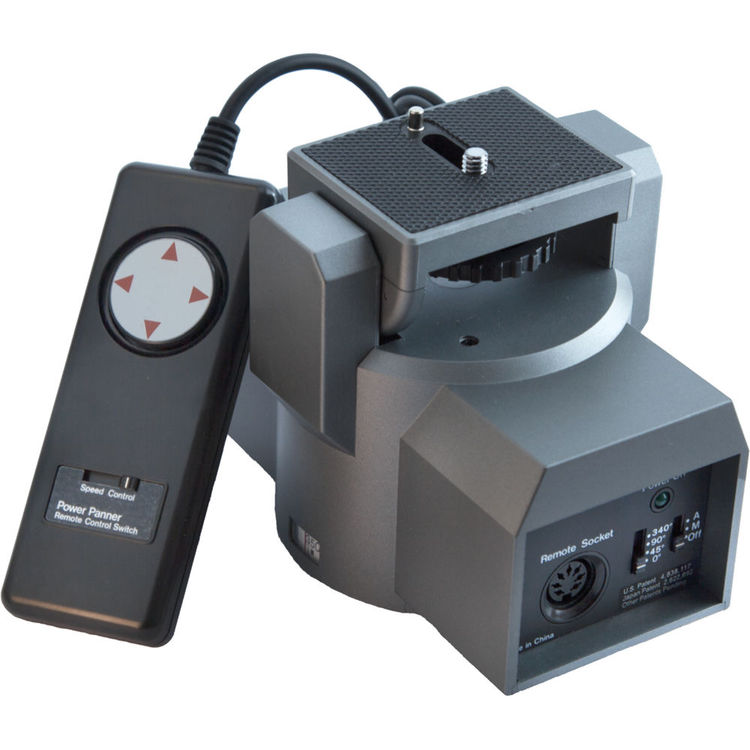
As I'm limited in terms of the budget, I've tried to limit myself to the very essential items, like this one: CamRanger MP-360 Motorized Pan/Tilt Tripod Head. This tripod head must be one of the MOST wanted items in my list since I'm having hard time controlling my lens when it is zoomed in (specially when it comes to shooting the sun or the moon). Tripod heads available for me now are just impractical, since at large magnification values for objects like the sun or the moon, the object would look to travel faster than it would appear to the naked eye, and I would have to adjust the knobs for the tripod head after each shot to follow up. This head should and is supposed to solve such problem quite easily by controlling the orientation by a cable remote.

Source: B&H.
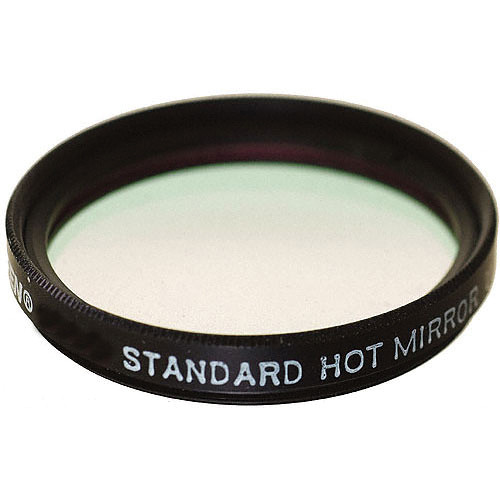
One of the major items and one of which I've been hesitant to order is the Tiffen 58mm Standard Hot Mirror Filter. The idea was primary about using this filter to aid my UV-pass filter and stop the IR leakage in it. However, checking the transmission curves provided, things would seem shaky with this filter because it does block spectrum in the range of UV as well. Roaming the net around, I've learned more and I've experienced more on how to read transmission charts, but unfortunately, no perfect match for my need was found. Few filters were found with quite narrow band passage allowance in the UV, but the corresponding websites looked weird a bit and I couldn't even place an order! Anyway, if this filter didn't work well with my UV-pass filter, I'm planning to use it normally and directly with my lenses, since it helps on clearing the image and increase its sharpness as I read in some articles; so in essence, it has a clearing factor just like what UVC (Haze, or UV-cut) filters do, but in a different region of the spectrum. However, this is not the end of the story with filter, as the lens itself play a major part in UV Photography, because modern lenses are usually multi-coated for UV protection, and seems older lenses are more appropriate for the task!

Kylemore Abbey

Coming to mention UV-cut filters, I've noticed some bluish streak in the panorama done for Kylemore Abbey in 2014. Even though the panorama is tone-mapped from HDR, yet such bluish haze (in the mountains) might not be removed with HDR technique and would require UV-cut filter indeed. For this reason, I've started to look for gel (or polyster or resin) UV filter to be used specifically with my fisheye lenses. Ironically, I barely used my circular 58mm UV-cut filter!

Source: B&H
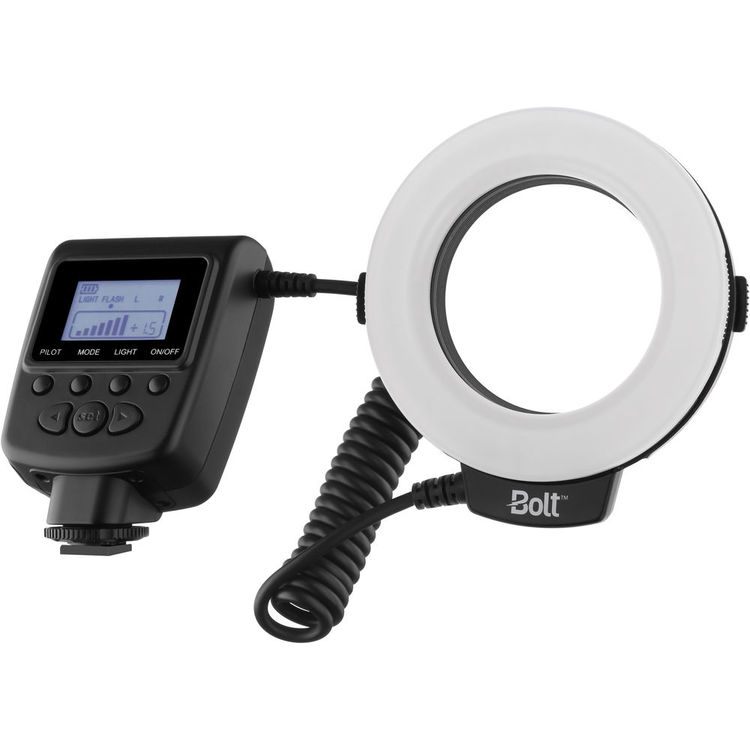
Another critical item which I've been postponing its purchase is the ring flash for macro photography. Since I don't delve deeper on a professional level with macro photography, I've thought that such professional ring flashes like Canon's are way too expensive for my simple use. Thus, I've decided to head to something more simple and cheap for occasional usage: Bolt VM-110 LED Macro Ring Light. It comes with various adapters for various diameters, and it uses LED instead of a flash tube. Moreover, this ring flash is universal and doesn't depend on TTL system, thus it works with any DSLR almost as the description reads. Some people would strongly recommend using TTL systems but I'm quite used by now on using manual modes in regular speedlites. Thus, handling this item should not be a problem supposedly.

Beside these major items, I've ordered some cheap infrared polyester filters and other stuff which I might talk about later. Also on the way but from another resource, some Baader filter sheet (or solar filter) to be cut and shaped freely for shooting the sun, and a book about Sumerians (been my fascination for some time). I can somehow consider this to be my own birthday gift to myself, but a bit early.

Finale

Up till this moment, my life is undergoing a storm, despite the calm appearance from the outside. Let's not delve into these matters of the heart for now. All I can say for now is I'm urging these new toys to arrive, as soon as possible, to get me started playing around. I need to put my worries onto something; the sooner the better…


Thursday, March 6, 2014

Ebb Me...

This is one week further, one week steps forward, one week rushing through summer with all its momentum and inertia (says the physicist!). The temperatures are going up, up even to 30oC, and it is just the beginning of March. If you ask me, my photographic opportunities are waning. This week was turbulent somehow and I couldn't do much about it, but I did have some encounters that might be interesting.

Grill Me

In this week, I think I can consider myself lucky, and that I've encountered a miracle myself. This is because of a disaster that was avoided with minimum losses after all. Otherwise, my own camera would have been the price! Let's see the image below and then I will tell the story behind it...

Grilled!

Some people do know already what is this, and for those who do not know, I will tell the story in the following lines:

Source: B&H
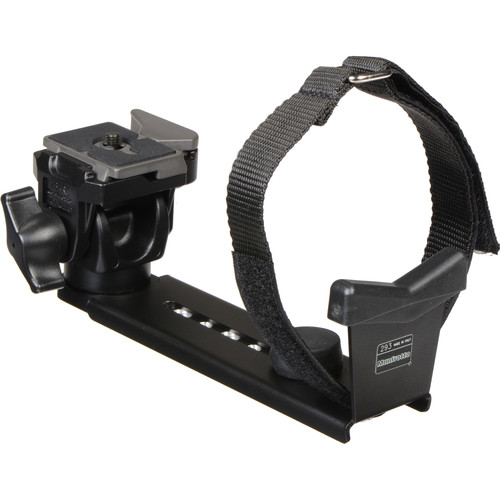
I've tried, as you might have seen in previous posts, to take a shot of the sun with some gel ND filter. This time though, I was trying to take a shot of the sun with my Rokinon 800mm mirror lens, and two teleconverters, using infrared filter. Hence I don't have a proper infrared gel filter to fit in the front of the lens (for which the diameter is 105mm). For this reason, I've decided to deal with the matter like I've done with Rokinon 8mm fisheye lens (as well as Canon EF 15mm fisheye lens); that is, to fix the filter at the back of the lens. To do this, I've measured the diameter of the rear end (the exposed lens portion only) of the mirror lens and cut out an equivalent square piece of my Kodak's infrared gel filter (which I already have and cut out a small piece of it for my Canon fisheye). Putting the filter there at the rear of the mirror lens, and connecting to the two teleconverters, and mounted on camera and the whole system was mounted on my Manfrotto telephoto lens adapter, and off I went to the roof to capture the sun.
Source: B&H
On the roof, even though sitting on a chair and working with the camera, I did have hard time to focus and at the end, I couldn't focus at all. Once I get a glimpse of the sun disc, sharpening the image by rotating the focusing ring simply turns erratic and everything goes blank. I gave up after many trials and decided to head to my room and see the results on my monitor to better judge what I was doing.
As I stepped into my room, the aroma of some grill filled the air! Following up the smell a bit, I've found out that it is emanating from my camera! Quickly, I've disconnected the lenses, and smelled the camera up close, but the aroma wasn't there almost. To further check it out, I've connected my Canon EF 50mm lens, and did some check up and everything was fine and the camera wasn't damaged. Back to the lenses, I've gone thoroughly with each part of it, until I discovered the image you see above: a grilled IR gel filter!

Gracefully, no serious damage occurred here except of some blackening of the rear element of the mirror lens because of the soot. Some cleaning was enough. On the other hand, losing a piece of an infrared gel filter is somehow a considerable loss because this 3x3 inch gel filter is not cheap after all! I could have used this square gel filter for my Rokinon 8mm fisheye lens in the future! I wonder if it had been better putting some ND in front of the lens like before in a clumsy manner and using the IR filter? For me now, I might never know as I don't want to sacrifice further!

Enlighten Me

With the lack of venting and activities in general from my side (for various reasons), and because of my experience mentioned above with "grilling" the infrared gel filter, I've got a spark of an idea for some experimenting. Macro shot of a light bulb, with infrared filter on. The situation isn't easy because of the heat of course, but the filter in front of the lens generally provided some protection.

Coil Me
Canon EF 50mm + 68mm Extension, f/22, 0.25sec, ISO100.

The experience was merely an abstractive one in general. Probably I can even state that macro shots for non-living objects can be almost categorized into an abstract class - unless, of course, it was for documentation; that would be another story.

Cold Heat
Canon EF 50mm + 68mm Extension, f/22, 0.25sec, ISO100.

Despite trying several angles around the bulb, also changing the length of the tubes, it seems that Coil Me and Cold Heat were the only somewhat attracting shots, in abstractive sense of course. In the beginning, I didn't try any extraordinary processing for the image in Coil Me but changed my mind with the second one, Cold Heat, and decided to do a channel swap.
In my schedule I had a plan for an infrared panorama, which would require lot of time, effort, and sun! However, no chance was delivered to my door steps...

Finale

I'm resisting an ebb. An ebb reaching almost everything in my life right now. Many setbacks on the domestic front. I even envision a violence outcome in the near future - probably that would be the only way to show or emphasize some respect to some people.
The question is, if home isn't home, and work doesn't feel like paying respect, where would one go?
I do have the urge to move elsewhere. Far away. Yet, I can't simply forget about the people I care for in here. All I can do is dream of a vacation. Isn't amazing how foreigners can know you (and appreciate you) more than your close circle?

Back to my plans. My mind is sparked for a revival for the idea of a 3D panorama, beside doing a 3D project for my work place (specially after receiving a set of 30 anaglyph glasses red/cyan). The idea I have in my mind for a 3D panorama requires patience and lot of work (in time aspect). Thus, I might try to do a simple 360o panorama instead of a full one.
In the meantime I've been working with the group as well to sort out some images for Austria's international photography contest. As per the leader's opinion, 8 of my images are now on the queue for the final sorting trial next Saturday, March 8th. I leave you now with the sorted images so far...

Click To Enlarge


Thursday, February 20, 2014

Inert...

Another week is passing here with a dormant activity on almost all levels of my life. I'm not sure what is it really, it is just that deep feeling of tiring mind and body. Despite my trial to do some photography but I failed with an honorary degree. Maybe I will talk about that later.
My niece is out of the hospital now. According to the doctors, it seems that she was inflicted with the herpes virus, and probably her teeth are suspected for such low immunity (adding the effects of thalassemia) to the virus and enabling the virus to the reach the circulatory system that easily and up to the brain. Thank God she is fine by now, even though with a dozen of medicines and antibiotics. Just to imagine such a little girl is suffering all of that at such an age makes me hate my life already.

Well, let's see what I've done in the past 2 weeks, if there is anything that I could have done better anyway...

Astro

After getting my Rokinon mirror lens, I didn't have much chances in the past weeks to try it well, but I did enough to see its effect on lunar and solar photography. The solar part, in particular, was a cumbersome experiment which I will talk about in a while.

100% Crop
Rokinon mirror lens (800mm) + 2 x2 teleconverters, f/32, 100-1sec, ISO800.

The first real trial for the lens was directed to the moon. since I got the lens, the moon persisted on not showing up in the sky; if it is there then it's cloudy, or simply the setting time is prior to sunset itself. Anyway, let's not blabber about the "good" luck I've been experimenting this lately. I've finally captured the moon here and it's shaky as you can see above because of the great focal length (3200mm in total), and the wind was persisting that night. The crop above is a portion of the image which is not resized.

Sonne IX
Rokinon mirror lens (800mm) + 2 x2 teleconverters, f/32, 8000-1sec, ISO100.

The next test was aimed, of course, towards the sun. In fact, the sun was the main inspiration to get such a lens after all! However, you might have noticed that the ISO was relatively high in the moon's shot and it is low in the sun's shot, naturally because of the light level difference between the two. Ironically though, the sun's shot, to me, was harder to achieve for a number of reasons:
  • Sun's position in the sky which forced me almost to raise the camera at 90o.
  • Facing the sun and not being able to cover the camera with
LensCoat as I did with previous shots. The LensCoat is useful to cover my head as well while working with the camera's LCD, giving me shelter against the harsh sunlight. The diameter of the mirror lens and the fact that the camera was placed on Manfrotto telephoto lens support made it impossible to cover the system with LensCoat.
  • Cokin's adapter ring (105mm) is bent (!) and could loosely attach to the front of the mirror lens.
  • Focusing with the green welding glass proved cumbersome (it doesn't give a sharp focus after all) thus I had to try placing ND gel filters sheets in front of the lens (as Cokin's square ND filters are smaller than the diameter of the lens). This highly affected the quality of the light and increased the cumbersomeness of the movement of the camera and lens (specially with some wind blowing).
  • Despite the stack of ND gel filters, I still had to use the fastest shutter speed (8000-1sec)  for my camera and still it would be somehow a bright image.

  • Source: B&H
    I've used around 11-stop of ND filters in my sun shot. Surprisingly, the shot became desaturated. The blue color of Sonne IX might be typical for images processed from IR shots done before (by swapping channels) but in this instance all I had to do is increase the vibrance (and no channel swapping is involved). In the first instance the image was almost greyscale in appearance. I was thinking for some time about using the gel filters for general long exposure shots with other lenses instead of the Cokin square ND filters because staking Cokin's would yield a magenta tint to the image, and here with gel filters it did give an unexpected result. However, desaturation is way better than a magenta tint, from my perspective at least.
    The cumbersome situation with the filters made me rethink about the so-called Rear Filters which are supposedly fitting for T-mount lenses like this mirror lens. On the other hand, there is some hope in developing some way to fit gel filters easily into such a system by placing the filters on the rear end of the teleconverters instead of the rear of the mirror lens. However, this needs some revision as the structure of the teleconverter's rear is tricky a bit. Also one of the things that I need to work with is to innovate some way to focus this lens without touching intimately to reduce the shape as much as possible. For the time being, I might be using some rubber bands and clips!

    100% Crop of the sunspot.
    Now back to Sonne IX which surprised me with the existence of two sunspots (each spot is composed in a pair of poles in fact, meaning they appear as 4 dots). On the smaller version, the focus sounded fine, but of course as we approach in to view the 100% or the real size of the image we can see that the focus is not sharp enough. That's good enough though. Previously, using my Sigma and two x2 teleconverters (yielding 1200mm), the sun would appear as one big disk in the frame. Now, however, using a mirror lens with the same teleconverters, a quarter of the sun fills the frame, giving a good zooming in for the sunspots at hand. The crop you see here is for the sunspot at 5 o'clock in Sonne IX above.

    Nox

    I've been trying hard in the past 2 weeks to push it further with my night photography. However, the exhaustion and the lack of interest in most of the locations available made me almost idle. Now, in the coming few days, I have to work as much as possible and as fast as possible because winter is vanishing, though slowly. After all, I've somehow succeeded in only one shot which took me some time around 45 minutes to do.

    Ad Borea
    Rokinon 8mm fisheye, f/8, ISO100.

    The location is an old one in fact. I've previously took a shot in this location, with the same lens, and also in one winter night. The difference here is the shot was taken under the roof of the structure (gazebo?) rather than away from it. Also, Ad Borea is in fact a tone-mapped image from a HDR slide. The sequence of the shots was started at 16 minutes exposure and ending at 30 seconds, which one stop difference between successive shots.
    One of the embarrassing moments is to discover, after returning back home and uploading the images to the PC, that there was some trash on the left side that the darkness made it hard to see back then. I had to spend some significant time trying to manipulate the image (after tone-mapping) just to remove the trash from the scene. At the end, the only plausible solution I had in mind is to copy the table from the right side and fit it on the left!
    Now this location can be inspiring for some panorama work but I need to check my options first in that location.

    Failure

    I had some ideas sketched down on pieces of paper. Unfortunately for me, all of them do involve some portraiture work. Since I don't have a model, I have to try it all on myself. Of course, this is not an easy task, to be a model and a photographer for yourself in the same time (in fact it is never advised to be so). My room is in clutter; with all the gear splashing in the place. I've tried for several days to catch a decent portrait, but my trials were to no avail on both fronts; posing and lighting. Guess my face is simply not photogenic and doesn't encourage on more creativity with the light! I've decided for the time being to just abandon these ideas and keep on going with something else. Portraiture is a nightmare.

    Finale

    With the lack of books in the current time, I'm trying to spend time (specifically at work) reading off Wikipedia, which is not a good source of information but it would do the job for general knowledge I'd say.
    On the group's front, we are now in the phase of sorting out images to enroll in Austria's international photography contest and I've been given the responsibilities of uploading the photos as in the last year. Not sure how much I will get involved with the group for the time being, but surely I have to be careful in this field. Otherwise, I would slip into a twirl of responsibilities loads beside caring for Mom and the house, and my own projects with my camera and other things (Geltani specifically). Sometimes, I do think that I don't need a vacation from home and work only, but even away from my own camera.

    My work is passing through some upheaval in the current time; we don't really know what is going on with the administrative body of the college. Things seem to be in chaos, and more suffering for us, the scientific staff in this place. Day by day, I feel the screws are getting loose on my nerves and I might explode at any moment, with any one. My worries are even extending further on the home front, with some family members being into some hard times (other than my niece).

    I have to say that I'm literally losing my faith in everyone around me. I firmly believe that no one out there would really help me with anything, however simple may it be; I have to take things on my own and with my own hands; always. "Don't I deserve some love?" had become a stabilized bell-ringing question in my head at all times.

    Thursday, January 30, 2014

    Official...

    Surprises (or should I say Semi-Surprises) still have a plenty for me to show, and it is yet still the first month of the year.
    It is official now. I've been diagnosed with Retinitis Pigmentosa by a specialist, after checking all the results of the tests I've done in the past 2 months: Field of View (FV), OCT, and ERG. I'm not sure how did he really read my results without a close-up inspection to my eyes, but he depended, as it seems, on the ERG test result which I've done last Thursday. I'm not sure what's the next step, but anyway the doctor said that he cannot make up for how severe it is. When he asked if I do suffer of anything, I simply replied what with what I feel and what I've seen: Nothing.
    Anyway, more about that probably later. I'm somehow happy for this past week for a number of reasons which I'll be talking about below.

    A World of Pajero

    I've finally had a chance to do a panorama for my new car; Pajero 2014. The panorama wasn't any easier than the one done with my old car, Seat, despite the relatively wider space inside. This is mainly relative to the size of the tripod and the bulky nature of the panorama tools I need to use. This in fact sparked me to think seriously about finding some alternatives somehow.

    Pajero 2014

    Even though I've stated before that I'm not going to use the parking lot in my work place because I'm disgusted of that place, but anyway I've come up with a solution just to avoid suspicions. That day, however, I had to wash the car and make sure it's clean of dust and I had to remove all the plastic sheets covering the seats (as in any new car). After doing my fingerprint scanning to leave work, I've went to the back of the parking lot as if I was leaving but instead of leaving I just parked there in somewhat isolated spot. The total process (settling and shooting and packing at the end) took me around one hour and a half. During this time there were employees who did pass in front of me and I somehow managed to escape some of them, while HDR technique and merging did the rest of eliminating some of the moving objects that appeared out of control!
    The panorama was mainly formed by 3 rows like in normal panoramas with one or two shots for the zenith (but didn't use it later). As for the nadir, it is already a hassle in a regular panorama so imagine shooting this inside a car! I did try, however, to dangle the tripod with the camera and the carrier from the back of the Pajero, but the shots taken were not to be considered "serious"!

    A World of Pajero

    However, even though it is not a full panorama, the set of images were enough to do some twisting in the projection style as can be seen in A World of Pajero. I think what really helped me here very well in accentuating the colors is using a proper white balance to start with, and this was achieved by using my new Vello white balance disc. From that point, changing colors and vibrancy of colors is, relatively, an easier task.
    Even though Pajero 2014 was tone-mapped using Photomatix, yet I find that tone-mapping A World of Pajero using Photoshop CS5 did the job perfectly and with relatively more flexibility than in Photomatix. With the new controls that Adobe provided for tone-mapping HDR images, I think this is becoming a serious candidate and a powerful tool for tone-mapping HDR slides.
    I've already printed the flat panorama and prepared it (and signed it) to give it as a gift to the sales person who managed my papers for this car in the nearest opportunity; probably when I go for the first service after 1,500km is passed. This is in a part, can be said to be a "self promoting" somehow, or let's say a free ad. Since I suck at socializing, probably such acts would do me a favor "socially." We'll see about that later...

    Nächtlich

    Now, there was an idea that I've been trying to do for several weeks but I would always lay lazy or exhausted, or simply the weather and timing wouldn't allow me to. This past week though I had to force myself to work despite some health issues. Seems that the coughing syrup worked on making me drowsy in the first night of the weekend, thus I couldn't do much at night, but the second night I had to push myself despite the persistent coughing. Even though I headed to the location late after midnight, I've encountered some annoying "youngsters" who were not of this country. I somehow got pissed off because at the only time I could be there I must bear with such people. Even though I tried to work silently without paying any attention, I've decided to go back to my car and watch the please until they leave - they seemed to be under drugs or high because of something!

    Die Kuwaitische Mitternacht

    Guess I've forgot to mention that the destination is the Soog Sharg pier (or dock?) which was a favorite location in the past weeks for long exposures with my Rokinon 8mm fisheye lens. This time, however, the measures are different; I'm doing  panorama and to ensure that the luminance is coherent for the HDR merging later, I have to take 3 bracketed shots, and to ensure that the total time for each shot does not exceed 30 seconds, there is no escape from raising the ISO. Even though it's not something new here but my previous record was to work with a panorama in ISO800. This time, however, it had to be ISO1000! This will have gruesome consequences later on...

    Planeta Mitternacht

    One of the gruesome consequences of such panorama under such ISO is, naturally, the hardships with the cleaning process and, with highly distorted projections like in Planeta Mitternacht, the noise level becomes even uglier. To clean the image, then, means you must lose details. Thus, so far, these images are for display only and printing them is not something to think of in the current time - unless I find some other workflow to work with these images.

    Gravitation

    Obviously, the noise level is harsh in shadow areas. There is a noise layer as well in bright areas like the blue sky for example, but they are not as harsh and "ugly" as those in the shadow areas. Probably, I needed even more time for such exposures to expose the shadows properly! But to do this, I would have, properly, spent 2 hours if not more, shooting this panorama.

    Schrein Am Meer
    The worst to suffer from the noise.

    Working at the pier in fact was not even any easier physically than my previous panoramas done back in 2012 on the seashore. Because of the bulky planks and the gaps in between them, clumsiness in movement which I've been known for was NOT allowed! Any loose clutch or grip on any of the tools I've been using (to screw, unscrew...etc) is definitely not an option, and walking must be done carefully in such darkness because my feet can easily trip in between the planks.

    Working with these panoramas now did in fact spark some desire within me to work with older panoramas, specially those from Ireland of 2010, from Co. Tipperary. Under the light of the new vision and the new techniques I've learned so far, probably I could make out something different from these old pieces!

    Helios

    Source: B&H
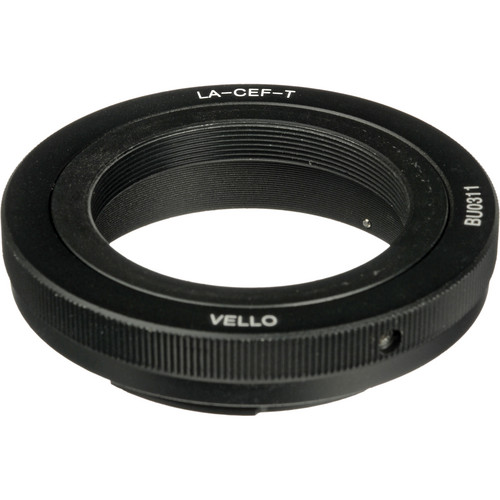
    I've finally received my shipment here and I had the chance to do a simple test for my new lens, the Rokinon 800mm f/8 Mirror Lens (a.k.a. reflex lens). To use it, I have to connect it to a t-mount adapter specified for EOS system. I was lucky that Vello's T-Mount Adapter comes with a small booklet that gives some idea about connecting the camera to a telescope and other optical devices which gives me some simple guidance of what to expect in the future if I need to do more with my camera.
    Source: B&H
    I've ordered also a Cokin ring adapter to fix my welding glass in front of the lens (which has a diameter of 105mm), but for some reason the ring came a little! Hence, it is hard to completely fit it into the lens but it did some job after all - even though the situation might be shaky. The other hardship here is the fact that I'm not using a zoom lens, but a "prime" lens. Previously, I used to zoom out to find the object and then zoom into the object (be it the sun or the moon or anything else). Here, though, I have to find my way the hard way, and with this shaky tripod system. Things get even harder with adding teleconverters and raising the focal length up to 3200mm! Anyway, I was able to give it a try.

    Sonntag
    Rokinon 800mm Mirror lens, f/8, 800-1sec, ISO100.

    To add to my "good" luck (and please note the sarcasm), since I got the new lens, I didn't have a good chance to shoot the sun nor the moon because of the clouds and few rains. I did have a single opportunity to shoot at the sun with welding glass, but it seems that the nature (and thickness) of the welding glass is a main reason for defocusing. The shaky system probably makes it harder for me to concentrate my eyes and focus properly (and everything is done manually) but it apparent that focusing with the welding glass is harder. As I'm typing this, I'm waiting for my chance to shoot, this time trying my ND filters (and I do need to use a stack of them). Not sure though if they will fit and cover the diameter of the lens. Another option would be to use the gel filters sheet which I still have, and let them down in front of the lens with the help of the Cokin ring. Just some ideas that I need time to test further. These issues, however, are nothing compared to be having a good and dependable tripod right now which made me think seriously of getting a new one from here.

    Finale

    Now it is probably the time to slow down and do as much as possible in the same time. Despite the fact that I'm officially diagnosed for retinitis pigmentosa (RP) right now, I'm just trying to chill and cool down my nerves and go on with my life without putting much weight on my own notifications about my own sight.
    I had some ideas before in fact about what if I was a sculptor; probably I can make a monument somehow to commemorate RP and its patients.But since I'm a photographer (or let's say trying to be still), maybe then I can show and do something on the same line? What can I do as a memorabilia for this?

    I do have some ideas in my pocket right now, but to do them, some effort is needed, specially if I'm working alone and trying to take shots on my own for my own self. I do have some other ideas not related to RP as well and all is scribbled down on sticky notes. Just need the proper "timing" to work with them.

    Maybe I can imagine RP to be an inflicted photography style somehow. I'm not sure how this is possible but probably with some thought and philosophy and meditation, I would be able to reach a solution for how to work around RP, and show it in my work.

    I'm not sure what I'm awaiting in this life for the time being. My exhausted mind and body are really urging for a vacation somehow but it's unclear how or when. The only thing that I can do for the time being, is just look for some time to sleep, as much as I can...


    Thursday, January 9, 2014

    Sonnenaktivität

    Here we are; a new year. I won't be talking about resolutions here as, in fact, the new year thing is not widely separated and the concept of New Year's resolutions is just something weird for most of the people here - needless to say that we grow up without really considering it something special that a solar year passed and a new one began.
    I can't say my beginnings of this year were good, but I really couldn't care lesser about my bad luck, or the troublesome conflicts with other people around me, specifically at work. This, by now, became like a daily dish for me.
    One of my great sorrows for the past week is that I wasn't able to go out at night during the long "weekend" which consisted of 4 days and shoot at night. Mainly because not much scenes were available, and some of the locations that I've used to visit for some solitude and silences, were bugged by annoying people and their trash. Luckily, I did some of my homework the week before and did shoot something at night.

    Blaue Nacht

    From the early beginning of that night, it was a helpless endeavor trying to find out something to do and not to sleep that early in a such winter night. My first pick was a location that I used to visit years back, and specifically at such time of the year (and even did a panorama there deep in low tide time). This time, however, the situation had changed. People (specifically the annoying type) were still roaming the place. I tried my best to stay away from the rest and do my own business.

    Ausstrahl
    Rokinon 8mm fisheye, f/11, HDR.

    I have to say that the main reason for visiting old location is some inspiring kick that got to me when I viewed some old images (specially those I've made into 3D anaglyph images) of a broken shade on the beach. Back then, I didn't have the fisheye lenses that I do have now, specially the Rokinon 8mm. Thus, I've decided to re-discover the area and this shade specifically with my Rokinon because, simply, the geometrical patterns were inspiring as they are.
    As I settled down in the place, over the soft sand, I was faced with two main problems: a) setting up the tripod on a soft ground, and b) the flare from the harsh lights of the restaurant at my back. In the final image, Ausstrahl you can still see some traces of the flare even after the crop. One of the problems with fisheye lenses like Rokinon, with a large field of view, it is the hardship to use a flag to block other light sources that cause the flare; simply because there is a big chance that the flag would get into the frame, and when moved out of the frame it does not technically block anything!
    On the soft sands it took me some time to settle and to take some test shots with ISO12800 to judge my composition. I've decided then to go with long exposure brackets; something that became a favorite activity at night exposures. Can't remember the exact timing but it ranged from about 8 minutes down to around 30 seconds. Almost at the end of the exposures, some guy was peeking from the top of the concrete wall behind me and started to make comments. His comments weren't bad or vulgar, but they were simply nosy. Thus, when I felt the situation being like that, I didn't stay longer and picked my stuff and left the place.

    Altar
    Rokinon 8mm fisheye, f/8, 4m, ISO100.

    Leaving the first location, I still had the urge to work a bit more, thus I've visited Soog Sharg dock place where I made some shots several times previously. This time, it was relatively quite (as the time was nearing dawn by then). Even though I did take several shots with different times thinking of bracketing and merging into HDR when I finish, but at the end I only picked the first shot that took me 4 minutes. The rest was a play in the RAW editor (DxO in this case) to fix the shadows and highlights as much as possible, along with the distortion but not to the extreme flattened look. That night, however, wasn't the last activity for me in 2013!

    Pajero

    As I've mentioned before, I've got a new car just before the end of 2013. A Pajero. I really like driving it and it was a great help with the rains that hammered over Kuwait this week. I'm grateful.

    Pajero 2014

    The day I picked to shoot my new car was cloudy and prior to some light rains back then, but with HDR rendering I was able to show details in the clouds above. For such an elevated car, it was hard to pick up a proper angle to shoot form a lower level, unlike my previous car, Seat.
    I've taken several shots as well from various angles. However, no need to put them here as they are just regular ones. The main interest for me now is to do a panorama from inside like I did with Seat. I've managed to check the rear and I've almost settled with my mental process on how to setup the gear inside - but I do need a proper place to work (for some long time) and it should have proper light level. Let's not forget that I must wash the car prior to my work!
    There is one old panorama taken from inside of Seat, which I've done in the parking lot of my work place, but now with my sickness of this place, I've neglected the idea of heading there and shoot a panorama.

    Sonne

    In the past 2 weeks I've picked up a new hobby. Shooting at the sun. Well, it can be classified as astrophotography, but the case with me is that I'm not completely within the reach of astrophotography; but my main interest is the sun, and the moon of course.
    This main interest was sparked (again) in fact when I was surfing B&H website to find what was new for me back then, the mirror lenses. With some little research and study, it seems that those lenses are in fact just small telescopes to be attached to the camera (with the help of some adapters too). This even sparked in me the desire to, maybe one day, get my own telescope and try some astrophotography - but we would need REAL good locations for such hobby, and the urban areas where I live and roam are, of course, not suitable for such task.

    Sonne I
    Red arrows point to noise bits from the system itself.
    Blue arrows point to features on the sun itself.

    My first trial to shoot at the sun was with my relatively-new Sigma 70-300mm. As I used to do with the moon, with my Tamron back then, I've attached two x2 teleconverters to raise the focal length to 1200mm. Using the two teleconverters can be awkward in normal conditions because the light quality becomes lower, but with the sun, we would still need some filters to block the harsh light, and here comes the welding glass (green) to do the role.
    The welding glass provides around 11.7 stops which was enough to look at the sun thru the LiveView LCD at the back. They say, usually, if it is safe for your eyes, then it is safe for your camera when it comes to shooting at the sun, and this is what I've done in fact. Focusing, however, was a bit troublesome; typical for such a long focal length and a shaky system. I think I do need a collar to hold the lenses to the tripod like how it is done with typical large telephoto lenses.

    Sonne II

    I did another trial few days later but this time the harsh spots from the system itself did vanish, and I'm not sure why! Maybe it has something to do with the focus itself. When focusing at a subject like this I usually zoom the LiveView to the edge of the sun disk and try to make it out as sharp as possible visually (which is not always a good solution). With two teleconverters (and f-number exceeding f/2.8 in multitudes!), the AF function is simply idle. Just to note here that the image were corrected for colors later of course. In Sonne II, the spots (or flare?) are more obvious than in Sonne I. The best has yet to come though...

    Sonne III

    My third trial with the sun was done differently. I've used the IR filter instead of the welding glass. The thing about the IR filter is that I can't technically measure the number of stops it reduces, because mainly it is intended to block visible spectrum and pass the IR band of the spectrum - this is the main goal for producing it, and using it! Thus, with this uncertainty in my mind, I kept some ND filters at hand just in case I do need to reduce the light even further. Just to notice, my IR filter thread is 58mm and my Sigma's thread is 62mm, thus I had to use a step-down adapter between the two which causes a bit of vignetting at the edges, but here it's not really important.

    Sonne III
    Original IR shot.
    The light level, however, was easily controlled then by the shutter speed and the aperture (which was kept at maximum) and reducing the ISO too (back to 100!). All that was done as I was watching the LiveView. Not so surprising, focusing using the IR filter was much easier and I could achieve a relatively sharper edge focus. This is understandable since the welding glass is bulky and it technically hangs in front of the lens, while is IR filter is screwed in. What I'm not sure of though, does the IR radiation has any part in any of that? Meaning, does the IR radiation come into focus and NOT the harsh disk of the sun itself? Logic says that I've been focusing with the help of the IR band since I'm using an IR filter - but who knows! However, with Sonne III I was even luckier to find several spots at the center of the sun. Adding to that, the original IR shot did have some "halo" around the disk, unlike the dull image done with the welding glass. Seems to me that it is all a good practice for now before, one day, getting my hand on a mirror lens or even a telescope.

    The f-Problem
    One of the problems that accompany using a teleconverter is the fact that not all information might be recorded in the EXIF of the image file, or even communicated with the camera itself. In my case, my Bower x2 teleconverter would communicate such information, but the Vivitar x2 teleconverter does not communicate any of such information with the camera. Thus, the camera would show f/22 for example, but in reality the f-number is supposedly larger than f/22; after all, the f-number is a ratio.
    When shooting at the sun with my two x2 teleconverters, the recorded f-number was f/64. I thought, if someone would try to track the information of the shot to try and do something similar, the consequences might be not "pleasant". Also, I have to think about the future use if I want to mention such information with my images, like in this blog for example, and definitely such information would be misleading. All in all, there must be some accuracy in the information represented with the images. Sigma's maximum f-number is f/22, and it is recorded as f/64 when using the two x2 teleconverter, and this value comes from the Bower teleconverter alone.
    Hitting mathematics, let's see what does that mean. That is, having f/64 with two x2 teleconverters and the lens zoomed to 300mm. First of all, let's get the diameter of the aperture here without teleconverters:

    N=f/D;
    Where N is the f-number, f is the focal length, and D is the diameter. Simple algebra, and we get the equation of the diameter as:

    D=f/N;
    Thus, in normal conditions with 300mm focal length and maximum f-number of f/22 (as in the Sigma 70-300mm lens), the diameter should be: 300/22 = 13.636mm. 
    Now, the teleconverters are just magnifiers and do not have any aperture control. In return, then, the diameter doesn't change with the addition of teleconverters, but the focal length does. With two x2 converters, the focal length is theoretically expanded to 1200mm! (300 x2 x2). Now, if we supposed that the f-number is indeed f/64, and the diameter of the aperture is not changed, what would the focal length be in that case? Again, simple algebra would give the equation as: f=ND. Meaning, the focal length is: 64x13.636 =872.727mm. A wrong answer of course.
    Using the above equations again to find the correct f-number, it would be: 1200/13.636 = 88. It is worthy to note that in the specs of such teleconverters, it is mentioned already that they double the f-number, but the problem here lies a bit in the mathematics involved, because f-numbers are not based on the rule of stops of 2n, but rather on 2n/2. I find the method of finding the diameter is more "direct" if I can call it so!
    This item of info, though simple, I believe it would play some role in critical times when calculating the required exposure becomes essential and finding the correct f-number would be a must at such times, along with other uses.

    Finale

    Gaston Bachelard
    The Aesthetics of The Image
    Ghada Al-Imam, PhD.
    Husain Ali, PhD.
    The Philosophy of Art
    A New Vision
    My arsenal of books is about to finish, but that's going slowly for the time being. Two interesting books (somewhat) are on the list for now. The first is a discussion of Gaston Bachelard's (1884-1962) philosophy. In fact, despite the title of the book, I thought it would be a direct impact on the matter of the arts, but it turned out to be a highly deep and sophisticated discussion for various themes, and generally for the relation between science and art. I had to stop when I reached around quarter of the book or even lesser than that because, simply, I could not comprehend a single word from the text. Thus, I've just decided to put it aside for later and start reading the second book on the list. The second book, The Philosophy of Art, is more clear in its aspects about art and the philosophy related to it. I've just began reading it though and I need to see what comes next; at least the talk is clearer and I'm able to follow the ideas so far. I'm not expected though some tips about how to criticize a work of art or the likeness of that, but at least I might develop my own sense and evaluation of art in order to see future work with a philosophical eye, and not simply with the visual attraction.

    Aside from the cultural venue, I've been suffering a lot of downs with no ups. Mom's condition is not getting any better (though stable), and in my work place things are getting on my nerves more and more. In fact, my work right now is the last thing I do care about. The mediocre, if not poor, treatment from the administrative people in my work place makes me question the value of my dignity and respect relative to those people. It's not the first time to think of seriously leaving that work place and be on my own doing my own job and the things I like - but it is better to be with moonlighting; that is working with a stable job and a side job until the situation becomes concrete on the side job. I didn't start this yet even and makes me wonder what to do next. What angers me the most is to realize that I've spent 6 years in this college to get a scientific degree, to be controlled then by a bunch of monkeys that barely know how to do algebra and simply got no considerations for our simplest rights.

    The situation is vague. I'm simply living each day to its extent and trying hard not to think of tomorrow. It's hard to neglect that because of the hammered mind, an expectation for a new trouble arises with every morning I turn my opened for the daylight. My heart is tired.