Showing posts with label cable. Show all posts

Thursday, May 1, 2014

Nacht der Langzeitbelichtungen...

Well, now we are back to the rhythm after two posts about my trip to Failaka; despite the fact that I'm still processing some of the images taken there. But probably the bulk of the images that I really enjoyed taking were already done... till I discover something new though. The B&W processing and tone-splitting sound promising but I do need more time with my images. In the meantime, I'm trying to settle down with time ripples as I'm torn in between two blogs, both of which would require an early preparation to be posted in time. Probably my future posts in this blog would be short (be happy!).

Nacht der Langzeitbelichtungen

I hope dear reader won't consider the title offensive*. It's just a title that reflects what I've been doing since I got back from Failaka island two weeks ago. I'm trying to do the best I can before the weather gets warmer (than this already); long exposures at night time.

Sky and Earth
Rokinon 8mm fisheye, f/8(?), 3.5m, ISO100.

My beginnings were shaky. Despite the fact that the low tide timing was perfect for me, because I wanted to go deeper into the sea shelf (the area which is covered in high tide time), yet, the tide was not low enough. To add to my problems, the beach area was not "silent" at 3:30 a.m.!
My first exposure, Sky and Earth, which was for around 4 minutes, came out blank. Not literally blank but out of features. I was hoping to go deeper into the sea shelf specifically to capture more rocks in the foreground, but it wasn't the case here.

Luminatus
Rokinon 8mm fisheye,
f/8(?), HDR, ISO100.
As you can see, because of the time that lapsed when these images, Sky and Earth and Luminatus, were taken, I've completely forgot what was the aperture used back then in this manual lens; but I doubt I've gone further than f/8 (hence "f/8(?)" in the caption). Luminatus, in particular, was shot about 180 degrees to the other side on the shore, away from the first shot Sky and Earth. Now, I have to admit I don't like both shots, but I did shoot after all. I didn't want to go back with empty hands after struggling to the beach at 3 a.m. that day! Some people commented that they like the transition in the horizon line in Sky and Earth, and I might like it a bit because of its minimalistic approach to the seascape, yet, it's not much more than a play of colors; in fact this is all what I depended on here to make this image work a bit. Otherwise, it is one big fail. Luminatus on the other hand was a fail still but with some liking from my side because of the spot-like effect that surrounds the buildings. This is mainly caused by the lights of the buildings themselves which caused a halo effect somehow. The HDR technique (gathered from long exposures) helped a lot here in controlling the range of the halo, but then some work in Photoshop was required. My night was over then and I had to go back to my car on the soft sands, carrying the load!

Extraterrestrial
Rokinon 8mm fisheye, f/8(?), 8m, ISO100.

The night after was a bit more promising but I have to admit here as well, I didn't expect the results. One of the major differences between an amateur and a professional photographer is the expectation of the final outcome before the work is done. The timing isn't really what I was hoping for because it was close to dawn, and the exposure time, when calculated in the regular way as I usually do, must be shortened than the real calculations; This is because the sun is on rising even though slowly, but it does affect the outcome significantly (in some trials before, the exposure time would be one minute short than calculated to get a proper exposure, or at least a proper histogram distribution).
In theory, when doing long exposure for moving clouds, a cloudy day in fact is not good - this is because the movement would not be so obvious in the sky. The movement won't be noticeable unless there is some spacing in between the clouds. In the meantime, I was thinking: Is it possible to record the movement of a hole in the clouds when a cloudy day? I think I got the answer in Extraterrestrial. I'm not a meteorologist, but it seemed that this place in the sky specifically was like a barrier for the clouds passing through it and hence the lines formed around this specific vacancy. The bright spot in the sky was probably the sun disk which, on location, was completely invisible to the naked eye. Probably this is one of the beauties of doing long exposures: to see the unseen!

Blauentraum
Rokinon 8mm fisheye,
f/8(?), HDR, ISO100.
Just before leaving the place, after observing how much light is shining on the land, I decided to do one last trial, this time for HDR bracketing (and if I remember correctly it was also a series of long exposures). As you may have noticed  in Blauentraum and Extraterrestrial already, I've been using the Fluorescent WB excessively for such time of the day (along with dusk time too). In processing the HDR, I didn't try to do any magic here, but simply eliminate as much as possible the ground of the beach while darkening the sky a bit. The guide line here is not strong, and the only thing I would rely on in this image is the hues and blend of colors. Otherwise, I wouldn't submit this to be judged in a contest!
The coming weeks after that did (and will) witness more long exposure trials but I'll keep these images for later...

* In case the reader is not aware what it means; the title means "night of long exposures"; parallel to the Night of Long Knives (Nacht der Langen Messer), which was a name given to a  series of political murders in the beginnings of the Nazi regime.


Finale

Source: Amazon
 New books now arrived, and I've already started reading it. The new book is a contemplative book somewhat (just like another book I had before) but in a different style somewhat. I do have some list of books that I'm reading already for bedtime (an Agatha Christie novel in Arabic in fact) and at work I'm somewhat busy doing work related to this blog and the other blog, thus reading this book is a challenge for me now. The best I could do for now is to read in between when taking breaks, or when I wait for my fingerprint time before leaving work. The other books are related to Archaeology and principles of optics which I'm also dying to read. The latter specifically looks an old edition; I really didn't check it out! But it doesn't matter as long it gives some basics.

Source: Amazon
On the other hand, I've ordered another flash cable instead of my Vello cord which got broken after some accident. This one (from Pixel) though is cheaper than Vello's. I'm not sure why though, but it works fine and tested it for High-Speed mode on my 580EXII. If it is about the make, then I have to say the Vello is higher in price and yet couldn't stand the fall of a tripod; hence, it wouldn't make a difference for me I guess if I get a cheaper one. After all, I'm not using it excessively for the time being - but that doesn't mean it's not necessary!

This is it for now I guess. I'm not sure I want to talk about work here, because I'm trying to keep myself busy as much as possible just to forget the insults that I see daily in that place. The summer is coming, and the hell is starting to cook my body already. My only condolence is to see students finish off their semester as soon as possible to release some of the jam in this place.
Meanwhile, I do feel guilty though for not doing much work with my Geltani conlang. Two weeks of vacation and yet, I didn't touch it at all and concentrated all my time for photography; it's unfair I guess. Too many things to do, and one body to do them all...

Thursday, June 27, 2013

Paralyzed...

As the title says. This week I've been paralyzed. Not much activity (except of some self portrait issues) and all of that because of, mainly, the car issues. In the middle of the week we had a special religious occasion and it is customary to fast on this day so I did fast 2 days in fact - and with fasting, my powers go down a bit and I wouldn't be able to do much after working hours. some ideas are there, but to work them out, I would need either more resources or, so to say, more objects to buy and/or help (something I seriously lack).

Source: B&H
My savior cable turned out not much of a savior. However, it still works. After getting the Vello 33' cable, I've found out that I can't access the speedlites via the menu in camera but I have to do mostly everything manually. Strangely, this problem persists only when the speedlite is attached to the far end, but I can access the menus when the speedlite is attached to the main head connected to the hot shoe on camera.
After contacting B&H they did indeed help me out and sent me a Return Form to be sent through UPS, but unfortunately, this service doesn't work out for international destinations like from Kuwait. Thus, I have to keep myself contented with what I have right now. The main thing is applying High-Speed options which might be problematic, but the wireless triggering works just fine so probably I would have some work out around this problem.

Source: B&H
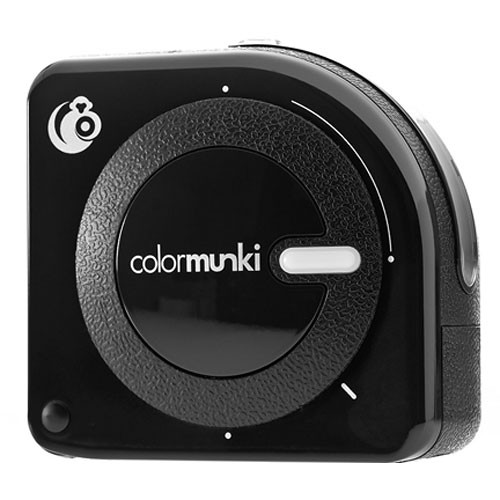
On the other hand, the new ColorMunki is working just fine and I've already calibrated my new laptop and the desktop monitors. What is left is to try out and calibrate some projector (which I don't really need but to get the hang of it) beside doing some printer calibration when possible. All of that is on hold for the time being till I finish my car problems!
What I like about this ColorMunki is the more sophisticated options it has (beside of course the basic calibration which a beginner can still use). It has options to calibrate according to the ambient light or according to a light temperature (e.g. D50, D65) and so on. My monitor now looks significantly darker than it was with the calibration done from the old simple ColorMunki (with monitors settings set to default or factory settings).

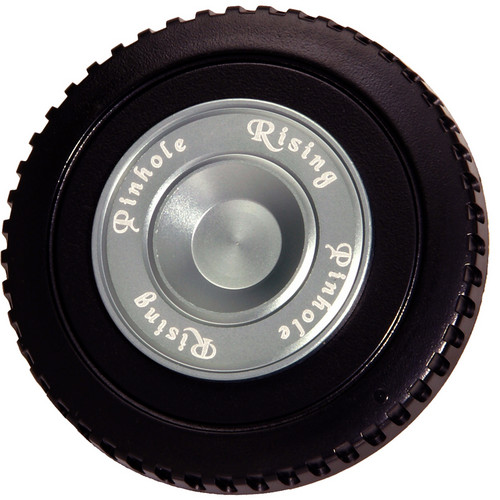
Other toys are just fine and the pinhole mount specifically needs more experimenting, but initially the test is fine. For the time being, I'm thinking of using my light meter to initiate the calculations for finding out the required exposure time when using the pinhole (of f/222). To find the required exposure here I would have to measure the light level at a specific f-number and then build up the exposure time up to f/222. I will try the simple formula:

V = 2*Log(N) / Log(2)
Where V is the number of stops needed, and N is the f-number. However, for N here, I would substitute for the difference in f-number (i.e. ΔN) between f/222 and the initial f-number (say f/8 for example). I'm not sure this is mathematically correct, because I think I'm suppose to drive ΔV and not simply V. Anyway, my mathematical expertise is not good enough to derive such a formula. My main, and simple, derivation is from the equation mentioned in Wikipedia's page here.
Of course then, after calculating the stops (V in this case) I would use it in the following formula to get the required time for the exposure:

T = S * 2V
Where T is the Time that we need to know for the exposure, and S is the shutter time calculated at the initial f-number (f/8 for example as stated above) by means of the light meter. You might think or feel it is kind of ridiculous to work with all these equations just to use a pinhole (while you have a set of lenses that I can use still with TTL systems), but trust me, it takes a physicist or a mathematician to realize the sweetness of such experimenting and the joy when you find out that you've done the right thing.

Away from this mess, I'm still spending some time with other people's photos and trying to enhance them somehow. Lot of nice photos but the noise level makes it horrible to work with such photos. Anyway, I'm advising everyone I can reach to get a real camera instead of a phone camera.
The Gaze
Canon EF 50mm, f/6.3,
400-1sec, ISO200.
In the meantime, I've decided to work with my own camera little bit and do a half-portrait; after all, I didn't take much photos of myself for a long time, and I didn't even edit much of my photos to make some of them as pieces of art. The setup was time-consuming and I had to stand, literally, in a jungle of tripods. 
I've taken many shots with different setups of the speedlites and among the tens of shots Ive taken, only one that got through, even with some lighting problems. 
The Gaze II (Edit)
The main problem here is that I was using the 430EXII speedlite with a honeycomb grid to act as a spotlight and give extra light to the eye area, after lighting the whole face with 580EXII speedlite plus reflector. Anyway, pointing the spotlight is so critical and I've never got it right after all, and as you can see in the images, the closest I could get is the area under my eye, on the cheek and thus we have an overexposure in this area specifically.
The Gaze III (Edit)
However, I'm glad that one shot survived at least from the tens of shots I've made (and how ironic in the beginning I was using the speedlites on the wrong side of my body). Everything in this experiment was set on a tripod; two speedlites, monitor, and camera. Moving was something delicate. My main idea in the beginning was totally different in which I wanted to use some flash drag technique while moving my face (to create a ghosting effect) but for this case I would probably need a darker atmosphere rather than the hall in which I've conducted this experiment. In hope that I would be able to do this soon. Just thinking about the configurations and the settings that I have to do makes me a bit sluggish and lazy to do all of that. For this experiment though, I might use a simple hatchet configuration, which is made by placing 2 light sources on the sides of the face, and yet because I have 2 different speedlites here with 2 different powers, I might as well have to change the distances accordingly, making the 580EXII further away from my face (or reduce its power accordingly) - and probably the guide numbers would help with this. New venturing, let's hope it goes smoothly without much headache!

Finale
As of writing these words, I'm still struggling with my car yet and I'm not sure there is an easy way out to fix the damn A/C. Living without an A/C in your car in Kuwait means a catastrophe for most of the fields of your life - because you need to do your business outside and with no A/C, you are simply a melted chocolate!
After the shock from the original car dealer which offered fixes for 520 K.D. (approx. US$1500), I've pulled the car from there without fixing it and now I'm trying to find a good substitute. Some times I do get some hope from some garage owners, and some times they get me down, but after all one thing is certain: it's not going to be a cheap fix. I'll be just happy to finish this topic and have some peace of mind before Ramadhan's arrival and the beginning of the fast.
Mom's situation worries me and it does sound more like a chronic issue. Despite the fact that she seems to be in a good health and she goes in and out of the kitchen as she used to do before, but the matter with the dialysis is not finished yet and my elder sister brings some bad news now and then. Poor mother, we keep the bad news away from her to keep her calm, and God knows what's waiting for her. Just wish if I can give her one of my kidneys if that was possible. The least I'm hoping for for the time being, is some reduction in her dialysis times.

All what I want for the few coming days, is to stare at the sky at night and see some stars. Just, some stars...


Thursday, June 20, 2013

Let's Play!

I'm not sure what kind of week is this, as I'm typing this in the middle of the week to be posted on Thursday. However, one problem with the car and the whole week seems to be like a disaster.
I didn't post a thing last week despite the simple material that was available just because I did need some vacation from writing here, and because of the hectic life pace and with such heat that already exceeds 40oC at just 10:00 a.m. sometimes, my mind and brain were completely out of words and order and all what I was thinking of was sleep, sleep and sleep.
The material, however, was not much more than simply some floral shots that were taken around my work place just because I felt the need to work with my camera. I've done as I've done the 50mm challenge  before, when I would pick up my camera and the 50mm lens only and try to train my eyes to find something; the only difference here though is the fact that I've picked up my extension tubes with me.

New Born
Canon EF 50mm + tube, f/11, 30-1sec, ISO400.

Working out without a tripod and extension tubes is certainly not a work for the faint heart! One particular scene that really got my interest and surprise is some tiny blooms in a bud beside my work place, just like the one in New Born. These tiny blooms were actually almost 1 cm in diameter when fully open; and when I saw them first day I was without tubes, and when I visited them next day with the tubes, they were all gone. Most of them died because of the heat and probably the petals flew away with the hot wind. I was lucky to find this one in New Born and I had to dangle my body and holding the camera with one hand while balancing myself with the other against some rail and with the help of the on-camera flash, I've barely managed to get some stability (but not completely stable) at 30-1sec.

Floral Abstract
Canon EF 50mm + tube, f/22, 80-1sec, ISO400.

Generally speaking, one should not try to do macro without a tripod, either using a macro lens or extension tubes. Kids, don't try this at home!
However, sometimes it just happens that you need to try. After all, we do photography for fun here and not for a serious paid job to do, and yet we get somehow extra happy to find one or two shots that went out OK despite the instability of the situation. The situation becomes harder when you have to use high f-number (smaller aperture). Maybe you've noticed that New Born was taken with f/11, and Floral Abstract with f/22 and both were taken at ISO400. This is one of the reasons that I had to use the on-camera flash even though it is not a good source of light specially in macro shots but playing around can do some achievements anyway. The core purpose of the whole thing is to go light and take whatever comes your way, thus no speedlites were taken along. The shutter can be increased a bit though if the object is under the sun as in Floral Abstract which was half lit by the sun. If I'm to take this shot again I would have done it differently, with more close-up approach, and, of course, a tripod!

3D Seeds

One of the interesting findings, if I should call it so, is when I've discovered two images for the core of a sunflower that are close to each other with some change in perspective, which ignited in me directly the desire to make an anaglyph, or a 3D image. The different thing about 3D Seeds is the fact that the two shots were not exactly different in point of view, but they are different little bit in focusing distance. However, some points did coincide (not completely), mainly those in the center of the focus region of course. I'm not sure if this is a good 3D effect in fact but with red-cyan viewing glasses, the composition looks fine and almost no ghosting appears! Maybe a trend for some new studies for 3D composing? Who knows!

Revolving
It had been some time since I did a brainstorming session but some times you don't really need it when some items are available at hand to give you some kind of an idea to do and work with. This is exactly what happened when I've found a small plastic globe that my older sister brought to teach my nephews (from another sister and my brother) about geography for some of their tests.
I thought tabletop photography is, relatively, something easy to do indoors but believe me if I say it is lot harder (and even harder when you have to move your equipments out of home!). Moving stuff from my room to the guest room where I usually shoot is not any easier task, and while there is a table that is good to use for such projects, yet I can't use it because it is in a small place and I can't move it often here and there to do my projects. Thus, all I got is one small place in one corner of the guest room.

Test Shot

My plan was to record the movement of the globe with somewhat a spot light effect from the side or from top, while having a background of some old map (I do have this already on size A2 from previous project, and yet not a good size!). Lot of technical problems were in play here, mainly the question of how to rotate the globe and have a long exposure - and in the same time how to make a coherent exposure with my speedlite. In the beginning, the speedlite has to be set on 2nd shutter sync so that after the blur of the movement is recorded with the long exposure, the speedlite would freeze the motion to get a concrete image of the globe and its map at the END of the exposure. However, long exposure with an extra speedlite light meant possible overexposure, thus many test shots with varying exposure times were taken to make sure that the background is dark but not invisible while the globe is lit with the correct power from the speedlite (with honeycomb grid attached to it); a very delicate matter, and I was going to use some ND filters as well (as in the Test Shot above) but I've abandoned this idea later as the exposure was long enough just by switching off most of the lights in the room, and a double ND would tint the image magenta.

Welt im Wandel
Tamron 70-300mm @109mm, f/4, 4sec, ISO100.

However, despite the test shots, the whole game changed when the question of the motion came into play; mainly, how to do so?
After looking here and there, I've finally arrived to the idea to use my own vacuum cleaner which can be used to jet air from the other end as well as the regular vacuuming. It did achieve something in the beginning but I've realized that pointing the hose is not an easy task and the pointer should be precisely set (as I kept holding the hose with my own hand while putting the camera on timer to take the shot). However, this step rose many other problems, like the movement of the globe itself because of the power of the air (and to solve it I had to use lot of duct-taping skills!), and also, even though there was some blur movement but the freezing motion of the speedlite was dominant and the image appeared stable and not moving, thus probably requiring more exposure time and doing that I might screw the whole mathematics of the experiment! I think it was better to use one dominant light, like a desk lamp, instead of a speedlite here. Anyway, I had to satisfy myself with Welt im Wandel and few other experimental shots.

Revolving Australia
Tamron 70-300mm @109mm, f/4, 4sec, ISO100.

In one of the trial shots I was lucky to get something close to what I had in my mind, but it wasn't created with the effect of a spotlight from a speedlite, but rather by the sluggish movement of the globe as the air flow from the hose was not precise enough, but rotating the globe for a little then it would stop. The movement blur here is not quite strong and it might need more time, but with a speedlite I believe it would all stop completely and no motion blur would be obvious as well.

One point I'd like to mention here is a website that helped me now on keywording my images and I'd love to share it with you. I've mentioned some previous website in some previous post but this one now works better for me with its functionality. It belongs to Microstock, which is another photo stock website (but I didn't make up an account there yet).

It was such a long experimenting but the main part was to set and configure the gear around which consumed most of the time (and power). One of the major problems here as well even before working with the light and motion is the fact that the cable or cord from the camera to the speedlite was quite short and bulky to be dealt with - for this reason I had to keep close to the globe and bear with the reflections on the surface (but I've managed to clone some of it in Welt im Wandel). However, this problem will hopefully vanish soon with a new set of toys!

Let's Play!
What I didn't mention last week is the fact that I've placed a new order for some new stuff. Mainly light gear but one major bulky device that I've been waiting to have (and my hands got all itchy!).

Source: B&H
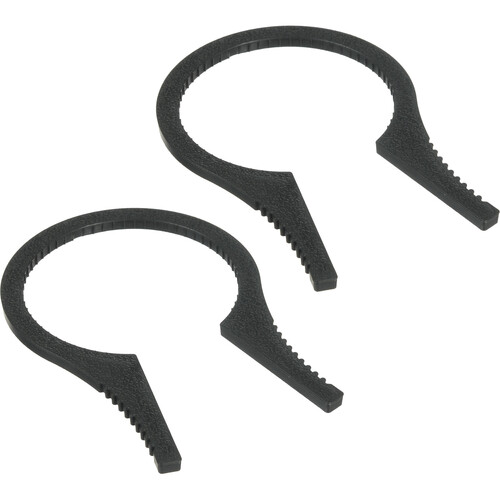
First item is the Sensei 48-58mm Filter Wrench which should be very useful when I deal with my IR filter and polarizer along with, probably, other attachments. It is probably more useful when attaching the IR filter and the polarizer together, since I had problems with these two before, specially in winter. I think in winter almost everything tends to jam a bit. These two wrenches will be useful in the near future.

Source: B&H
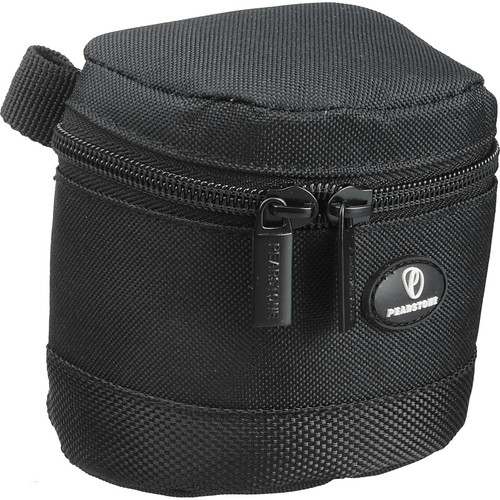
Next item is the Pearstone Onyx 30 Lens Case and this one is mainly to carry my dear Canon EF 15mm fisheye lens; my one and only lens that I usually use when creating panoramas (haven't done those in some long time now!). The cover or cap of this lens is easily removed and it doesn't click over the lens' front, thus I thought such a pocket is a better protection for it.

Source: B&H
Then we come to the fun part with the Rising Standard Pinhole; yes, pinhole. Just like in the old times. This one is specifically made for Canon mounts and I believe you can find it for other type of mounts. From what I gather, the larger the sensor/film, the better for the total sharpness of the image. The f-number for this pinhole is f/222 (but in the instructions manual it's f/223 for APS-C type cameras), so just imagine the depth of field (and the length of the exposure!). I'm still interested in the mathematics involved here though and who knows, I might be able to do my own pinhole measuring to something higher than f/222. Remember that Diameter (of aperture) = focal length / N; and from there we can start on manipulating stuff.

Source: B&H
And then comes the savior! The Vello Universal Duo TTL Off-Camera Flash Cord (33'), and by "(33')" it is meant to be 33 feet, approximately about 10 meters! Unfortunately, I've done the globe experiment above before the arrival of this cable (and till the moment of writing this, I didn't test the cable). This cable would and should push the limits of my speedlites significantly. One question hovers in my mind though: what would be the situation with High-Speed photography? I'm pretty sure there would be some time delay to transfer the signal (we are talking about microseconds here). In High-Speed photography, each single micro- or even nanosecond counts. We shall see about this matter in time.

Source: B&H
Finally, comes the one big toy that I should spend more and more time with. The X-Rite ColorMunki Photo Color Management Solution. Even though I do already have a ColorMunki device to calibrate my monitors (laptops and desktop), yet this device is here is far beyond calibrating monitors only (hence it costs more!). With this, I will be able, hopefully, to calibrate monitors, and make profiles from prints and analyze ambient light or even calibrate a projector! The perfect tool, I would say, for creating showrooms and proper digital darkrooms when needed. I'm thinking of installing this into my (old) desktop and my (new) laptop to make them ready for any task in the future. Just a point here about analyzing the ambient light; it is something important but unfortunately I don't see many people care about this tiny detail, at least in expos here in Kuwait. If you are a photographer and you really care about displaying your photos in printed form in a proper way as you envision them, it is not enough to calibrate your monitor to get the right colors. You have to get profiles for the printing but this is a matter that might be skipped for good in many cases (yet it is good to have profiles for various media). Then we arrive at the ambient light criteria. It is a good thing to know what kind of light and what color temperature the ambient light would be in the place where the photos are to be shown, because with this information, you would be able to examine the effect of such light on the colors of your photos on your (calibrated) monitor before even printing. Thus, you might think of making your photos more yellow-like to balance the extreme blue-colored light in a showroom or vice versa. It is all about taking care of the balance of colors and soft-proofing on your monitor before printing and displaying the photos.

Now with all these loads of new stuff, I think I do need an extra case to keep lot of these stuff and abandon that old small case (which was used for my old Canon 350D!). I'm thinking of getting one of those small traveling cases with wheels to keep my speedlites and related stuff in them. It is about time to organize some stuff (but not my room!).

Bücher
Source: Amazon
In the matter of books, I've finished my Lens Design book but in a fast rhythm. I've realized that such a book can't be read and completely digested without a tutor and without a practical workout. The many mathematical concepts involved are not so weird for me even though they include a high order of complexity, but in most times, many terms there within are familiar to me. However, in mathematics, at least with me, it never works without a practical workout and some tutor to walk step by step along the process. You'd think lot of the concepts here are relatively new but the fact is, most of such mathematical endeavor was developed long in the 18th and 19th centuries! Anyway, after passing through the pages quickly and read some articles, I've decided to look at some of my old books or even look into some books about optics in the library near by. That might help to achieve a better basic understanding for this topic.

Source: Amazon
I've started now reading the last book in the queue line, Handbook For Classical Research, in hope to flavor my mind with some archaeological spice. From the first few pages that I've read (and I didn't delve deep yet!) it seems that the whole book is about the Greco-Roman studies and culture. I was hoping for further expansion but anyway I still do think it is an interesting topic. The good thing about this book is that it is written by a single person, single author, and not scattered among various authors with an article or two for each. Such books with many authors involved are kind of scattered in thoughts and it's hard to keep a chain of thought going through the whole reading session. In linguistics and humanities, I've faced numerous books done in that manner and I have to say, it is kind of a waste of time to read but probably better be kept as a reference material when needed. I'm hoping this new book would give some amusement into my dull brain!

Unsettled Geltani
Maybe I didn't write much thoughts in my notebook about Geltani lately but nevertheless I was active in my mind. Yeah, I'm wondering why do I have a notebook anyway! However, I'm still planning slowly on assigning phonetic values and on the other hand I think I will abandon the newly-created system of possession articles. I think my problem was to create everything in idle and concise manner, but I think a language is more random than concise or systematic. Thus, I've decided to work on another method which might work as: pronoun-subject-suffix. For example, My Cat, would appear as: I-Cat-(suffix here). Development is slow naturally because of my stuffed schedule, and problems!

Finale
Scandinavian Eyes - Frida
Troubles on the home front keeps me busy and alert. I do say "front," yes. Because it seems that way; a game of dominance and reliance. There are moments that I do wish, and do imagine, how my life would be with another form of a family. They say you can't choose your family, but you can pick up your friends. However, under the current circumstances, it seems that I don't have the former, nor the latter. It feels like I'm floating with no support; not physically, nor emotionally. Mom is doing her best to keep me happy and I know it. I can see it in her eyes and actions. However, I'm the one who's supposed to keep her happy. I have a family that I can barely relate to.
Here and there, I'm keeping myself amused with some brush-up jobs with some photos from instagram users. It is something that I used to enjoy doing long before I take photography as a hobby. It might be just the desire to make something beautiful but trust me, if the original photo/person is not beautiful in the first place I would really have hard time creating the "uncreated". I think I do get satisfaction from the gratitude and happiness that those people show when I create some art with their pictures. I'm not a psychologist, but probably I'm projecting my needs outward - something that I've lost in my inner circle is satisfied with deeds to the outer world.
There had been some thoughts about resigning and chasing my own career but such thoughts are still cooking. It bears great responsibilities as well and even stepping into such realm should be done carefully without leaving the main job at once. However, with the current circumstances at work and the great disrespect that I face from the admins who think that my work place is something vain, I'm seriously getting sick of everyone around here and do wish to break free from all these master-slave relations. How, I don't know; but every good meal, needs a proper cooking...